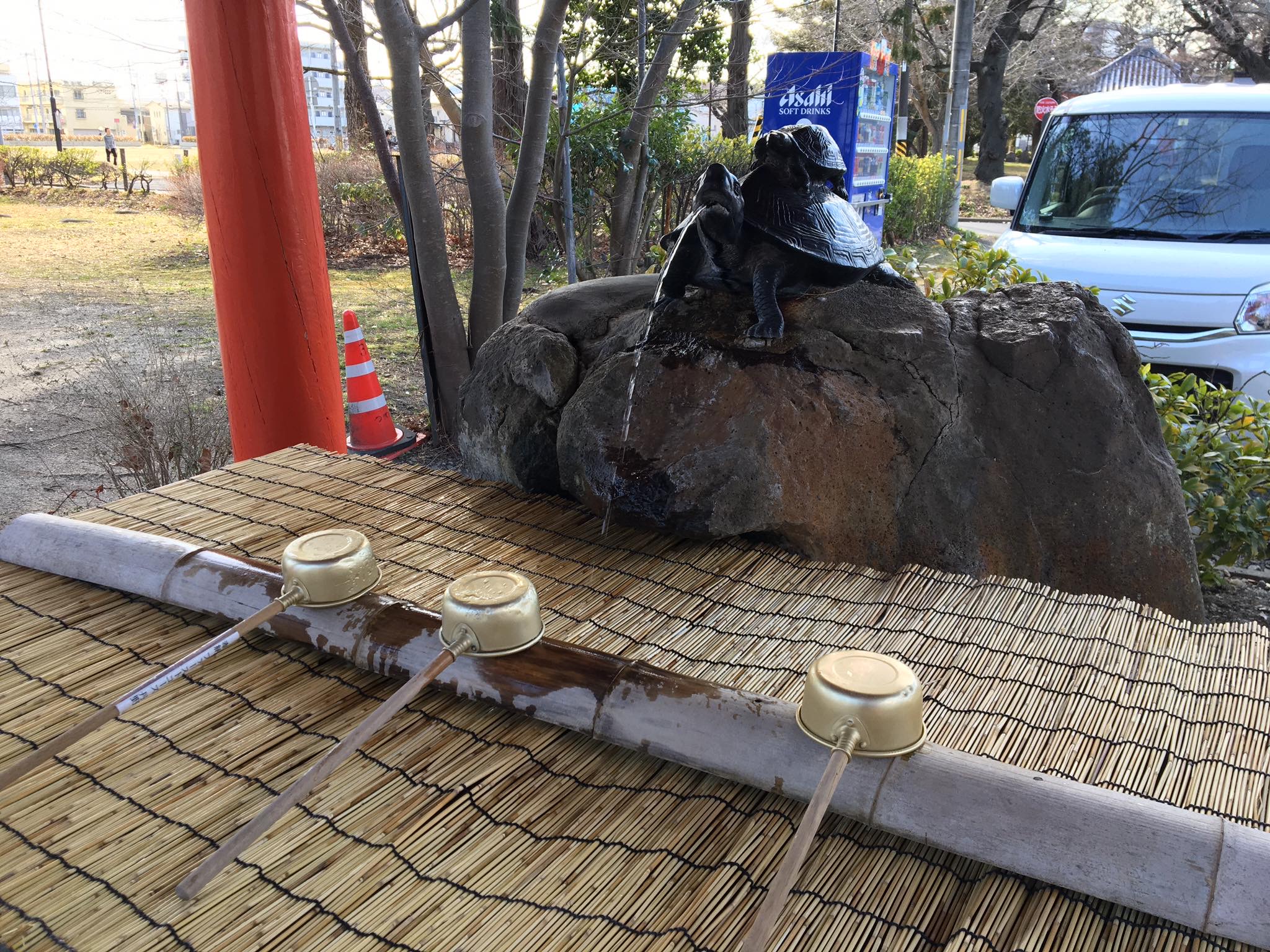
Mutsu Kokubun-ji
Once a year, and only once, the doors of the Yakushi-do hall swing open to reveal a bronze statue of Yakushi Nyorai, the Medicine Buddha. For the other 364 days, the figure sits in darkness behind closed panels, a hibutsu -- a hidden Buddha -- unseen by human eyes. This ritual of concealment stretches back centuries at Mutsu Kokubun-ji, a temple in Sendai's Wakabayashi ward whose origins reach to the year 741, when Emperor Shomu decreed that every province in Japan would build a monastery to ward off the devastation of a catastrophic smallpox epidemic.
An Emperor's Prescription
The 735-737 smallpox epidemic had ravaged Japan, killing perhaps a third of the population. Emperor Shomu's response was not medical but spiritual: he ordered the construction of a kokubunji, a provincial temple, in every one of Japan's sixty-odd provinces. Buddhism would become the shield of the state. In Mutsu Province, the empire's remote northeastern frontier, the temple rose 9.5 kilometers from Taga Castle, the military stronghold from which Yamato forces pushed into Emishi territory. The original complex was enormous -- a walled square 240 meters on each side, containing a seven-story pagoda, a great south gate, a kondo main hall, a lecture hall, cloisters, dormitories, and a scripture repository. Archaeological excavations have confirmed it was one of the largest provincial temples in all of Japan, a statement of imperial ambition at the very edge of the known world.
The One-Eyed Dragon's Craft
By the early 1600s, the original Nara-period temple had long fallen to ruin. Date Masamune, the formidable one-eyed lord of Sendai, made its reconstruction part of his campaign to establish his castle town as a cultural capital of the north. Between 1605 and 1607, craftsmen from Kyoto -- some of whom had previously worked for the Toyotomi family -- raised the Yakushi-do hall that still stands today. The building is a study in contrasts. Its exterior is plain, uncolored wood, almost austere compared to the ornate shrines Masamune built elsewhere. But step inside and the restraint vanishes: the altar area blazes with gold-leaf columns, vivid painted decorations, and intricate sculptural work. It is as if Masamune reserved the splendor for the sacred space alone, hiding beauty the way the temple hides its Buddha.
Guardians in Wood and Bronze
The hidden bronze Yakushi Nyorai is flanked by wooden statues of Nikko Bosatsu and Gakko Bosatsu -- Sunlight and Moonlight Bodhisattvas. An inscription inside the Gakko Bosatsu dates it to 1645, though temple tradition insists the central Yakushi figure survived from the original Nara-period complex, making it potentially over 1,200 years old. Surrounding them stand Kamakura-period statues of Fudo Myoo, Bishamon-ten, and the Twelve Heavenly Generals, each designated a Miyagi Prefectural Tangible Cultural Property. The 1607 Niomon gate, flanked by fierce guardian kings, marks the entrance to this sculptural treasury. In 1903, the Yakushi-do itself was designated an Important Cultural Property of Japan, and the temple grounds hold status as a National Historic Site.
On the Narrow Road
In 1689, the haiku master Matsuo Basho walked through Sendai on his famous journey to the deep north, the trip that became Oku no Hosomichi. The Yakushi-do today is designated as a component of the Landscape of Oku no Hosomichi, a National Place of Scenic Beauty that traces the poet's path. Walking the temple grounds, where ancient foundation stones mark the outline of buildings that vanished centuries ago, it is easy to imagine Basho pausing here, contemplating the same tension between permanence and impermanence that defines this place -- a frontier outpost of faith that has endured, in one form or another, for nearly thirteen centuries.
From the Air
Located at 38.2506N, 140.9006E in Sendai's Wakabayashi ward. The temple grounds sit in an urban area southeast of central Sendai. The nearest major airport is Sendai Airport (RJSS), approximately 13 km to the south. JGSDF Kasuminome Airfield (RJSU) lies closer, about 5 km southeast. From the air at 3,000-4,000 feet, look for the forested temple compound amid Sendai's dense urban grid. Sendai Castle ruins on Aobayama hill to the northwest provide a good visual reference.