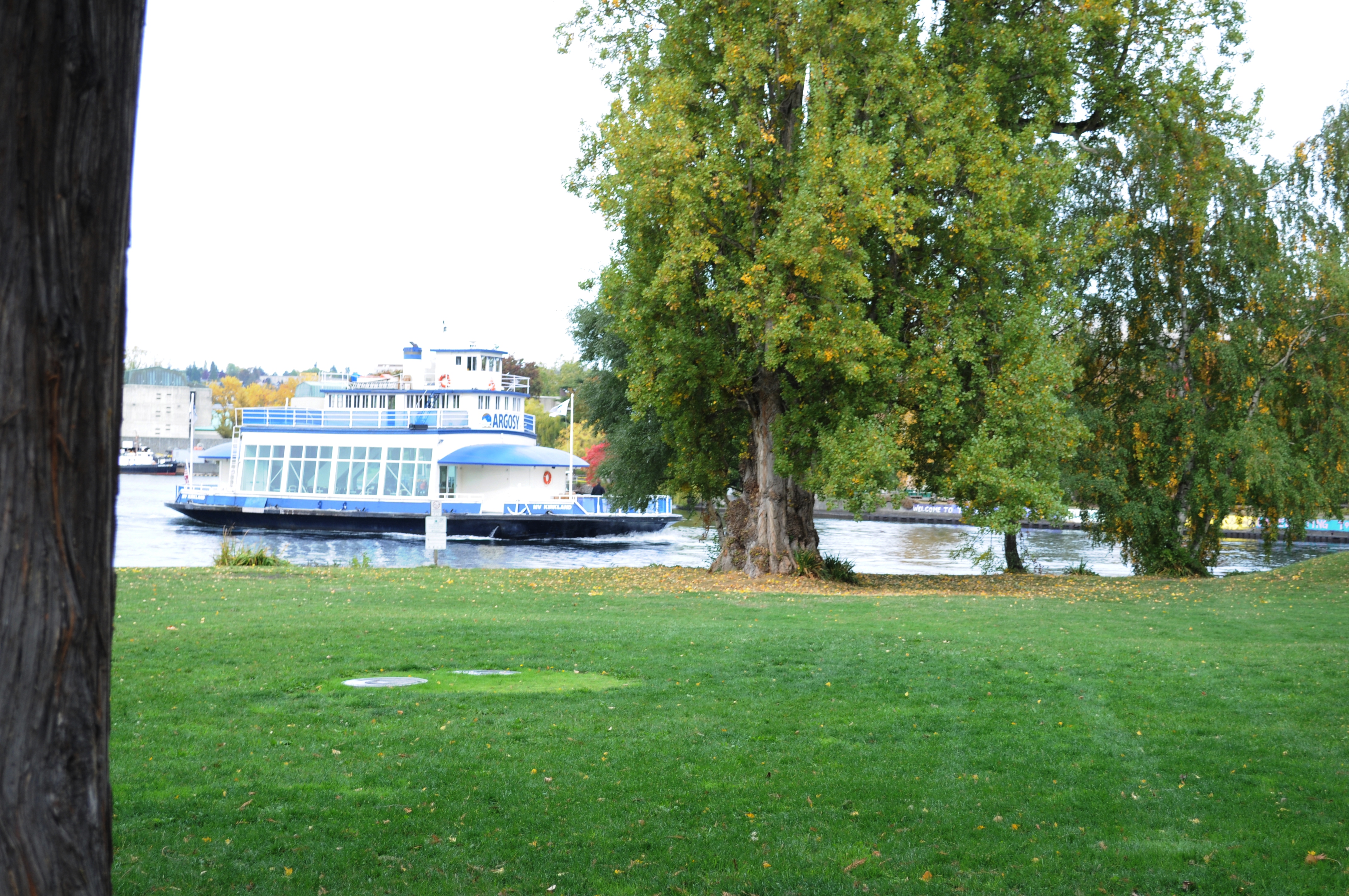
MV Tourist No. 2
She carried cars across the Columbia when the river was still an uncrossable barrier between Oregon and Washington. She laid mines at the river's mouth when the Japanese threatened the Pacific Coast. She cruised Lake Washington with floor-to-ceiling windows and full-service bars. And in July 2022, the MV Tourist No. 2 settled into the mud of the Columbia River in Astoria, Oregon - back where she started, almost a century after her 1924 launch. Few vessels have been reinvented so many times, and none of those reinventions managed to save her.
Crossing the Columbia
When the Tourist No. 2 entered service in 1924, the only way to cross the lower Columbia River was by ferry. The Astoria-Megler route connected the Oregon and Washington shores across four miles of water notorious for strong currents and shifting sandbars. The wooden-hulled vessel carried cars and passengers on this crossing for over four decades, becoming a fixture of the regional transportation network. The route was essential - communities on both banks depended on it for commerce, family visits, and access to services that only existed on the other side. The Tourist No. 2 worked this route with few interruptions, logging thousands of crossings between the two states.
A Ferry Goes to War
The bombing of Pearl Harbor in December 1941 changed everything on the Pacific Coast. The military feared a Japanese attack on the Columbia River's mouth, a strategic entry point to the interior Northwest. The US Army purchased the Tourist No. 2 and redesignated her as FB or JMP 535, pressing the civilian ferry into service as a mine-laying vessel. For the duration of the war, the boat that had spent its life shuttling families and Ford Model A's across the river now worked to make that same river impassable to enemy ships. When the war ended, she returned to ferry duty on the Columbia as if nothing had happened - the same wooden hull, the same crossing, a different set of memories below deck.
New Names, New Waters
The Astoria-Megler Bridge opened in 1966, making the ferry route obsolete overnight. After forty-two years on the Columbia, the Tourist No. 2 was moved to Pierce County, Washington, in 1967 and rechristened the Islander of Pierce County. She worked Puget Sound for years, but her wooden hull was increasingly out of step with the steel vessels replacing her generation. In 1996, Argosy Cruises bought the vessel, renamed her Kirkland, and gave her a dramatic makeover. Designer Jonathan Quinn Barnett redesigned the interior with 12-foot floor-to-ceiling windows, two full-service bars, and a galley, transforming a utilitarian ferry into a sleek cruise vessel. The main deck became unique among Northwest boats - the old car ferry had become something almost unrecognizable.
Fire, Sale, and Return
Early on August 28, 2010, fire broke out in the engine room while the vessel was docked at her Kirkland, Washington pier. Firefighters later said everything below deck was 'toast.' Argosy concluded the damage wasn't worth repairing and sold the vessel to Christian Lint, who moored her in Bremerton and used her for special events. In 2016, Lint sold the Tourist No. 2 to the Astoria Ferry Group, and on August 1, the vessel returned to Astoria - the same town where she had been built ninety-two years earlier. Restoration began, and the project made Restore Oregon's most endangered places list in 2017. Volunteers and supporters imagined the old ferry serving the Astoria waterfront once more.
The River Takes Her Back
The restoration never reached completion. On July 28, 2022, the Tourist No. 2 partially capsized in the Columbia River at her Astoria mooring. The wooden hull that had survived wartime service, decades of Puget Sound crossings, and an engine room fire could not survive years of deferred maintenance while tied to a dock. She was demolished in place and removed in September 2022. The vessel had been listed on both the Washington Historic Register and the National Register of Historic Places, recognitions that couldn't protect her from the simple physics of water and neglected wood. The Columbia River, which the Tourist No. 2 had crossed thousands of times, finally claimed her for good.
From the Air
Located at 46.20°N, 123.80°W along the Astoria, Oregon waterfront on the Columbia River. The vessel's final mooring was visible from the river, though the boat was removed in September 2022. From altitude, Astoria's waterfront stretches along the Columbia's south bank, with piers and docks marking the town's maritime heritage. The Astoria-Megler Bridge, the structure that made the Tourist No. 2's original ferry route obsolete, crosses the Columbia prominently to the west. The river mouth and Pacific Ocean lie to the northwest. Astoria Regional Airport (KAST) is approximately 3 miles southeast. The Columbia Bar, one of the most dangerous river entrances on the Pacific Coast, is visible where river meets ocean - the same waters the Tourist No. 2 helped defend during World War II.