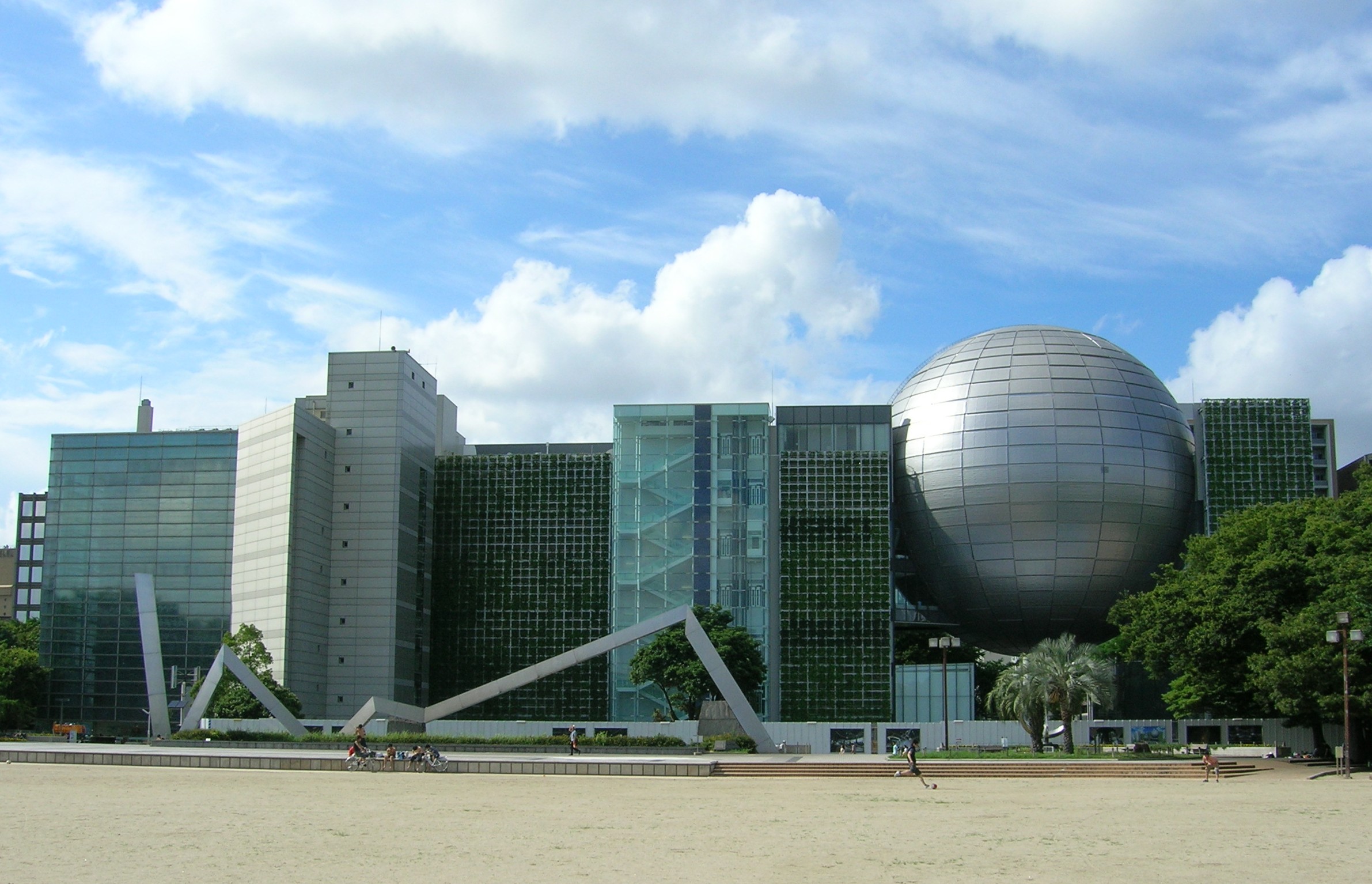
Nagoya City Science Museum
A massive silver sphere hangs in the air above Sakae, Nagoya's commercial heart, looking like a spacecraft that decided to park between office towers. The sphere is 35 meters across -- the largest planetarium dome on Earth, certified by Guinness World Records -- and it contains a sky so convincing that visitors sometimes forget they are sitting in a chair in central Japan. The Nagoya City Science Museum wrapped this extraordinary planetarium inside a building devoted to the idea that science belongs to everyone, filling three wings with hands-on exhibits that range from liquid rocket engines to model railways.
The Sphere in the Sky
The planetarium dome measures 35.02 meters in internal diameter, and the near-perfect sphere that houses it rises 39.2 meters high, suspended 11.4 meters above ground level. Inside, the UNIVERSARIUM Model IX optical projector reproduces the accurate positions and brightness of 9,100 fixed stars visible to the naked eye, while the Sky Max DSII digital system can render computerized stars across the entire dome surface. Together, they can show the night skies of the present, the past, and the future. The planetarium opened in March 2011, anchoring a major renovation of the museum. From the street, the sphere dominates the Shirakawa Park skyline -- a deliberate architectural statement that science deserves the same visual ambition as the temples and castles that define older Japanese cityscapes.
Three Wings of Wonder
Beyond the planetarium, the museum divides into three main sections covering modern technology, life sciences, and general science. The upper floors are devoted to space and future technology, utilizing touch-screen displays and interactive installations. The third floor houses a transport section complete with a model railway that delights younger visitors. Much of the museum was renovated in 2012 to coincide with the planetarium opening, giving the exhibits a cohesive, contemporary feel. The technology wing pays particular attention to the Chubu region's deep connections to science and industry -- fitting for a city that serves as the manufacturing engine of Japan, home to Toyota, aerospace firms, and precision engineering companies that have shaped the nation's industrial identity for over a century.
Nagoya's Industrial Soul
The museum's location in Sakae places it at the geographic and cultural center of a city that has always defined itself through making things. Nagoya's industrial legacy stretches from the ceramic kilns of the Edo period to the automobile assembly lines and rocket component factories of the present day. A full-scale LE-7 liquid rocket engine -- the powerplant that launched Japan's H-II rockets -- stands in the museum as a reminder that the region's factories do not just produce cars. The Chubu region's link between craftsmanship and technology runs deep: the same precision culture that produced samurai sword smiths now produces the components for satellites and bullet trains. The museum captures this continuity, presenting local industry not as dry economic history but as an ongoing story of human ingenuity.
A Park for the Curious
The museum sits in Shirakawa Park alongside the Nagoya City Art Museum, creating a cultural campus in the middle of the city. The park is easily reached on foot from either Osu Kannon or Fushimi subway stations along Fushimi-Dori, placing it within walking distance of Nagoya's famous Osu shopping district and its centuries-old Osu Kannon temple. This accessibility is deliberate. The museum was designed to draw families, students, and casual visitors who might not seek out a science institution on their own. The combination of the record-breaking planetarium, hands-on exhibits tailored for children, and rotating special exhibitions ensures that repeat visits reveal something new each time. On clear days, the silver sphere catches the afternoon light and throws reflections across the surrounding park -- a beacon for anyone looking up from the streets of Sakae.
From the Air
The Nagoya City Science Museum is at 35.165N, 136.900E in the Sakae district of central Nagoya. From the air, the distinctive silver planetarium sphere is a prominent visual landmark amid the rectangular office buildings of the commercial district. It sits in Shirakawa Park, a green rectangle visible from altitude. Nearest airport is Chubu Centrair International Airport (RJGG), approximately 35 km south. Nagoya Airfield (RJNA/Komaki) is about 10 km north. Best viewed at 2,000-3,000 feet to distinguish the sphere's shape against the urban grid.