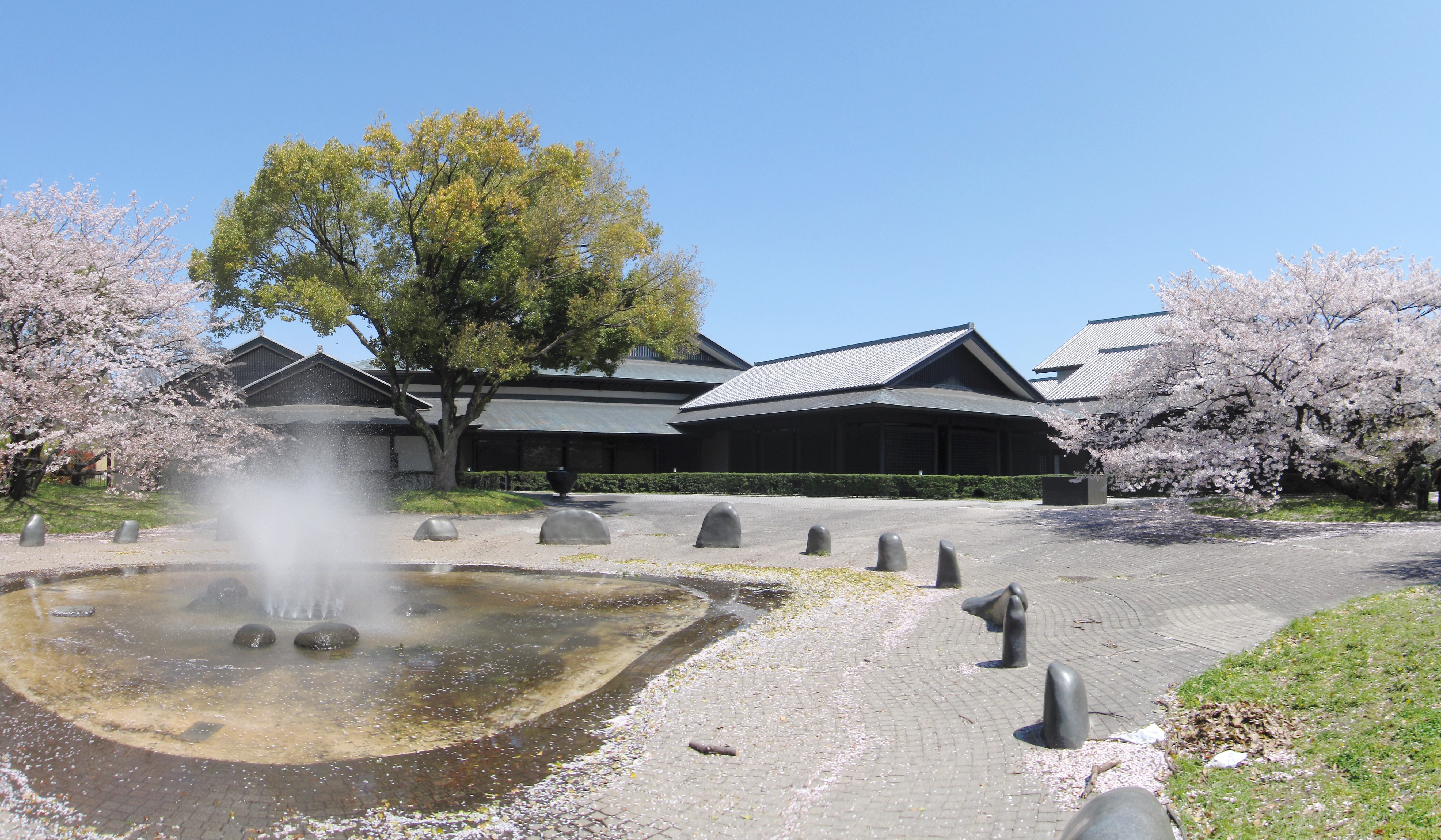
Nagoya Noh Theater
The footsteps are deliberate, almost impossibly slow. A masked figure glides across a stage of polished Hinoki cypress, each movement carrying six centuries of inherited precision. This is Noh -- Japan's oldest surviving theatrical form, proclaimed a Masterpiece of the Oral and Intangible Heritage of Humanity by UNESCO in 2001 -- and in Nagoya, it is performed just meters from the castle walls where feudal lords once commanded private performances. The Nagoya Noh Theater stands at the southern edge of Nagoya Castle's outer Sannomaru enceinte, a building that bridges the medieval origins of its art form with the infrastructure of a modern city.
Feudal Stages
Noh's roots in Owari Province run deep. During the centuries of Tokugawa rule, performances were staged at the Ninomaru Palace of Nagoya Castle on two dedicated platforms: the omote-butai, or front stage, and the oku-butai, the rear stage. These were not casual entertainments. Noh was performed to commemorate a lord's succession to a fiefdom and to celebrate the birth of an heir -- rituals of political legitimacy enacted through dance, poetry, and masked drama. The Owari branch of the Tokugawa clan were active patrons of Noh actors, sustaining entire troupes and shaping the development of the art form in this region. A reconstruction of one of the Ninomaru's Noh stages can still be seen at the Tokugawa Art Museum, preserving the spatial dimensions and wooden construction that defined feudal-era performance.
Ancient Art in Modern Concrete
The modern Nagoya Noh Theatre opened in April 1997, commissioned by the city government as a purpose-built venue for traditional performance. From outside, its rooflines deliberately echo the architectural vocabulary of historic Noh theaters -- the sweeping curves and layered forms that signal what happens within. Inside, the building is steel-reinforced concrete with a basement level and a total floor area of 5,200 square meters. But the stage itself honors tradition absolutely: it is constructed from Hinoki cypress sourced from the Kiso region, the same wood that has been used for sacred and ceremonial architecture in Japan for over a thousand years. The main stage measures 5.91 meters square within its four pillars, and the hashigakari -- the bridgeway passage through which performers enter -- extends 11.89 meters at an angle of 102.5 degrees from the stage. Six hundred and thirty seats face the platform.
The Slowest Drama on Earth
Noh is not theater in the Western sense. Originating in the eighth century when Sangaku performance traditions were transmitted from China to Japan, it was formalized into its current shape during the Muromachi Period by the playwright and theorist Zeami in the fourteenth and fifteenth centuries. A Noh performance unfolds with a deliberate, almost geological slowness: a single play can last an hour, with performers executing movements that might cover only a few feet of stage. Masks carved from cypress wood transform actors into ghosts, warriors, demons, and grieving women. The chanting follows melodic patterns passed down through lineages of performers. At the Nagoya Noh Theater, both Noh and its comic counterpart Kyogen are performed monthly, maintaining the dual tradition known as Nogaku that UNESCO recognized as intangible cultural heritage. The theater also houses artifacts of Noh performance and supports the city's active association of Noh mask makers, artisans who carve faces from single blocks of wood using techniques unchanged across generations.
In the Castle's Shadow
The theater's location is no accident. Sitting just south of the main visitor gate of Nagoya Castle, it occupies the same ground where the Sannomaru enceinte once housed shrines, retainer residences, and Confucian schools. Visitors walking from Nagoyajo Station on the Meijo Line pass from the subway exit -- itself constructed in the style of a traditional Korai-mon gate -- directly toward both the castle and the theater, moving through layers of Nagoya's cultural identity in a few hundred meters. The proximity creates an unspoken continuity: the same castle that hosted Noh performances for Tokugawa lords now anchors a neighborhood where that tradition persists in a purpose-built modern home. Nagoya remains one of Japan's most important centers for Noh, with the Nagoya Noh Promotive Association and the Nohmen Kohgeikai mask makers' association sustaining the art form's living practice.
From the Air
The Nagoya Noh Theater sits at 35.191N, 136.904E, immediately south of Nagoya Castle's main gate in central Nagoya. From the air, its distinctive traditional-style rooflines are visible adjacent to the castle's moat system. The theater is within the former Sannomaru enceinte area, now bordered by government buildings. Nearest airport is Chubu Centrair International Airport (RJGG), approximately 35 km south. Nagoya Airfield (RJNA/Komaki) is about 10 km north. Best viewed at 2,000-3,000 feet alongside Nagoya Castle for context.