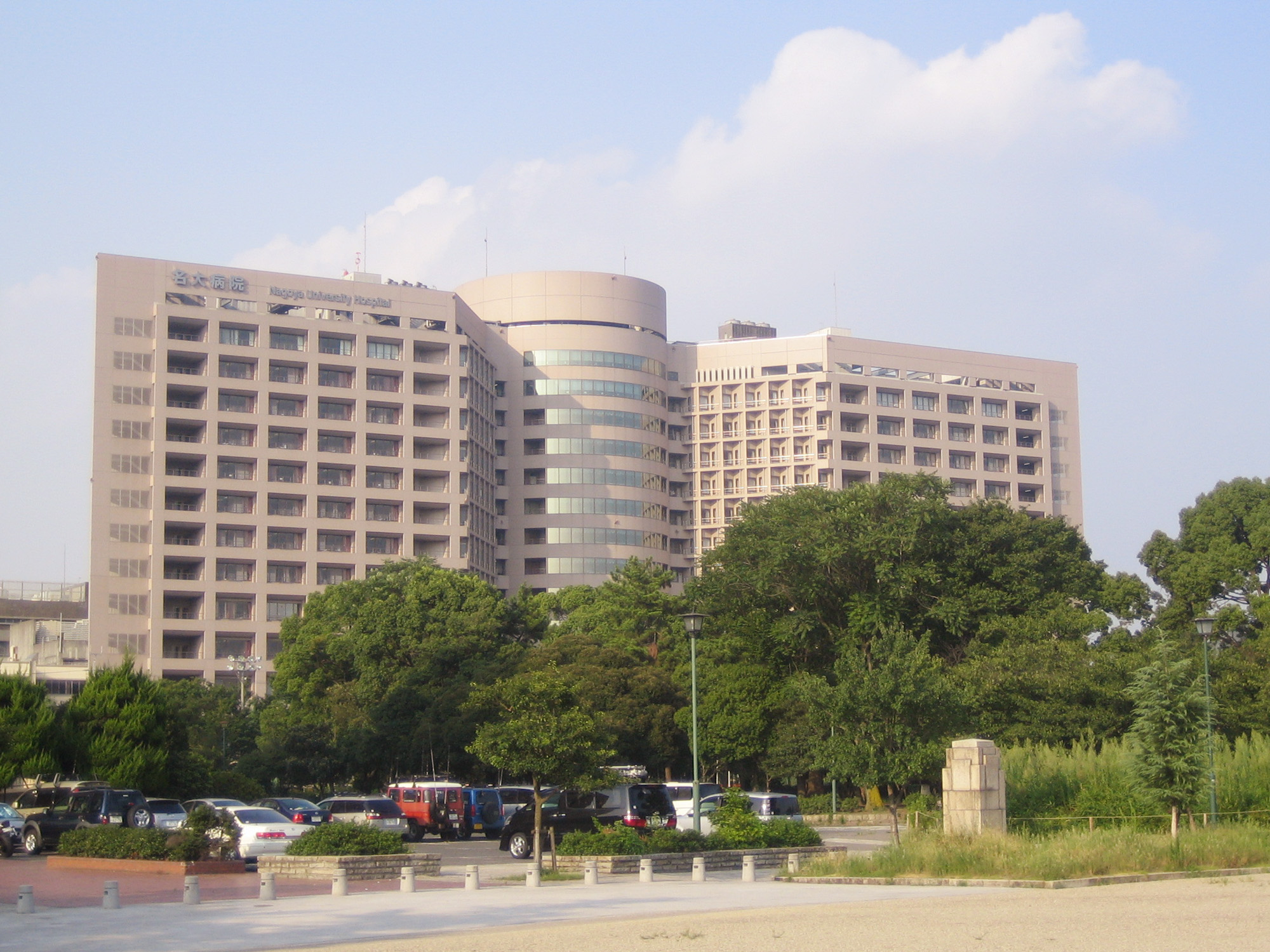
Nagoya University: The Last Imperial University That Lit the World Blue
In a laboratory at Nagoya University in the early 1990s, two researchers did something the world's best engineers had been trying and failing to do for decades: they made a semiconductor emit bright blue light. Isamu Akasaki and Hiroshi Amano's invention of the blue LED -- recognized with the 2014 Nobel Prize in Physics -- completed the color spectrum needed for white LED lighting and changed the way humanity illuminates everything from city streets to phone screens. That this breakthrough happened at the youngest of Japan's nine Imperial Universities, an institution founded in 1939 as the last addition to an elite network stretching from Tokyo to Taipei, says everything about the kind of place Nagoya University has become. Seven Nobel laureates and counting, a Fields Medalist, an Abel Prize winner, and the former CEO of Toyota all trace their paths through a campus in Chikusa-ku where the founding principle, borrowed from Japan's ancient Seventeen-article Constitution, is simply: harmony is to be valued.
The Youngest Imperial University
Nagoya University's roots reach back to 1871, when a temporary medical school and public hospital opened in what was then a castle town rebuilding after the Meiji Restoration. But the institution did not gain university status until 1939, when Nagoya Imperial University was established as the ninth and final Imperial University of the Japanese Empire. The timing was inauspicious -- the university opened on the eve of global war -- but the institution survived, was renamed Nagoya University in 1947, and set about building something distinctive. Where Tokyo and Kyoto had centuries of tradition, Nagoya cultivated a culture its Academic Charter would later describe as 'freedom, openness, and enterprising.' Its first president championed the principle of wa -- harmony -- drawn from Prince Shotoku's Seventeen-article Constitution, and that ethos of collegial, non-hierarchical collaboration would shape the university's research culture for generations.
A Factory for Nobel Prizes
Seven Nobel Prize winners have ties to Nagoya University, making it the third most prolific Nobel-producing institution in Japan and all of Asia, trailing only Kyoto University and the University of Tokyo. The roster spans physics and chemistry in ways that have reshaped daily life. Makoto Kobayashi and Toshihide Maskawa shared the 2008 Nobel Prize in Physics for their work on the CKM matrix, explaining why the universe contains more matter than antimatter. Ryoji Noyori won the 2001 Nobel Prize in Chemistry for asymmetric hydrogenation, a catalytic process now essential in pharmaceutical manufacturing. Osamu Shimomura earned the 2008 Nobel Prize in Chemistry for isolating green fluorescent protein, which revolutionized biological imaging. And Syukuro Manabe, a specially invited professor at Nagoya from 2007 to 2014, received the 2021 Nobel Prize in Physics for pioneering climate modeling. Nearly half of Japan's 21st-century Nobel laureates in natural sciences have some connection to this campus.
The Blue Light Revolution
The achievement that put Nagoya University on front pages worldwide was the invention of the blue LED. Red and green LEDs had existed since the 1960s, but blue proved maddeningly elusive -- without it, LEDs could not produce white light, and the dream of replacing incandescent bulbs with solid-state lighting remained just that, a dream. Isamu Akasaki, a professor at Nagoya University, and his graduate student Hiroshi Amano spent years working with gallium nitride, a material most researchers had abandoned as too difficult. Through persistent experimentation with crystal growth techniques, they achieved the first high-quality gallium nitride crystals and created the first blue LED. The 2014 Nobel Prize in Physics went to Akasaki, Amano, and Shuji Nakamura for this invention. Today, LED lighting accounts for a significant and growing share of the world's illumination, saving enormous amounts of energy -- a direct legacy of work done in Nagoya's Higashiyama campus laboratories.
Beyond the Lab Bench
Nagoya University's influence extends well beyond particle physics and chemistry. Mathematician Shigefumi Mori spent most of his academic career here before winning the Fields Medal in 1990 for his work in algebraic geometry. Masaki Kashiwara, another mathematician with Nagoya ties, received the 2025 Abel Prize. The biologists Reiji and Tsuneko Okazaki discovered Okazaki fragments here -- the short DNA sequences that are fundamental to understanding how DNA replicates. And on the business side, Shoichiro Toyoda, the former CEO who transformed Toyota Motor Corporation into a global powerhouse, studied at Nagoya. The campus itself, centered on the Higashiyama district of Chikusa-ku, enrolls approximately 15,771 students, including over 1,900 international students from more than 110 countries. In 2018, it became one of the first five Designated National Universities, and in 2020 it merged its administration with Gifu University to form Japan's largest national higher education corporation.
Meidai-sai and the Spirit of Wa
Every June since 1960, the Higashiyama campus transforms for Meidai-sai, the university festival, which draws crowds to roughly 100 events: laboratory tours where researchers explain their work to the public, performances by student circles -- the Japanese university equivalent of clubs -- and hands-on activities that range from tea ceremony to robotics demonstrations. The festival embodies the culture that makes Nagoya distinct among Japan's elite universities. More than 60 official circles cover everything from art to volunteering, and over 50 athletic clubs compete in the Seven Universities Athletic Meet, a tradition dating to 1962 that pits the former imperial universities against each other. For a place that has produced fundamental discoveries about the origins of the universe, the structure of DNA, and the physics of light, Nagoya University remains remarkably grounded in that founding principle of harmony -- a campus where a Nobel laureate and a first-year student might share the same cafeteria table.
From the Air
Located at 35.15°N, 136.97°E in Chikusa-ku, eastern Nagoya. The Higashiyama campus occupies a substantial area of tree-lined grounds visible as a green patch amid dense urban development. Nagoya Airfield / Komaki (RJNA) lies approximately 8 nautical miles to the north-northwest. Chubu Centrair International Airport (RJGG) is roughly 22 nautical miles to the south. Best viewed at 3,000-5,000 feet AGL. The campus sits east of downtown Nagoya and north of the Higashiyama Zoo and Botanical Gardens, which together form a large green corridor visible from altitude.