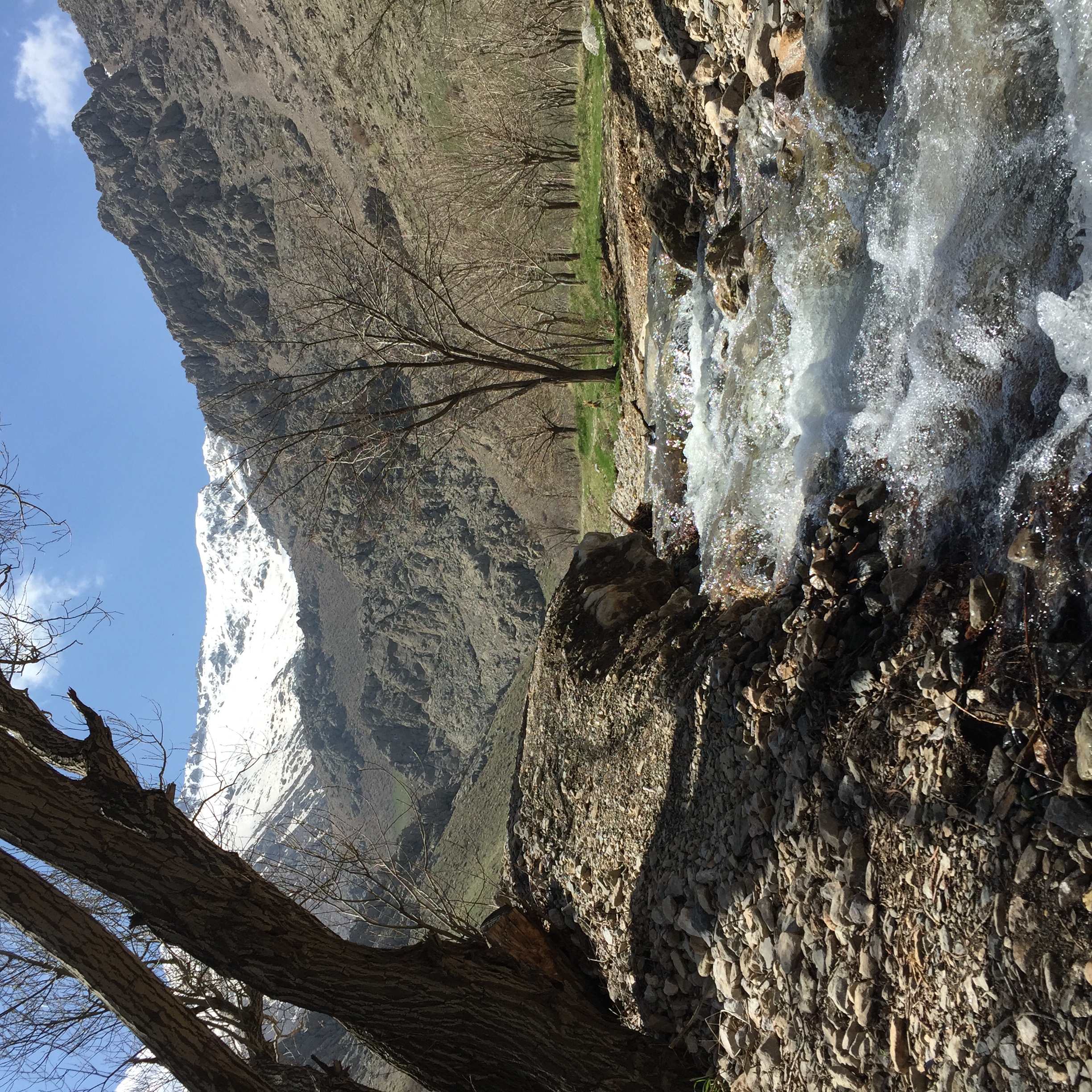
Nahavand
The Battle of Nahavand in 642 is sometimes called the "Victory of Victories" by Arab historians. For the Sasanian Persians, it was the opposite -- the defeat that ended an empire. Heavy losses fell on both sides, but the Sasanian army broke, and with it broke the last organized resistance to the Arab conquest of Iran. The doors of the Iranian plateau swung open. This single battle defines Nahavand in most history books, but the city itself has been absorbing conquerors, naming musical scales, and outlasting empires for seven thousand years.
Before History Had a Name
Excavations at Tepe Giyan, approximately 10 kilometers southeast of Nahavand, revealed occupation stretching back to at least 5,000 BC. Archaeologists Georges Contenau and Roman Ghirshman dug the site in 1931 and 1932, establishing that this corner of the Zagros Mountains has been inhabited since the late Neolithic. The city sits on the Nisaean plain, famous in antiquity for breeding the large horses prized by Persian kings. During the Achaemenid period, the ancient geographer Strabo wrote that Xerxes the Great refounded the settlement. It lay on the trunk road from Babylonia through Media to Bactria, a position that guaranteed both prosperity and vulnerability. Armies have been marching through Nahavand for as long as armies have existed.
Greeks, Parthians, and a Queen's Stele
Under the Seleucids, Nahavand was reshaped into a Greek polis with its own magistrates and governor. In the 20th century, a stone stele was found nearby bearing a copy of the dynastic cult inscription of Antiochus III the Great, created for his wife Queen Laodice III and dated to 193 BC. The stele confirmed that the city was known in antiquity as Laodiceia, one of numerous cities the Seleucids named after royal women across their empire. During the Parthian period, the polymath Abu Hanifa Dinawari recorded that Nahavand served as the seat of the Parthian prince who would become Artabanus I. The Sasanians later bestowed the district upon the House of Karen, one of Persia's great noble families, and a fire temple burned in the city. Each successive dynasty left its mark, but none erased what came before.
The Battle That Changed Everything
In 642, Arab forces met the Sasanian army at Nahavand. The Sasanian Empire, already weakened by decades of war with Byzantium and internal turmoil, staked its survival on this engagement. The result was catastrophic. Both sides suffered enormous casualties, but the Sasanian defeat was decisive. The battle opened the Iranian plateau to the Arab advance and effectively ended Zoroastrian Persia as a political entity. In the early Islamic period that followed, Nahavand flourished as part of Jibal province. Its revenues funded troops from Basra stationed in the city. Medieval geographers described it as a prosperous commercial hub with two Friday mosques. When the 10th-century traveler Abu Dulaf passed through, he noted "fine remains of the ancient Persians" and recorded that during the reign of Caliph al-Ma'mun, a treasure chamber containing two gold caskets had been discovered.
Conquered and Reconquered
Nahavand's position on the road from Iraq through Kermanshah to northern Iran made it a prize that empires seized, lost, and seized again. In 1092, the powerful Seljuk vizier Nizam al-Mulk was assassinated near the city. In 1589, Ottoman general Cigalazade Yusuf Sinan Pasha built a fortress there during the Ottoman-Safavid wars. The Safavids were forced to cede Nahavand by the Treaty of Constantinople in 1590, but in 1602 the city's inhabitants revolted against Ottoman rule. The Safavids retook the city and destroyed the Ottoman fort. When the Safavid dynasty collapsed in 1722, the Ottomans returned. Nader Shah expelled them in 1730. His death in 1747 plunged the region into chaos as Bakhtiari chiefs exploited the power vacuum.
A City That Named a Musical Scale
Nahavand gave its name to a maqam, a musical mode used across Arabic, Persian, and Turkish traditions. The Nahawand maqam is known for melodies that sound surprisingly Western to modern ears, built on intervals that approximate a harmonic minor scale. It is one of the most widely used modes in Middle Eastern music, appearing in everything from classical compositions to popular songs. The city also preserves its own linguistic heritage. The local Nahavandi dialect belongs to the northern branch of the Luri language and is considered one of the closest living relatives of Middle Persian, the language of the Sasanian court. In a city where Achaemenid kings, Greek governors, Parthian princes, Arab conquerors, Seljuk assassins, Ottoman generals, and Safavid rebels have all left their footprints, it is fitting that what endures most vividly is not a monument but a sound.
From the Air
Located at 34.19N, 48.38E in Hamadan Province, western Iran, on the Nisaean plain south of Hamadan. The Alvand mountain massif separates it from Hamadan to the north. The city is visible as an urban area in a fertile agricultural valley framed by Zagros ridgelines. Nearest airports include Hamadan (OIHH) and Khorramabad (OICK). Fly at 8,000-10,000 feet AGL to see the city's relationship to the mountain passes and historic routes leading to Kermanshah and Isfahan.