Nahuel Huapi National Park
The black glacier clings to its mountainside like frozen tar, a geological curiosity that stops trekkers in their tracks. This dark ice, stained by volcanic debris, is just one of countless surprises waiting in Nahuel Huapi National Park, where Argentina first declared protected wilderness in 1934. Spanning portions of both Neuquen and Rio Negro provinces in the Andean foothills, the park wraps around its namesake lake like protective arms, encompassing everything from dense temperate rainforest to high-altitude rock and ice. The gateway city of San Carlos de Bariloche has transformed what might have been simple preservation into a sophisticated adventure destination. Here, trails lead to mountain refugios, ski lifts ascend Cerro Catedral, and ferries navigate fjord-like inlets to remote ports. It is wilderness made accessible, though never tamed.
The Lake at the Heart
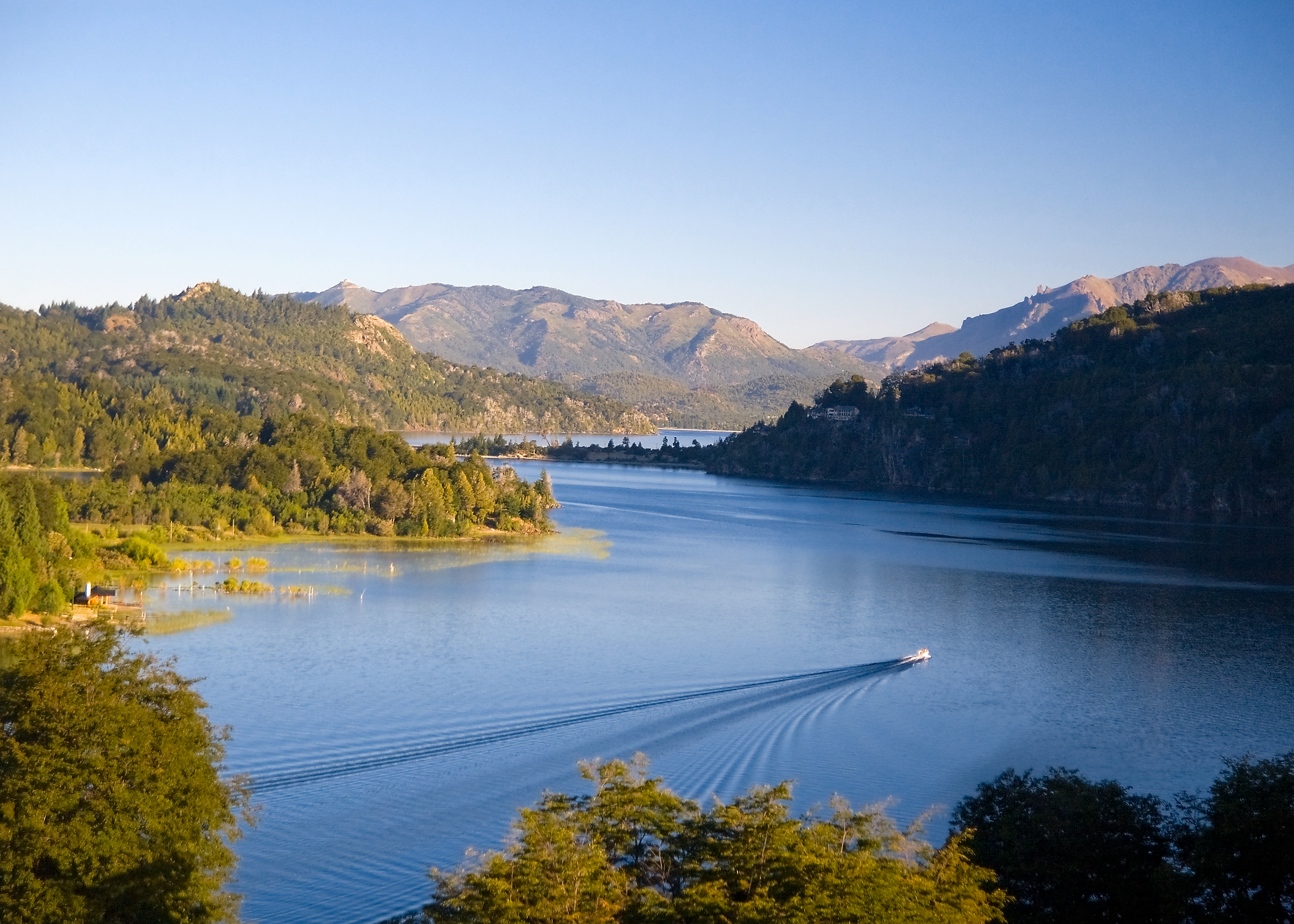
Nahuel Huapi, one of the largest lakes in Argentina's Lake District, dominates the park's geography and imagination. Its waters, fed by glacial melt and mountain streams, fill a basin carved by ice ages past, reaching depths that dwarf most inland bodies. The lake's irregular shoreline creates countless bays, peninsulas, and islands, each with its own character. Ferries depart for Puerto Frias, penetrating deep into the Andean corridor where Chile waits beyond the continental divide. From the water, the scale of surrounding peaks becomes fully apparent, their flanks rising directly from the shore to snow-dusted summits. The lake serves as both highway and destination, its blue expanse reflecting moods that shift with Patagonian weather.
Trails to the Refugios
A network of mountain shelters makes multi-day trekking possible through Nahuel Huapi's high country. Refugio Frey, Refugio Lopez, Refugio San Martin, and Refugio Italia offer bunks, meals, and warming stoves at the end of demanding trail days. The Club Andino in Bariloche provides maps, conditions updates, and reservations for these backcountry havens. Registration with the National Park at their San Martin Street office is required before venturing into the wilderness, a sensible precaution in terrain where weather can turn quickly and rescue requires significant effort. The trails themselves range from gentle forest walks to steep climbs through exposed rock, rewarding prepared hikers with views that justify every vertical meter gained.
Winter Wonderland at Cerro Catedral
When snow falls on the Andes, attention turns to Cerro Catedral, one of South America's largest and most respected ski resorts. Lifts access varied terrain from gentle beginner slopes to challenging expert runs, all framed by the dramatic Patagonian panorama. The resort lies a short drive from Bariloche, making it convenient for day trips, though dedicated skiers often stay closer to the lifts. Beyond downhill skiing, the park offers cross-country routes, snowshoeing trails, and ice climbing opportunities. Winter transforms familiar summer landscapes into something magical, with frozen waterfalls and snow-laden forests creating scenes from alpine fantasy.
Beyond the Park Boundaries
Nahuel Huapi serves as the hub of a protected wilderness network extending in every direction. An hour north, Villa la Angostura provides access to Los Arrayanes National Park with its unique forest. To the south, the hippie-influenced town of El Bolson offers twice-weekly markets and excellent parrilla restaurants like Las Brasas. The bus journey to El Bolson alone justifies the trip, winding through mountain valleys on roads that trace the landscape's contours. Summer activities proliferate: rafting, kayaking, mountain biking, rock climbing, kitesurfing, canopy tours, paragliding, and golf at the prestigious Llao Llao course. This is a park that rewards extended stays, each day revealing new possibilities in territory that has barely begun to share its secrets.
From the Air
Coordinates: 41.00S, 71.50W. Elevation ranges from approximately 760 meters at lake level to over 3,400 meters at Tronador summit. Nearest airport: San Carlos de Bariloche Airport (BRC/SAZS), approximately 20 km east of the park's eastern boundary. From altitude, Lake Nahuel Huapi's distinctive shape is visible, with the ski runs of Cerro Catedral appearing as cleared strips on the mountain. The Tronador glacier complex near the Chilean border is visible as a bright white cap during clear conditions.