Nairobi National Park
In the early 1900s, residents of Nairobi carried guns at night to protect themselves from lions. Giraffes trampled flower beds. Zebras wandered through neighborhoods. The city had 14,000 residents by 1910, and the line between urban settlement and African bush was not a line at all but a gradient that shifted with the seasons and the moods of the animals. Nairobi National Park exists because of that original proximity, and what makes it extraordinary today is that the proximity never entirely went away. The park boundary is ten minutes from the city center, and the skyline of a modern capital of over four million people is visible from inside a wilderness where black rhinos, lions, leopards, buffalo, and more than 400 bird species go about their lives as though the concrete and glass on the northern horizon were simply another range of hills.
A Paradise Quickly Disappearing
Mervyn Cowie was born in Nairobi and left as a young man. When he returned in 1932 after a nine-year absence, he was stunned. The Athi plains east and south of the city, once thick with game, had been overtaken by farms and livestock. The wildlife was vanishing. At that time, the area existed as part of the Southern Game Reserve, where hunting was prohibited but virtually everything else was permitted: cattle grazing, industrial dumping, even bombing runs by the Royal Air Force. Cowie began a campaign for a proper national park system in Kenya, one that would give wildlife legal protection rather than the nominal status of a reserve that anyone could exploit. The government formed a committee. Debates dragged on. It took fourteen years, but in 1946 Nairobi National Park opened as the first national park in all of Kenya. Cowie served as its director until 1966. The Maasai pastoralists who had long grazed their cattle across these plains were removed when the park was created, a displacement that echoed across the continent as conservation and colonialism intertwined.
Skyline Safari
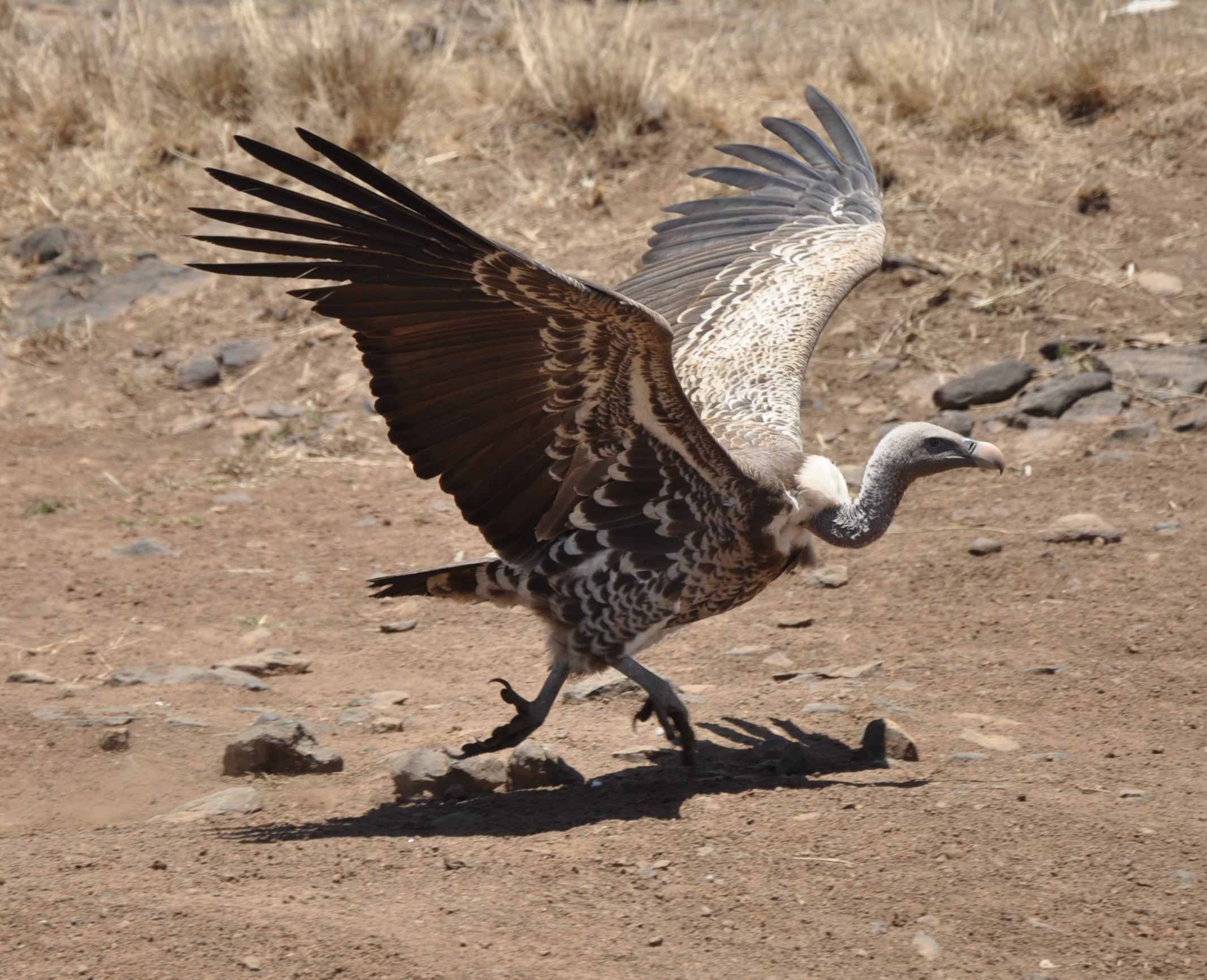
The park covers 117 square kilometers, open on three sides and fenced only along the northern boundary where the city presses closest. The southern edge remains unfenced, allowing seasonal migration of wildebeest, zebras, and other herbivores between the park and the Athi-Kapiti plains beyond. This is what makes Nairobi National Park both remarkable and vulnerable: it is not a sealed enclosure but a fragment of a larger ecosystem, one that depends on migration corridors that urban sprawl is steadily narrowing. Inside the park, the landscape is open savanna studded with acacia trees, cut by seasonal streams, and anchored by patches of highland forest. Black rhinos are the headline species, and the park supports one of Kenya's densest rhino populations. Lions, leopards, cheetahs, buffalo, ostriches, and hippos are also present. The birdlife is exceptional, with over 400 species recorded, making the park one of East Africa's premier birding sites.
Ivory in Flames
On a July day in 1989, Kenyan President Daniel arap Moi stood inside Nairobi National Park and set fire to twelve tons of confiscated elephant ivory. The pyre was worth millions of dollars, and the act was a deliberate message to the world: Kenya would not profit from poaching, and the ivory trade had to end. The event transformed Kenya's conservation image internationally and helped galvanize the global campaign that led to the ivory trade ban under CITES later that year. The burning site within the park became a landmark, and Kenya has repeated the gesture since, destroying additional stockpiles of ivory and rhino horn on the same ground. The symbolism runs deeper because of the location. This was not a remote wilderness. It was a national park inside a capital city, visible to the world's media, ten minutes from hotels and embassies. The choice of venue was as strategic as the choice to burn.
Ten Minutes from Downtown
Nairobi National Park sits off Langata Road, roughly ten minutes from the city center. The proximity makes it unique among Africa's game parks: it is a genuine half-day safari destination for travelers with limited time, and for Nairobi residents it functions as something between a nature reserve and a city park, though one where leaving your vehicle is generally not permitted. The terrain requires a four-wheel-drive or sturdy van, as the roads are unpaved and rough. Several car-hire firms offer guided day trips. The park has no accommodation inside its boundaries; visitors stay in Nairobi itself, which offers everything from backpacker hostels to international hotels. The contrast is the point. You can eat breakfast in a modern African capital, spend the morning watching rhinos and lions in open savanna with the city skyline as your backdrop, and be back for a late lunch. No other place on Earth offers that combination.
From the Air
Nairobi National Park is located at 1.37S, 36.86E on the southern edge of Nairobi, Kenya. From the air, it appears as a striking patch of green-brown savanna immediately adjacent to the dense urban fabric of Nairobi's southern suburbs. The contrast between city and wilderness is visible from any altitude. Best viewed at 2,000-4,000 feet AGL. Jomo Kenyatta International Airport (HKJK) is approximately 15 km to the east. Wilson Airport (HKNW), which handles smaller charter flights, borders the park's northwestern edge. The Nairobi-Mombasa railway and highway are visible along the eastern boundary.