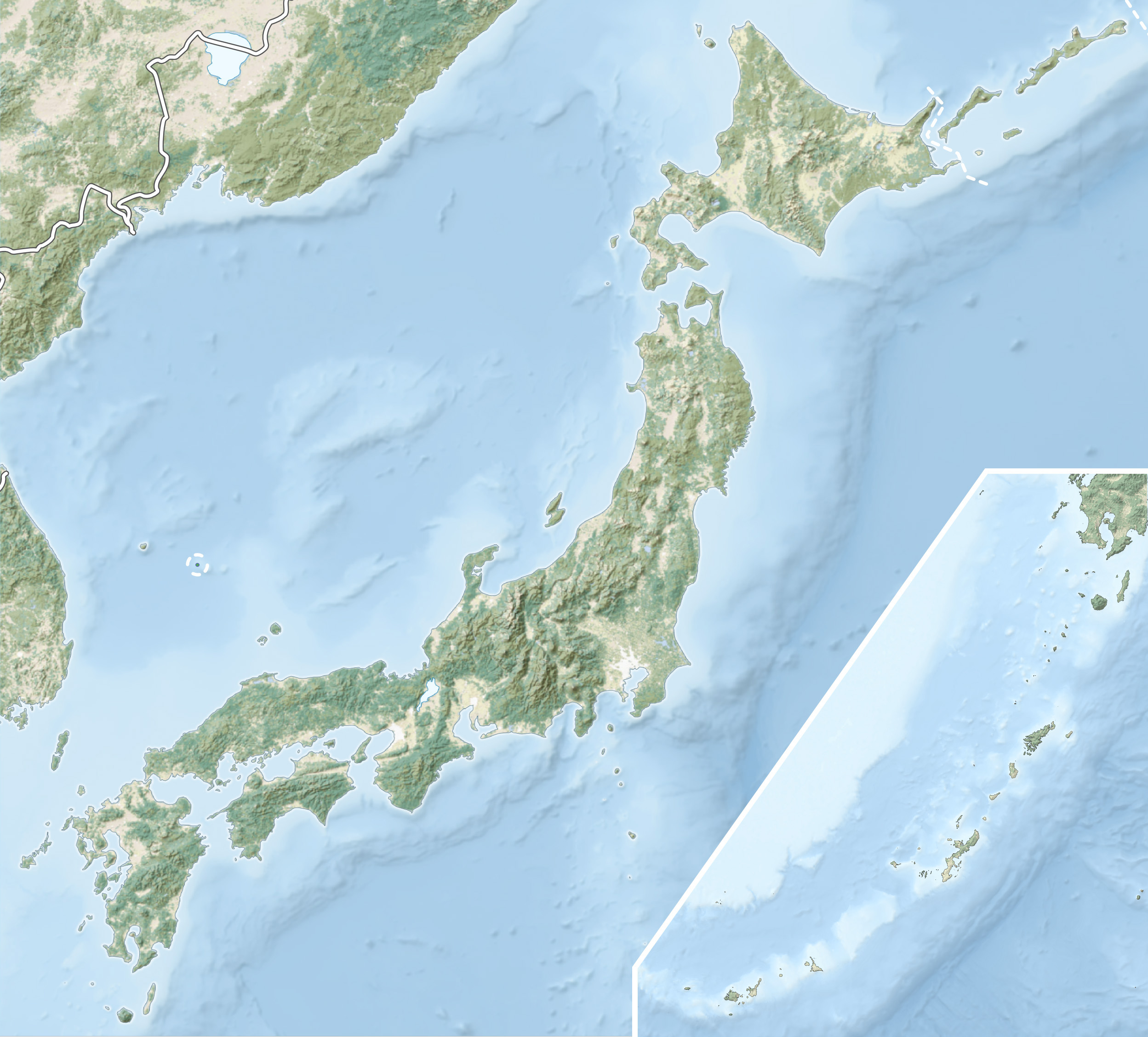
Nakazato Shell Mound
Somewhere beneath the concrete viaduct of the Tohoku Shinkansen, four and a half meters of compacted oyster shells tell a story that rewrites what we thought we knew about aquaculture. The Nakazato Shell Mound, stretching roughly one kilometer through the Kaminakazato neighborhood of Kita-ku in northern Tokyo, is not a typical archaeological site. Designated a National Historic Site of Japan in 2000, it is the largest shell midden ever discovered in the country -- and its contents suggest that the Jomon people were cultivating oysters thousands of years before the Romans claimed to have invented the practice.
When the Sea Came to Tokyo
Six thousand years ago, this stretch of northern Tokyo was coastline. Sea levels during the early to middle Jomon period ran five to six meters higher than today, and temperatures averaged two degrees Celsius warmer. The Kanto region's coast pushed far inland, and what is now urban sprawl between Akabane and Kaminoma was a wave-carved sea cliff. The Nakazato site sat just below that ancient shoreline, at the edge of a long inlet reaching into what would become Tokyo Bay. As the waters slowly receded over millennia, the inlet transformed into a wetland delta, leaving behind thick layers of peat and driftwood -- and an enormous deposit of shells from the people who had worked these waters for centuries.
A Factory, Not a Village
The 1996 excavation changed everything archaeologists assumed about the site. Diggers uncovered a shell layer four meters thick and, crucially, two shallow dish-shaped pits filled with roasted stones and lumps of oyster. These were not cooking hearths. They were industrial processing facilities: the Jomon workers would fill the pits with water, drop in fire-heated stones to bring it to a boil, and steam open massive quantities of shellfish in a single batch. Planks forming wooden walkways crisscrossed the site. Wooden stakes driven into the ground pointed to deliberate aquaculture -- the cultivation of oysters in managed beds. There were almost no traces of dwellings. This was not a settlement where people happened to eat shellfish. It was a specialized processing plant, producing dried shellfish for trade with communities deeper inland. The shell layer dates to between 4,600 and 3,900 years ago.
The Canoe and the Bullet Train
Among the most remarkable finds was a dugout canoe: 5.79 meters long, 0.72 meters wide, and shaved to just two centimeters thick at the bottom. Burn marks across its surface revealed the construction technique -- the Jomon builders scorched the wood and then scraped it with stone tools, a method that allowed precise shaping without metal implements. Dated to approximately 4,700 years ago, it is the only Jomon-period boat ever recovered in the Tokyo area. Tragically, the same excavation that unearthed these treasures was a race against the clock. Construction of the Tohoku Shinkansen in the early 1980s destroyed much of the site. Archaeologists conducted emergency digs from 1982 to 1984, salvaging what they could as the viaduct and the Shin-Tokyo Shinkansen Vehicle Center consumed the land above. Today, some of the most significant prehistoric remains in Japan lie directly beneath high-speed rail infrastructure.
Older Than Rome
The implications of Nakazato stretch well beyond Tokyo. Oyster cultivation has long been attributed to the Romans, specifically to Sergius Orata around 100 BC. But the wooden stakes and managed beds at Nakazato push that timeline back by thousands of years, to a period when the Mediterranean world had not yet developed written language. If the interpretation holds, the Jomon people of the Kanto coast were practicing systematic aquaculture more than two millennia before anyone in Europe attempted it. The site attracted scholarly attention as early as the Meiji period in the late 1800s, but the first full-scale excavation did not occur until 1958, when researchers confirmed a shell layer of Hamaguri clams and oysters more than two meters thick. Artifacts from all the excavation campaigns are preserved and displayed at the Kita Ward Asukayama Museum, a ten-minute walk from Oku Station on the JR Tohoku Main Line. What survives above ground is modest. What it represents is not.
From the Air
Located at 35.744N, 139.754E in the Kaminakazato neighborhood of Kita-ku, northern Tokyo. The site runs roughly parallel to the Tohoku Shinkansen viaduct between Kami-Nakazato Station and Tabata Station -- look for the elevated rail corridor cutting through dense residential blocks. Nearest airports: Tokyo Haneda International (RJTT) approximately 15nm south, Chofu Airport (RJTF) approximately 15nm southwest. Narita International (RJAA) lies approximately 33nm east-northeast. The site itself is not visually distinctive from the air, but the Shinkansen viaduct and nearby Oji rail junction serve as reliable landmarks. Tokyo Class B airspace restrictions apply.