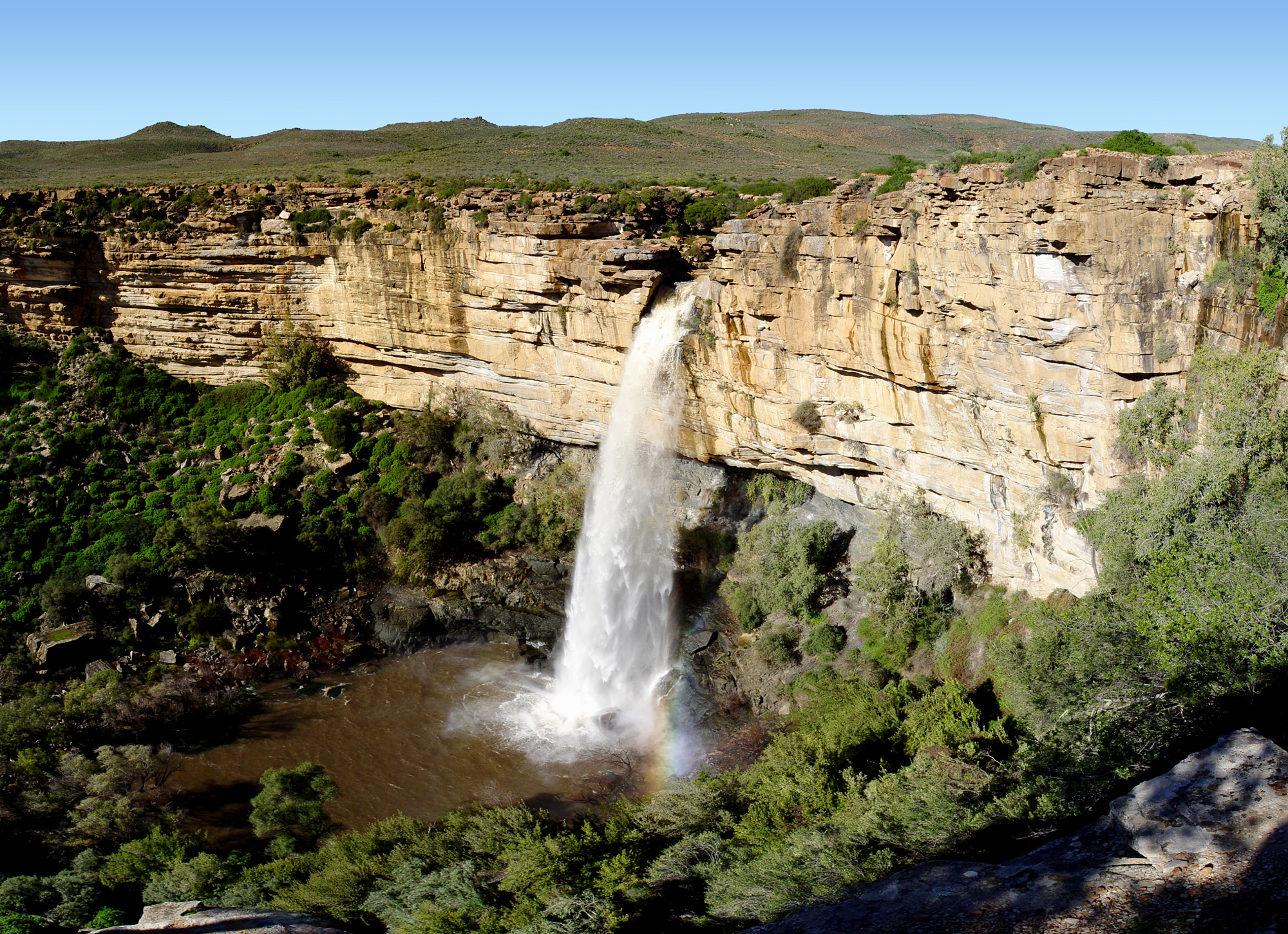
Namaqualand
Every August and September, something improbable happens in one of southern Africa's driest landscapes. The desert floor cracks open and color pours out: orange Namaqualand daisies, purple vygies, yellow bulbinellas, a carpet of wildflowers so dense and so vivid that the display is visible from space. Tourists drive hundreds of kilometers to witness it. Then the rains stop, the petals fall, and Namaqualand returns to what it is for the other ten months of the year: an austere, wind-hammered expanse of rock and sand stretching over a thousand kilometers along the Atlantic coast.
The Land of the Nama
The name tells you whose country this is. Namaqualand means "land of the Nama people" in the Khoikhoi language, and the Nama have inhabited this region for centuries, herding livestock through the semi-desert and adapting to a climate that punishes the unprepared. They are a Khoikhoi people who speak the Khoekhoe language, one of the click languages that Europeans found so difficult to transcribe. The Orange River divides the region into two halves: Little Namaqualand to the south, in South Africa's Northern Cape Province, and Great Namaqualand to the north, in Namibia's Karas Region. Together they encompass 440,000 square kilometers, an area larger than Germany and the United Kingdom combined. The Nama's history here took a catastrophic turn in the early twentieth century. Between 1904 and 1907, the German Empire carried out a genocidal campaign against the Nama and their Herero neighbors, killing approximately 50 percent of the Nama population and 80 percent of the Herero. Germany formally acknowledged this genocide in 2021.
Flowers from the Dust
The wildflower bloom is Namaqualand's most famous phenomenon, and its mechanics are remarkable. The seeds of thousands of plant species lie dormant in the soil year-round, waiting for the precise combination of winter rainfall, temperature, and day length that triggers germination. When conditions align, the result is one of the most concentrated floral displays on the planet. The flowers track the sun, opening in the morning and closing in the afternoon, so the best viewing is between 11 a.m. and 3 p.m. on clear days. The display draws visitors from around the world to towns like Springbok and Kamieskroon, which swell temporarily with botanists, photographers, and ordinary travelers stunned by the contrast between the barren landscape they drove through and the riot of color at their feet. The Goegap Nature Reserve, outside Springbok, is one of the best-protected viewing sites.
Copper, Diamonds, and the Deep Earth
Beneath Namaqualand's surface lies a geological wealth that has shaped the region's modern history. Copper mining around O'okiep dates to the mid-nineteenth century, making it one of the oldest mining districts in South Africa. At Aggeneys, 110 kilometers inland, a large mine extracts copper, lead, zinc, and silver. Along the coast, alluvial diamond deposits have driven the economies of towns like Alexander Bay and Port Nolloth, creating restricted zones where mining companies controlled access for decades. The Ai-Ais/Richtersveld Transfrontier Park, formally combined in August 2003 from separate South African and Namibian reserves, protects the mountain desert landscape carved by the Orange River through some of the oldest exposed rock on Earth. The park is a UNESCO World Heritage Site and a refuge for plants found nowhere else, including the halfmens, a tree-like succulent that Nama legend says are people turned to stone as they fled northward, forever gazing back toward the land they lost.
Holding the Land Together
Namaqualand's future is tied to how well its human inhabitants can manage the tension between extraction and preservation. Overgrazing has degraded rangelands, and climate change threatens to shift rainfall patterns in ways that could extinguish the annual flower bloom. Community-based adaptation projects, supported by organizations like Conservation South Africa, work with local farmers to develop grazing management strategies that protect both livelihoods and biodiversity. The Namakwa coastline and the banks of the Orange River draw hikers and off-road enthusiasts to trails that wind through landscapes largely unchanged since the Nama first moved their herds through them. Whether Namaqualand can sustain its ecological wealth while supporting the communities that depend on it is the defining question for this vast, quiet, occasionally dazzling corner of the continent.
From the Air
Located at 28.29S, 16.67E in the Northern Cape of South Africa, near the Namibian border. The region extends over 1,000 km along the Atlantic coast. The Orange River is a prominent landmark dividing the territory. Springbok (FASB) is the nearest significant airport. The Ai-Ais/Richtersveld Transfrontier Park is visible to the north along the river canyon. During spring (August-September), wildflower blooms may be visible as color patches from altitude. Best viewed at 5,000-10,000 ft AGL to appreciate the scale of the landscape.