Nanao Castle: The Mountain Fortress That Fell from Within
Uesugi Kenshin, the feared warlord of Echigo Province, stood before Nanao Castle in 1576 and did something he rarely did: he retreated. The massive yamajiro -- a mountain castle -- spread across the ridges and slopes of Shiroyama, a 300-meter peak overlooking what is now the city of Nanao on the Noto Peninsula. Its concentric rings of stone ramparts, dry moats, and fortified enclosures covered more than a square kilometer of terrain, each level controlled by a different vassal of the ruling Hatakeyama clan. There was no single gate to storm, no one wall to breach. Every approach forced attackers uphill through multiple layers of defense. Kenshin, who had just conquered neighboring Etchu Province, recognized an impossible fight and withdrew. He would return the following year -- but the castle's fall, when it came, had nothing to do with military force.
A Fortress Among the Five Greatest
The Hatakeyama clan began building Nanao Castle around 1408, when Hatakeyama Mitsunori was appointed governor of Noto Province. Over the next century, the fortress grew into something extraordinary. Hatakeyama Yoshifusa expanded it dramatically in the early 1500s, stretching the fortifications 2.5 kilometers from north to south and a full kilometer east to west. The design was distinctly Japanese: rather than a single towering keep, Nanao Castle consisted of dozens of enclosures arranged in concentric rings descending the mountainside. The central enclosure sat at the summit, reachable only by climbing through the compounds of the clan's most trusted retainers. Each level formed its own small fortress within the whole. This design earned Nanao Castle a place among Japan's five great mountain castles, alongside Kasugayama Castle in Niigata, Odani and Kannonji Castles in Shiga, and Gassantoda Castle in Shimane.
The Siege That Wasn't
When Kenshin returned to Noto in 1577, he first isolated Nanao Castle by reducing the branch fortifications surrounding it, cutting supply lines and communications. Then he settled in for a siege. Inside the walls, the young lord Hatakeyama Yoshitaka sent desperate appeals to Oda Nobunaga for a relief force. Nobunaga dispatched an army under Shibata Katsuie, but it would arrive too late. Yoshitaka died under mysterious circumstances during the siege -- possibly from an epidemic sweeping the cramped enclosures, possibly from assassination by poison. His chief retainer Cho Tsunatsura fought on fiercely, but Kenshin found a cheaper path to victory. He negotiated with another senior vassal, Yusa Tsugumitsu, who betrayed the Hatakeyama and opened the castle gates. The greatest mountain fortress on the Sea of Japan coast fell not to siege engines or scaling ladders, but to a whispered agreement in the dark.
Three Warlords and an Abandoned Ruin
Kenshin left Noto Province in Yusa's hands and marched south, intercepting Nobunaga's tardy relief force at the Battle of Tedorigawa in 1577 and defeating it decisively. But Kenshin died the following year, and Yusa's hold on Noto crumbled. By 1581, Nobunaga's forces had conquered the province. Yusa surrendered, but whatever offense he committed earned Nobunaga's displeasure, and he was murdered. Maeda Toshiie, one of Nobunaga's most trusted generals, was appointed lord of Noto. Toshiie had no use for a mountain fortress designed for a previous era of warfare. He built a new castle at Komaruyama, closer to the port and better suited to the changing nature of Sengoku-period combat. By 1589, Nanao Castle stood empty. The concentric rings of stone and earth that had defied Uesugi Kenshin began their slow surrender to the forest.
Stone Walls in the Trees
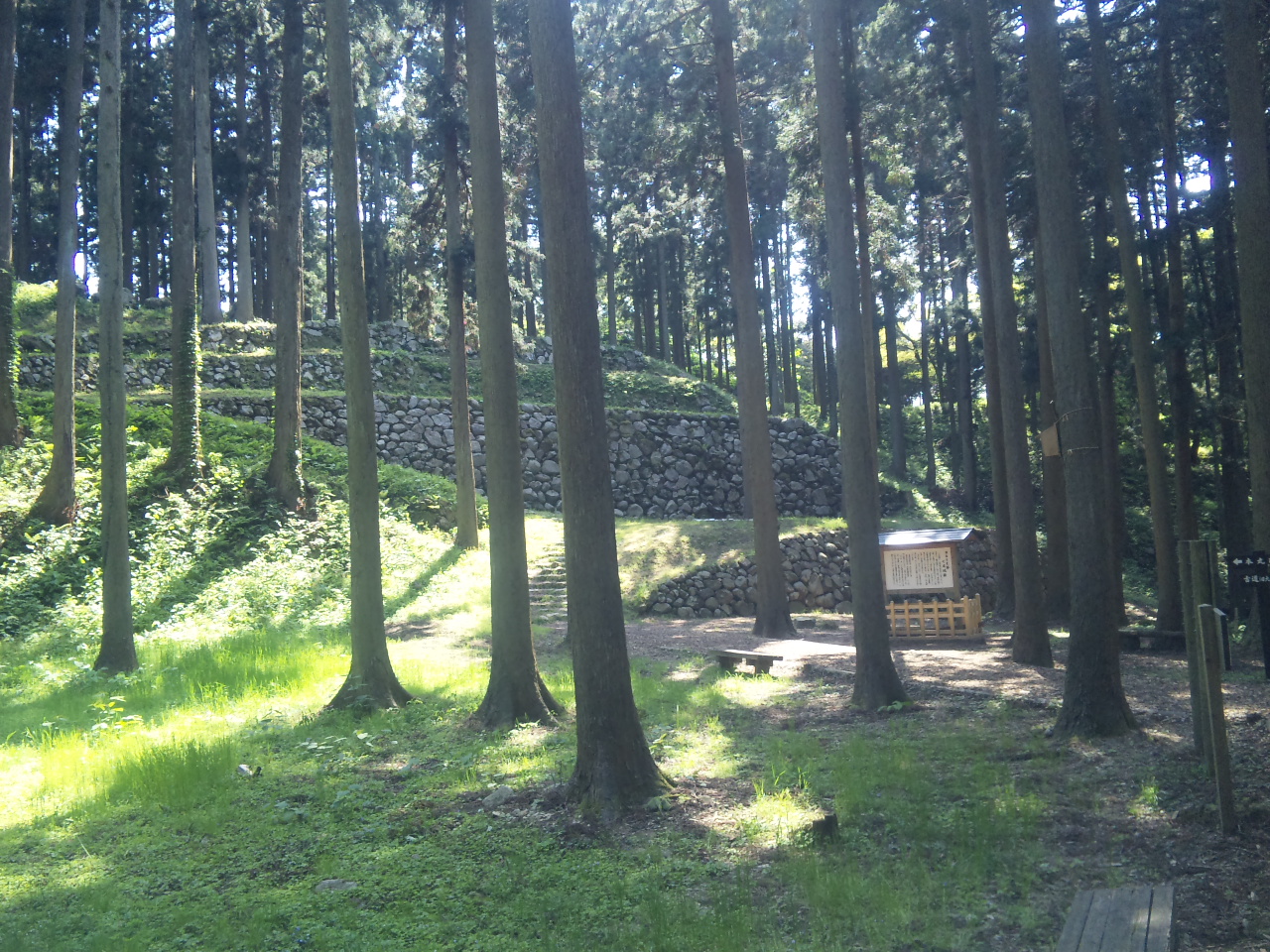
Today, Nanao Castle is ruins and forest. Stone ramparts emerge from the hillside beneath cedar and broadleaf canopy, tracing the outlines of enclosures where samurai once kept watch over Nanao Bay. The site was designated a National Historic Site in 1934 and later selected as one of Japan's 100 Fine Castles. A small museum at the base of Shiroyama tells the story of the Hatakeyama clan and the siege. Hiking trails wind through the former baileys, climbing through what were once the compounds of individual retainers -- each a small fortress in its own right, now marked by crumbling walls and interpretive signs. From the summit enclosure, the view stretches across Nanao Bay to the hills of the Noto Peninsula, the same panorama that once gave the castle's defenders their strategic advantage. The January 2024 Noto earthquake, which devastated communities across the peninsula, was a reminder that this landscape remains as dynamic and unpredictable as the history played out across it.
From the Air
Located at 37.0089°N, 136.9841°E on the slopes of Shiroyama mountain, south of the modern city center of Nanao. The forested mountain and its ruins are visible at lower altitudes as a distinct wooded hill rising above the coastal plain. Best viewed at 2,000-4,000 feet AGL approaching from the north over Nanao Bay. Noto Satoyama Airport (RJNW) lies approximately 30 nautical miles to the north-northeast on the outer peninsula. Komatsu Airport (RJNK) is approximately 50 nautical miles to the southwest along the Ishikawa coast. The bay setting and surrounding terrain are distinctive landmarks for orientation.