Nanchan Temple
The oldest wooden building in China survived because nobody important knew it existed. In 845 AD, Emperor Wuzong of Tang launched a sweeping persecution of Buddhism, ordering the destruction of thousands of temples and monasteries across the empire. Tens of thousands of monks and nuns were forced to return to secular life. But high in the mountains near the town of Doucun on Mount Wutai in Shanxi Province, a modest three-bay hall built just 63 years earlier escaped the purge entirely. The Great Buddha Hall of Nanchan Temple, constructed in 782 AD, was too remote and too insignificant for the emperor's enforcers to bother with. That obscurity preserved it for 1,244 years and counting.
Rediscovery and Recognition
Nanchan Temple's Great Buddha Hall spent more than a millennium in the mountains before the modern world found it. In the 1950s, architectural historians surveying China's ancient buildings identified the hall and, in 1961, it was officially recognized as the oldest standing timber-frame building in the country. An inscription on one of the beams confirmed its construction date of 782 AD, during the Tang dynasty. A second inscription recorded a renovation in 1086 under the Song dynasty, when all but four of the original square columns were replaced with round ones. Then in 1966, an earthquake damaged the building, and the subsequent restoration gave scholars an extraordinary opportunity: the chance to study a Tang dynasty structure piece by piece, documenting every joint, bracket, and beam.
Humble Architecture, Profound Significance
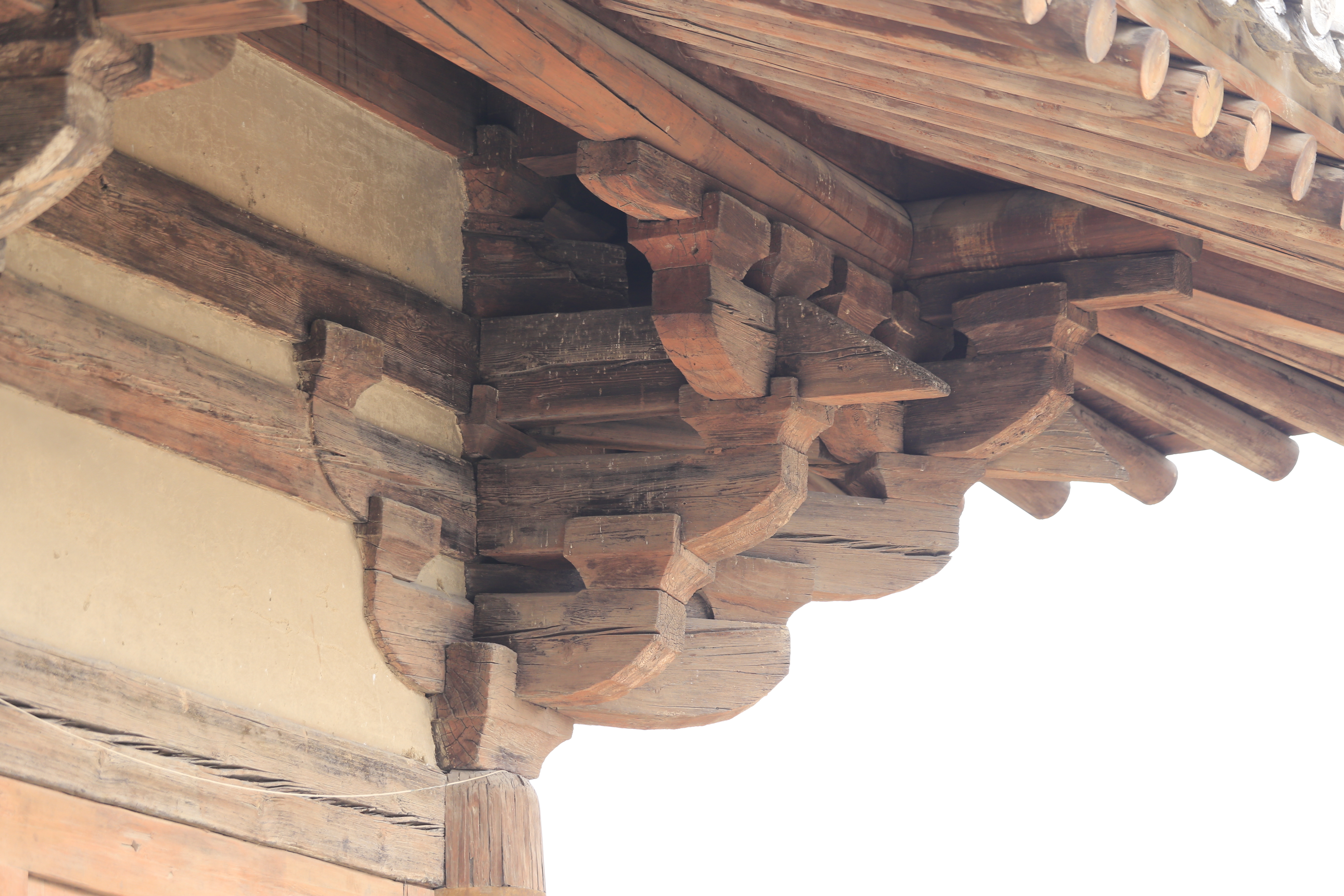
The Great Buddha Hall is not a grand building. It measures just 11.75 meters across and 10 meters deep, a three-bay square hall with a hip-gable roof supported by twelve pillars planted directly into a brick foundation. There is no ceiling, no interior columns, no struts between the outer columns -- features that mark it as a low-status structure in the Tang architectural hierarchy. But these very limitations make it invaluable. The hall preserves Tang dynasty construction techniques in their most unadorned form: the longer central front bay, camel-hump braces, five-puzuo bracket sets, and a yuetai platform. Every detail is a primary source document in wood, recording how Chinese builders worked twelve centuries ago.
Tang Dynasty Sculptures Under Threat
Alongside the architectural structure, Nanchan Temple houses seventeen original Tang dynasty sculptures arranged on an inverted U-shaped dais. The central figure is a cross-legged Sakyamuni Buddha seated on a sumeru throne decorated with sculpted lions and demigods, his massive halo adorned with lotus flowers and celestial beings. Flanking statues include bodhisattvas, Samantabhadra riding an elephant, Manjushri on a lion, two of the Buddha's disciples, heavenly kings, and attendants. The hall also contains a small Northern Wei stone pagoda carved with Buddhas on every surface. Not all of these treasures survived the modern era intact. Three of the original Tang sculptures were stolen in 1999, and the stone pagoda was taken in 2011. None have been recovered -- a reminder that the threats to ancient sites come not only from emperors and earthquakes but from thieves.
Taken Apart and Put Back Together
The 1974 restoration of Nanchan Temple was an extraordinary undertaking. Defined by the Chinese term Luo-Jia-Chong-Xiu -- roughly meaning to disassemble the entire structure and reassemble it -- the project required removing every component, repairing or replacing damaged elements, and rebuilding the hall according to its original Tang dynasty design. Weathered columns were reinforced with traditional metal hoops and experimental epoxy resin injections. Scholars removed a dwarf pillar that later dynasties had added, revealing the original Tang-era diagonal support called Cha-Shou. The eave rafters, which had been trimmed during previous restorations, were extended back to their original length based on the dimensions of the platform. Most controversially, the team removed a brick facade of arched windows and doors -- a later addition, since bricks were uncommon in Tang construction -- and restored the original wooden facade using the nearby Foguang Temple as a guide.
From the Air
Located at 38.70N, 113.11E near Doucun on Mount Wutai, Shanxi Province. The temple sits in mountainous terrain at moderate elevation. Nearest airport is Xinzhou Wutaishan Airport (ZBXZ). The nearby Foguang Temple, also a Tang dynasty site and UNESCO World Heritage component, is roughly 20 km to the northeast. Approach with care in mountainous conditions; the temple's small size makes it difficult to spot from high altitude.