Nanluoguxiang
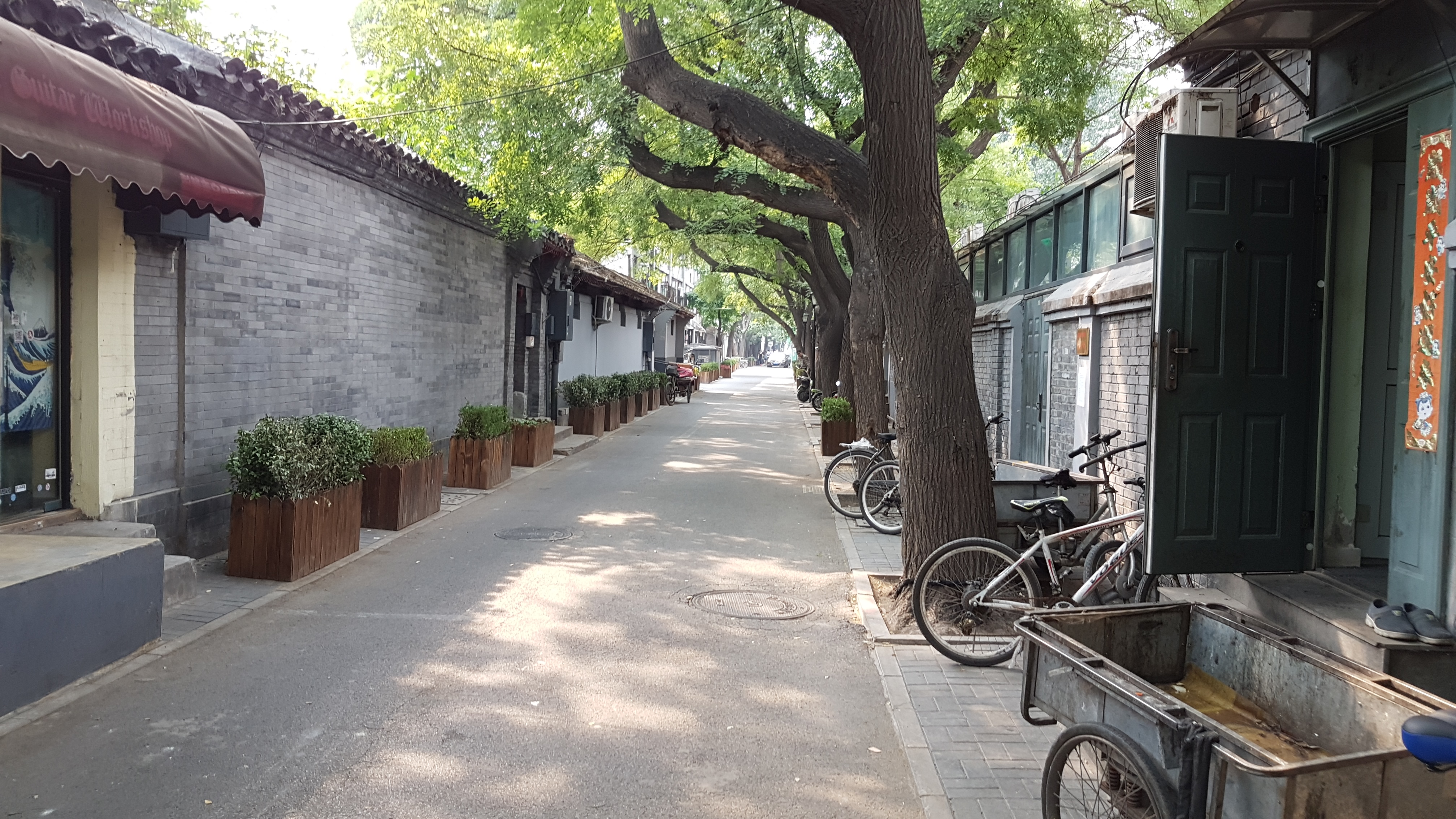
Walk 800 meters from Gulou East Street to Di'anmen East Street and you will have passed through roughly seven centuries of Beijing. Nanluoguxiang is a narrow alley in the Dongcheng district, but the name applies loosely to an entire neighborhood of hutongs, the traditional narrow lanes that once defined the city's residential fabric. Built during the Yuan Dynasty and given its current name around 1750 under the Qing, this is one of the few areas in central Beijing where the old street pattern survives largely intact, a lattice of alleys branching off a central spine, each one a few meters wide and lined with the gray brick walls of siheyuan courtyard homes.
Layers Behind the Walls
The hutongs branching off Nanluoguxiang are not merely old streets. They are archaeological cross-sections of Beijing's social history. Behind the gray walls, siheyuan courtyard homes once housed families of varying status, their size and decoration calibrated to the occupant's position in the imperial hierarchy. Some of these courtyards are associated with famous historical and literary figures, their names inscribed on plaques that visitors often photograph without fully understanding the significance. A siheyuan is organized around a central courtyard, with rooms arranged on all four sides according to strict conventions about orientation, hierarchy, and family structure. The south-facing main room traditionally belonged to the head of the household, while children and servants occupied the wings. Each courtyard was a self-contained world, inward-looking and private, its entrance marked by a pair of red doors with brass fittings that communicated the family's status to the street.
The Transformation
For most of the twentieth century, Nanluoguxiang was simply a neighborhood. Its hutongs housed ordinary families in courtyards that had been subdivided and overcrowded as Beijing's population grew. The alley itself was unremarkable, a local street for local purposes. The transformation began in the early 2000s, when a combination of historic preservation efforts and entrepreneurial energy turned the main alley into a destination. Restaurants, bars, live music venues, coffee shops, and souvenir stores opened in converted courtyard buildings along the 800-meter stretch. The Beijing Subway's Nanluogu Xiang station, which opened in 2012, made the neighborhood accessible to visitors from across the city. What had been a quiet residential lane became one of Beijing's most visited streets, a development that brought economic vitality and tourist congestion in roughly equal measure.
Navigating the Side Streets
The real character of Nanluoguxiang lives not on the main alley, which on busy days can feel like a pedestrian highway, but in the side hutongs that branch off it. These narrower lanes remain largely residential. Elderly residents sit in doorways. Bicycles lean against walls. Laundry dries on lines strung between buildings. The contrast between the commercial main street and the quieter side alleys illustrates a tension that runs through much of Beijing's historic preservation: how to attract visitors without destroying the qualities that make a place worth visiting. Some of the side hutongs contain small temples, including the Guanghua Temple, one of several Buddhist sites that survive in Beijing's old neighborhoods. Others open unexpectedly into small squares or dead-end at courtyard gates that have been locked for decades. Getting lost in these alleys is easy and, in most cases, the point.
Old Pattern, New City
From above, the hutong pattern of Nanluoguxiang is visible as a fine gray texture in the urban fabric, distinct from the larger blocks and wider streets that characterize modern Beijing. The central alley runs north-south, with side hutongs extending east and west in a pattern that mirrors the Yuan Dynasty grid on which the neighborhood was originally platted. This is one of the few places in Beijing where that medieval urban plan remains legible, the narrow lanes following paths that were laid out when Kublai Khan's capital was young. The neighborhood sits between the Drum Tower to the north and the old imperial city to the south, positioned on the seam between Beijing's ceremonial center and its residential quarters. That location, at the boundary between the formal and the domestic, gives Nanluoguxiang its essential character: a place where monumental and intimate scales meet, where you can see the Drum Tower at the end of a lane barely wide enough for two people to pass.
From the Air
Located at 39.94°N, 116.40°E, in the Dongcheng District north of the Forbidden City. The hutong pattern is visible from low altitude as a fine grid of narrow lanes distinct from surrounding modern blocks. Best viewed at 2,000-3,000 feet. Nearest airport: Beijing Capital International (ZBAA), approximately 22 km northeast.