Mahogany, Merlot, and the Meal That Moves
The man who brought the Wine Train to Napa Valley was Vincent DeDomenico, and before he was a railroad entrepreneur, he invented Rice-A-Roni. That detail matters because it captures something essential about the Wine Train itself: it is unapologetically commercial, cheerfully nostalgic, and far more interesting than its detractors have ever been willing to admit. When DeDomenico's company acquired the old Napa Valley Railroad right-of-way for $2.5 million in 1987, the tracks hadn't carried passengers in years. Southern Pacific had abandoned the line, and twenty million dollars in rehabilitation stood between the rusty rails and a functioning railroad. What DeDomenico envisioned was simple -- vintage dining cars rolling through vineyards, passengers eating and drinking their way from Napa to St. Helena and back. What he got was a legal war, a community revolt, and eventually, one of California's most distinctive tourist attractions.
A Train Nobody Wanted
The opposition to the Wine Train was fierce and, in its way, sincere. Residents along the route objected to the noise and diesel exhaust of a working rail line reactivated in their backyards. City governments worried that the train would funnel even more tourists into a valley already straining under the weight of its own popularity. Opponents persuaded the state Public Utilities Commission to demand compliance with the California Environmental Quality Act, a regulatory gauntlet designed to slow or stop the project. The case went all the way to the Supreme Court of California, which ruled 4-3 on March 19, 1990, that the PUC had no authority to impose CEQA requirements on a rail line that had never technically gone out of use. The legal distinction was narrow -- the gap between Southern Pacific's last freight run and the Wine Train's first passenger trip was not long enough to constitute abandonment. It was enough. The train survived.
Rolling Stock with a Past
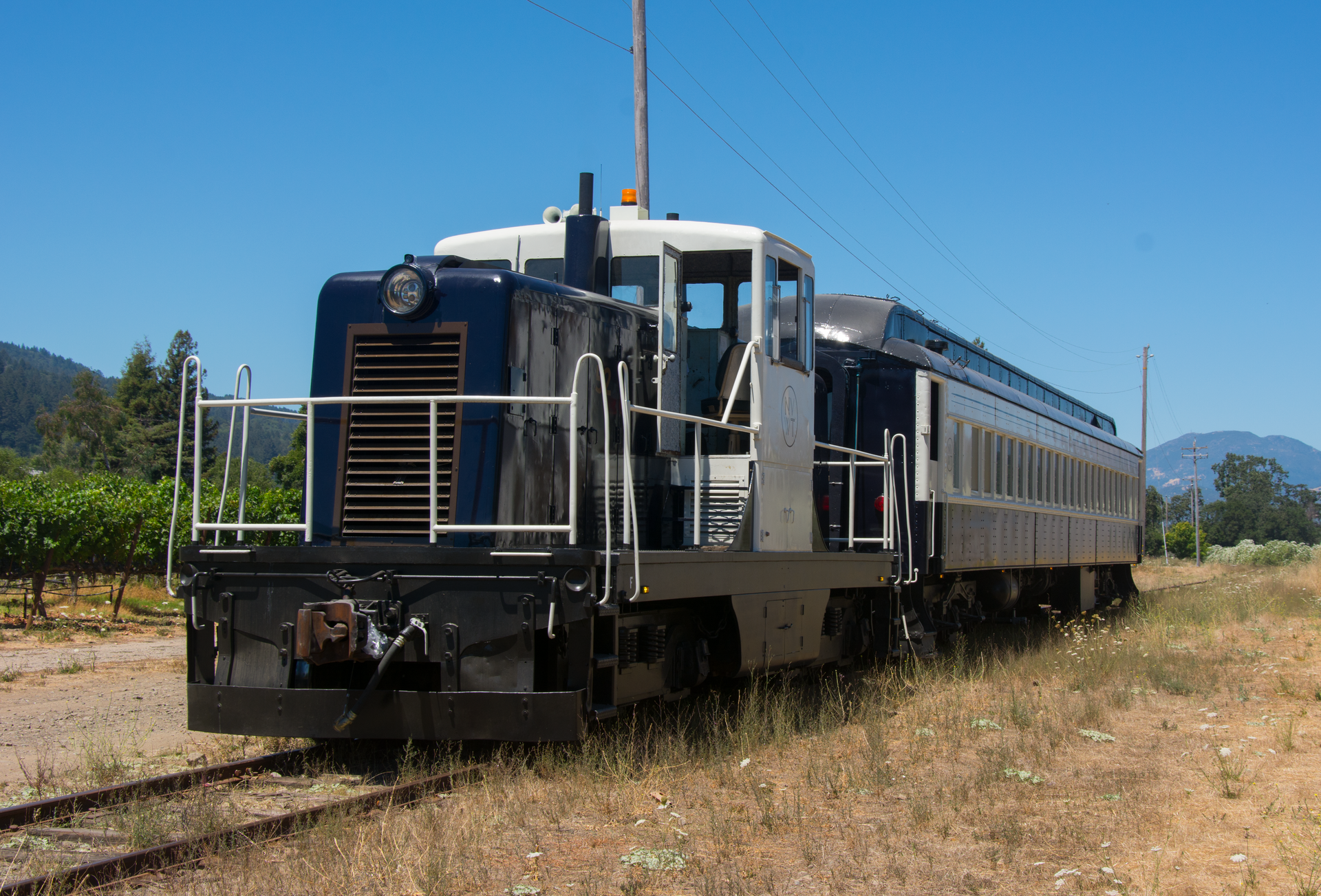
The Wine Train's nine passenger cars were built by the Pullman Company in the early 1900s for the Northern Pacific Railroad. They spent decades hauling travelers across the American West before being sold to the Denver and Rio Grande Western Railroad in 1960, where they served as the Ski Train between Denver and Winter Park, Colorado. When the NVRR purchased them in 1987, the cars needed more than cosmetic work. Crews added air conditioning and poured four inches of concrete into the floors to stabilize the ride at the train's deliberate crawl through the vineyards. The interiors were remodeled in Honduran mahogany and plush fabrics. In 1997, the railroad added a Super Dome car originally built in 1952 for the Milwaukee Road, a car that had logged more than a million miles before retirement. Its exterior was rebuilt at the Ringling Bros. and Barnum & Bailey Circus train repair yard in Palmetto, Florida -- perhaps the only dining car in America that owes part of its existence to circus mechanics.
Laughing While Black
On August 22, 2015, the Wine Train became the center of a national conversation about race. An eleven-member book club called Sisters on the Reading Edge -- ten African American women and one white woman, ages 39 to 85 -- was removed from the train for laughing too loudly. The Wine Train's initial Facebook post accused the group of "physical and verbal abuse towards other guests and staff," a characterization later retracted as "incorrect" by a crisis communications expert the company hired two days later. The hashtag #laughingwhileblack spread across Twitter. A reporter who had been on the train expressed dismay at the ejection. Two book club members lost their jobs as fallout from the publicity. The group filed an $11 million lawsuit that settled in April 2016 for an undisclosed sum. The incident forced a reckoning not just for the Wine Train but for Napa Valley itself -- a region whose wealth and exclusivity had long been inseparable from questions about who felt welcome there.
Twenty-Five Miles of Vines
The route runs along State Route 29, passing through Yountville, Oakville, and Rutherford before reaching St. Helena -- a procession through some of the most valuable agricultural land in the world. The Napa Valley AVA produces wines that regularly fetch hundreds of dollars per bottle, and the vineyards visible from the train's dome car represent billions of dollars in real estate. Following DeDomenico's death in 2007, his family sold the railroad to Noble House Hotels & Resorts in 2015. The new owners announced plans for a 148-room, five-story hotel on the railroad's downtown Napa property on McKinstry Street. As of 2023, the railroad has begun modernizing its locomotive fleet, replacing older diesels with two Tier 4 engines built by Knoxville Locomotive Works. The first entered service in November 2023. The tracks still connect to the Union Pacific Railroad and California Northern Railroad, and there have been periodic studies about adding commuter service to the line -- though a 2012 business plan revealed the service would need over a million riders annually to break even. For now, the Wine Train remains what DeDomenico intended: a meal that moves.
From the Air
Located at 38.302N, 122.284W in downtown Napa, with the route extending north-northwest approximately 25 miles to St. Helena paralleling State Route 29. The rail line is visible from altitude as a narrow corridor running through the vineyard-covered valley floor between the Mayacamas and Vaca mountain ranges. Napa County Airport (KAPC) lies approximately 5 nautical miles south of the downtown depot. Recommended viewing altitude: 3,000-5,000 feet AGL to appreciate the full route through the valley. The train itself may be spotted as a short consist moving slowly through the vineyards, particularly on weekends.