Nariai-ji
A starving monk, alone on a mountainside in the winter of 704, broke the most fundamental of Buddhist prohibitions. He ate meat. According to the Konjaku Monogatari, the medieval collection of tales, the monk had prayed desperately to Kannon Bosatsu for salvation. A dead deer appeared at his door. He carved a haunch, roasted it, and survived the night. But when dawn came, the remains of his meal had turned to wood chips, and a large piece was missing from the thigh of the temple's statue of Kannon. The deity had given its own body to save him. This story, whether believed literally or understood as parable, has drawn pilgrims up the slopes of Mount Tsuzumigatake to Nariai-ji for over thirteen hundred years.
The 28th Prayer on the Road
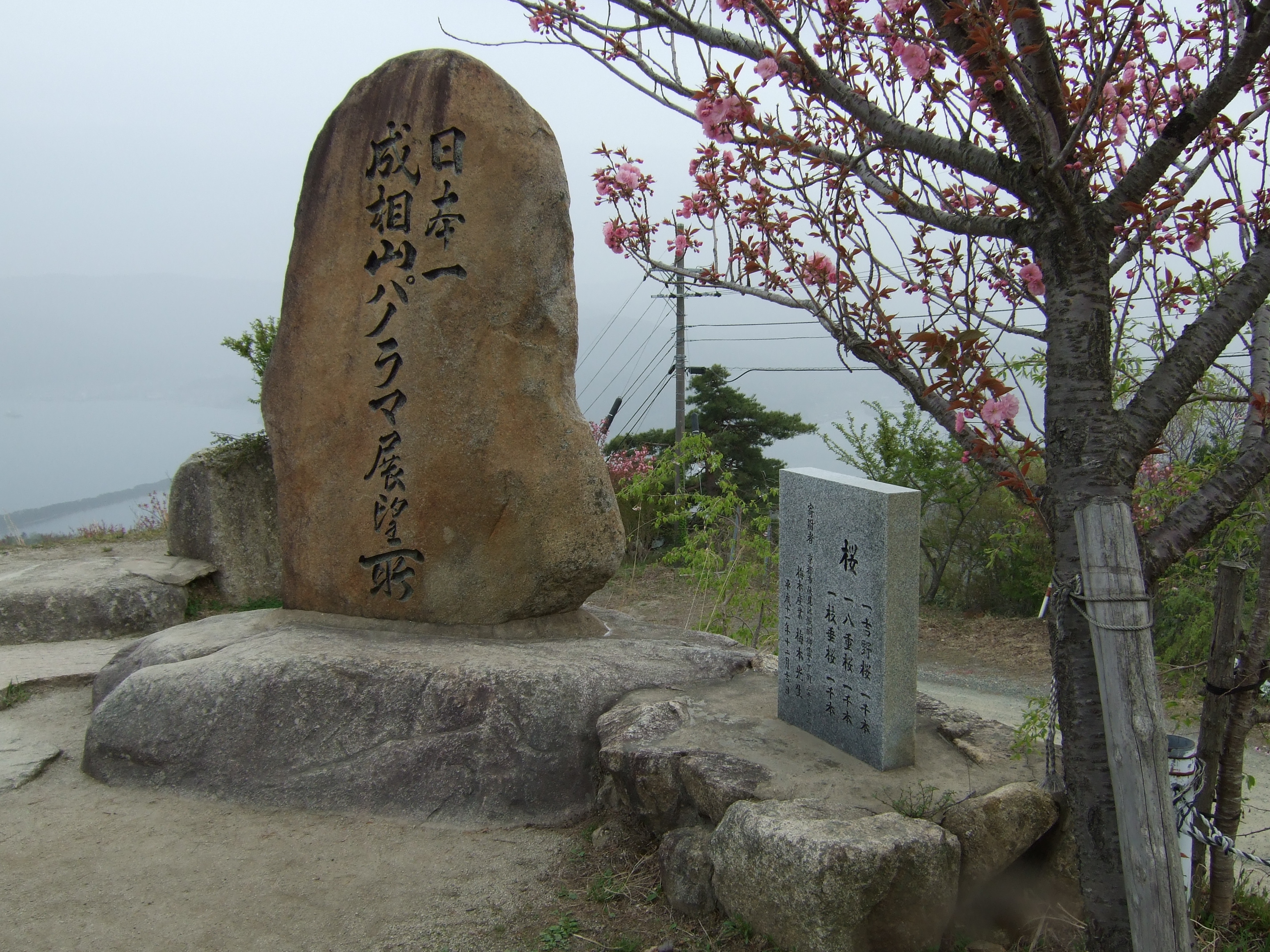
Nariai-ji is the 28th temple on the Saigoku Kannon Pilgrimage, a circuit of 33 temples dedicated to the bodhisattva of compassion that winds through western Japan. The route is one of the oldest pilgrimage trails in the country, established during the Heian period, and completing it is said to atone for all sins and guarantee rebirth in the Pure Land. The temple sits at an elevation of 328 meters on the southeastern slope of Mount Tsuzumigatake, which rises to 569 meters above sea level. From the temple grounds, pilgrims look down upon Amanohashidate, the pine-covered sandbar that stretches across Miyazu Bay and ranks among Japan's three most celebrated scenic views. The combination of spiritual purpose and natural grandeur has made Nariai-ji one of the most visited stops on the entire pilgrimage.
A Statue Seen Once in a Lifetime
The temple's honzon, or primary sacred image, is a statue of Sho-Kannon Bosatsu dating from the Heian period. It is classified as a hibutsu, a hidden Buddha, meaning it is kept sealed away from public view. At Nariai-ji, the statue is revealed only once every 33 years, a cycle that mirrors the number of temples on the Saigoku Pilgrimage and the number of forms Kannon is believed to assume when appearing to those in need. The last public showing was in 2005. The secrecy is not mere tradition but an active spiritual practice: the act of concealment generates reverence, and the rare unveiling transforms a routine temple visit into a once-in-a-lifetime encounter. For most visitors, the statue of Kannon remains invisible, its power residing entirely in the knowledge that it exists behind the sealed doors.
Mountain Monks and Sliding Earth
According to tradition, the temple was founded in 704 by a monk named Shin'no during the reign of Emperor Mommu. In its early centuries, Nariai-ji sat higher up the mountain and served as a training center for practitioners of Shugendo, the ascetic mountain religion that blends Buddhist, Shinto, and Taoist practices. There is no reliable historical documentation of this early period, but the temple's mountain location and associations with extreme spiritual discipline are consistent with Shugendo practice. In 1400, a landslide forced the temple to relocate to its current position lower on the slope. The move preserved the temple but severed its connection to whatever structures and sacred geography had accumulated above.
Painted by Sesshu, Rebuilt by the Faithful
Nariai-ji appears in one of the most celebrated paintings in Japanese art: Sesshu's 'Amanohashidate Map,' a panoramic landscape now designated a National Treasure and housed in the Kyoto National Museum. In the painting, the temple is inscribed as 'Senosan Josho-ji,' an alternate historical name. The current Main Hall dates to 1774, a reconstruction that preserved the temple's footprint after earlier structures were lost. In 2005, the same year the hidden Kannon was last unveiled, a five-story pagoda was added to the temple grounds, a modern addition that nonetheless follows traditional architectural forms. Two years later, in 2007, the temple made the unusual decision to separate from the Koyasan Shingon sect, one of the most established Buddhist lineages in Japan, and establish its own Hashidate Shingon sect, named for the famous sandbar visible from its grounds.
Treasures Above the Clouds
The temple's cultural properties span nearly a thousand years. Three items from the Kamakura period hold designation as National Important Cultural Properties, including artifacts from the temple's sutra mound. Kyoto Prefecture has designated additional items as Tangible Cultural Properties, among them works from the Muromachi and Edo periods and a collection of 591 volumes of sutras with origins stretching back to the Southern Sung dynasty in China, catalogued from 1394. The temple precincts were designated a National Historic Site in 2016, and in April 2017, the site received Japan Heritage designation as part of the Tango Chirimen Corridor project, which celebrates the silk textile culture of the region. From the temple observatory, the view stretches across the treetops and down to Amanohashidate far below, the pine trees along the sandbar reduced to a thin green thread between sky and water. The temple sits approximately 11 kilometers north of Amanohashidate Station on the JR West Miyazu Line.
From the Air
Nariai-ji sits at 35.5954N, 135.1874E on the southeastern slope of Mount Tsuzumigatake (569m) above Miyazu Bay, Kyoto Prefecture. From the air, the temple complex is visible among the forested slopes above Amanohashidate, the iconic pine-covered sandbar stretching across the bay below. The five-story pagoda added in 2005 is a useful visual marker. The nearest airport is Tajima Airport (RJBT), approximately 60 km to the west. Recommended viewing altitude: 3,000-5,000 feet for the dramatic perspective of the temple perched above one of Japan's three great views. The steep terrain of Mount Tsuzumigatake rises sharply from the coast, creating impressive relief visible from multiple angles.