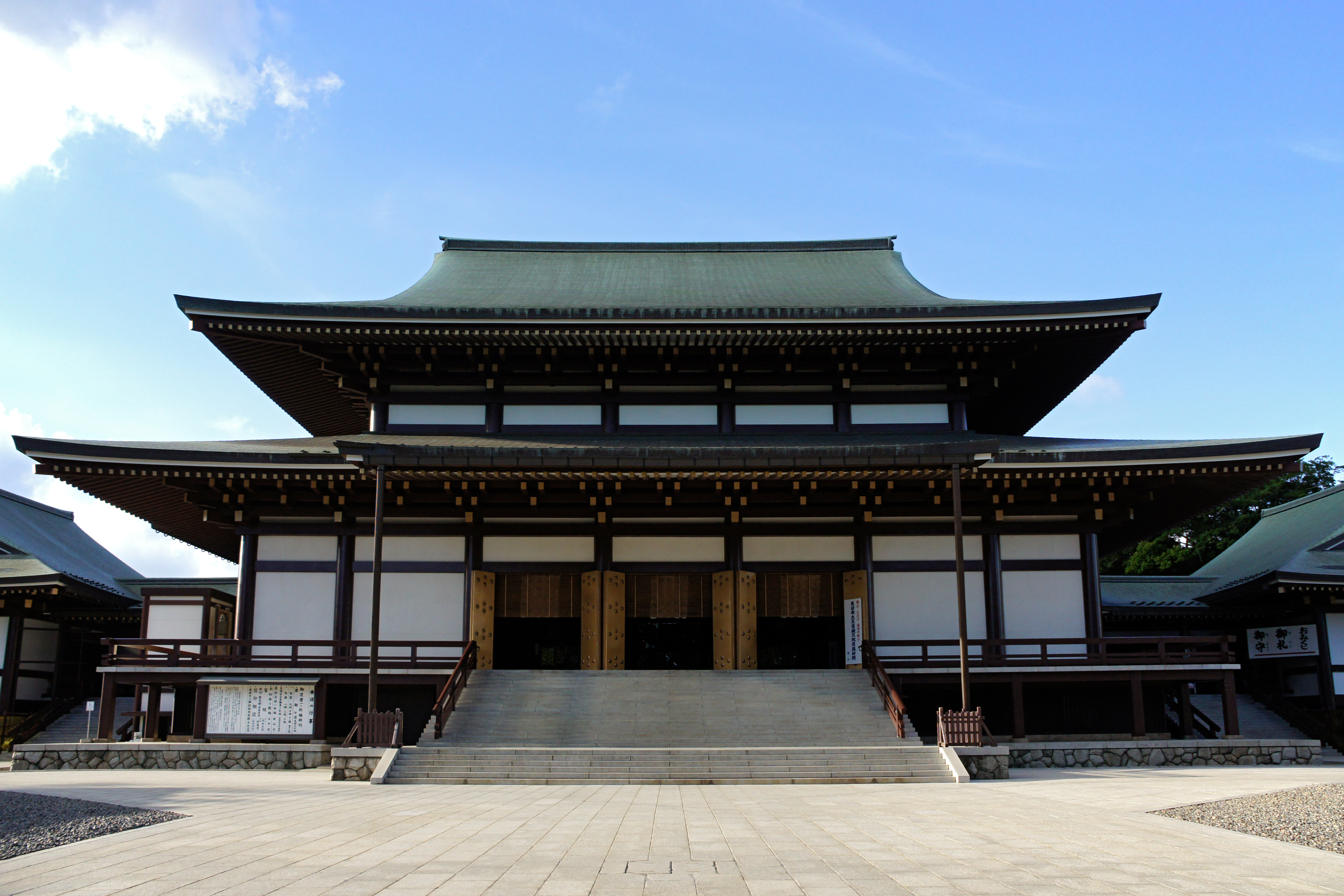
Narita-san
The statue refused to move. That, at least, is how the story goes. In 940 AD, after a Shingon priest named Kancho completed a three-week sacred fire ritual to help crush a samurai rebellion, he tried to carry his carved image of Acala -- the Unmovable Wisdom King, fierce and flame-haloed, gripping sword and rope -- back to Kyoto. But the figure had become impossibly heavy. It would not be lifted. So they built a temple around it instead, naming it Shinsho-ji, the New Victory Temple, on the hillside known as Narita-san. More than a thousand years later, that temple complex sprawls across central Narita in Chiba Prefecture, one of the most visited Buddhist sites in the Kanto region, drawing millions of pilgrims and tourists each year to a place that began with a legend about a deity who planted himself and stayed.
Born from Rebellion
The temple's origins are inseparable from war. Taira no Masakado, a powerful Kanto samurai, had launched a revolt against the imperial court in Kyoto. Forces were dispatched from the Heian capital to suppress him, and the priest Kancho Daisojo accompanied the expedition carrying an image of Acala from the Fire Offering Hall of Takao-san Jingo-ji. This was no ordinary carving -- tradition holds that Kobo Daishi himself, founder of the Shingon sect, had sculpted the image and employed it in Goma fire rituals that quelled an earlier rebellion. When Kancho performed the same rites and Masakado's revolt collapsed, the supernatural authority of the statue was confirmed. The temple built to house it became a symbol of divine protection and military triumph, its very name -- New Victory -- a declaration etched into its identity.
Six Centuries in Obscurity
For over 600 years after its dramatic founding, Narita-san remained a remote, humble provincial temple. That changed in 1603 when Tokugawa Ieyasu moved the national capital to Edo, modern-day Tokyo. Ieyasu credited the temple's abbot with converting him to Buddhism and assigned the local Sakura Domain daimyo to oversee its care. The temple's location also held strategic spiritual significance: it guarded the unlucky northeast approach to Ieyasu's new capital, mirroring the position of the great Tendai temple Enryaku-ji relative to the old Heian capital of Kyoto. Still, shogunal support was slow to materialize. It was not until 1655 that Tokugawa Ietsuna reconstructed the Main Hall -- a building that survives today as a calligraphy classroom, a quiet echo of Kobo Daishi's legendary brushwork.
The Kabuki Connection
The figure who truly transformed Narita-san from provincial shrine to national pilgrimage destination was not a shogun but an actor. Ichikawa Danjuro I, one of the most celebrated kabuki performers of his era, was born into a merchant family with ties to the Narita area. A devout Buddhist, Danjuro credited the fire deity Fudo Myoo at Shinsho-ji with the safe birth of his son Kuzo in 1688. That son made his stage debut in 1697 portraying Fudo with such ferocity that the audience began offering prayers as if before an actual temple deity. In 1703, Danjuro I wrote and starred in a play about the Fudo of Narita, timing its premiere to coincide with a traveling exhibition of sacred images from the temple in Edo. His immense popularity fused kabuki stardom with religious devotion, and commoners of every class began making regular pilgrimages from Edo to Narita-san. Celebrity endorsement, it turns out, is not a modern invention.
Layers of Sacred Architecture
The temple complex today is a layered record of centuries. Several structures carry designation as National Important Cultural Properties: the Komyo-do, built in 1701 and dedicated to Vairocana, the principal Buddha of Shingon; the three-storied pagoda, 25 meters tall, completed in 1712; the Niomon main gate from 1830; the Shaka-do from 1858; and the Gaku-do from 1861. The Kaizan-do shrine honoring founder Kancho was built in 1938, just in time for the temple's thousandth anniversary. Narita-san Park, covering 16.5 hectares, opened in 1928 and draws visitors for ume blossom viewing in early spring and autumn foliage in late fall. The current Great Main Hall dates from 1968, and several times daily, wooden amulets burn in Goma fire rituals that carry forward a tradition unbroken since the tenth century.
Gateway Shrine
Since Narita International Airport opened as Japan's primary international hub in the late 1970s, the temple has become something it never was in the centuries of Edo pilgrimages: a first impression. Transit passengers with long layovers make the short trip into town, walking the traditional approach street lined with shops selling rice crackers and eel, and find themselves at a complex where fire rituals have burned continuously for over a millennium. The major festivals still draw enormous crowds: Oshogatsu in January, Setsubun in February, taiko drums in April, firelit Noh performances in May, the Gion Festival in July, Obon in August. For many international visitors, Narita-san is the first Japanese temple they ever enter, a site where the ancient and the incidental overlap -- a thousand-year-old pilgrimage destination that happens to sit minutes from the runway.
From the Air
Located at 35.786°N, 140.318°E in central Narita, Chiba Prefecture. The temple complex is approximately 3 km east of Narita International Airport (RJAA). From the air, the extensive temple grounds and 16.5-hectare park are visible as a densely wooded area within the urban fabric of Narita city. Best viewed at 2,000-3,000 feet on approach to or departure from RJAA. The traditional approach street (Omotesando) runs from Keisei Narita Station to the temple, visible as a distinct corridor through the urban area.