Naryn Castle, Meybod
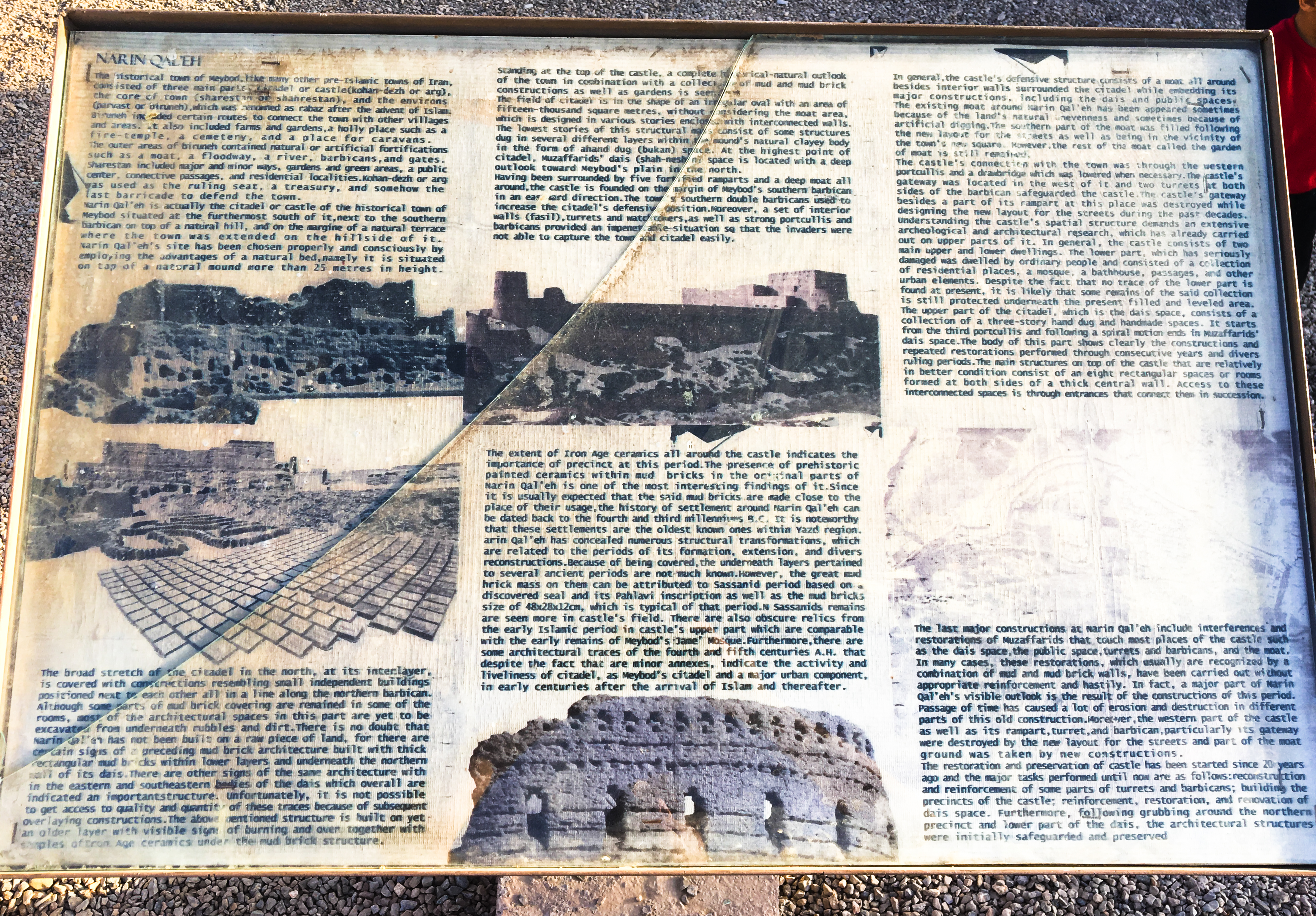
Nobody knows exactly how old Naryn Castle is. Estimates range from 2,000 to 6,000 years, a spread so wide it essentially means scholars are guessing. What they do know is this: the mud-brick citadel rising 40 meters above the town of Meybod contains engineering that should not exist in a structure of its apparent age -- a plumbing system built from sarooj, a waterproof mortar, threaded through its massive walls. Helical staircases spiral upward to a rooftop terrace. Underground chambers tunnel beneath the foundations. The castle is either younger than it looks or far more sophisticated than anyone expected.
Forty Meters of Mud and Mystery
Naryn Castle dominates the skyline of Meybod, a town in Yazd province on the edge of Iran's central desert. The structure rises 40 meters -- roughly 130 feet -- from its base, all of it constructed from mud-adobe brick. Four towers anchor the compound's corners, and a large gate opens into a central courtyard. The castle was built upward in layers, with varying sizes of mud bricks suggesting that construction spanned multiple historical periods. Some of the oldest bricks show characteristics associated with the Medes, the pre-Persian empire that controlled western Iran before the 6th century BC. Other sections bear the hallmarks of Achaemenid and Sassanid construction. The citadel, in other words, was not built once. It was built and rebuilt over millennia, each era adding its own layer to the growing tower.
Plumbing Before Plumbing
The most surprising feature of Naryn Castle is its water system. Built into the thick walls, a network of channels and conduits made from sarooj -- a traditional Iranian waterproof mortar composed of slaked lime, clay, sand, ash, and organic binders such as egg whites and animal hair -- carried water through the structure. This was not decorative. It was functional infrastructure, evidence that the castle's builders understood hydraulic engineering well enough to embed it in a mud-brick fortress. The system bears a peculiar resemblance to features found in the Ali Qapu palace in Isfahan, built centuries later. Whether this reflects a shared engineering tradition or coincidence remains an open question.
Spirals and Shadows
Two helical stairwells once provided access to a terrace at the top of the structure, offering panoramic views across Meybod and the surrounding desert. Those stairwells have since collapsed, their walls caving inward, making the upper terrace inaccessible. Below ground, a large underground chamber -- now filled with rubble -- extends beneath the castle's foundations. Its original purpose is debated. Some researchers believe it served as a prison. Others think it was a storage vault or emergency shelter, consistent with the defensive purpose that defined most fortifications in this region. The castle's three floors were divided into upper and lower living sections, creating a self-contained vertical community that could seal itself off from the outside world.
Second Only to Bam
Naryn Castle is recognized as the second-largest adobe fortress city in Iran, surpassed only by the Bam Citadel in Kerman province. That comparison carries weight: Bam was one of the largest adobe structures in the world before the devastating 2003 earthquake. Naryn has suffered its own seismic damage over the centuries, and the castle at Meybod is currently under study by preservation teams trying to understand the full scope of the site before more of it crumbles. Earthquakes have been the castle's persistent enemy, shaking mud-brick walls that were never designed to flex. Yet enough remains standing to give visitors a visceral sense of scale -- a 40-meter tower of sun-dried earth, rising from a desert town that has grown up around its base like moss around a stone.
The View from the Citadel
From what remains of Naryn Castle's upper levels, the town of Meybod spreads out below -- a patchwork of flat-roofed buildings, winding lanes, and the ochre tones of desert construction that characterize Yazd province. The castle sits within a broader landscape of Iranian fortification history. Sar Yazd Fortress, the Sassanid-era communal vault with its 480 locked rooms, lies to the southeast. Mehrpadin Castle, with its double walls and Mongol-era origin story, stands to the south. Together, these three sites trace a thread of defensive architecture that stretches across at least two millennia, each castle answering the same question in its own way: how do you protect a community on the exposed plateau of central Iran?
From the Air
Located at 32.2261N, 54.0144E in the town of Meybod, Yazd province, Iran. The 40-meter mud-brick citadel is the tallest structure in the town and visible from altitude as a prominent mound rising above the surrounding flat-roofed urban fabric. Nearest airport is Yazd Shahid Sadooghi Airport (OIYY), approximately 50 km to the southeast. The terrain is flat desert plateau with clear sightlines. Meybod itself is a historic town with traditional architecture visible from above. Sar Yazd Fortress and Mehrpadin Castle lie to the southeast and south respectively, forming a triangle of ancient fortifications.