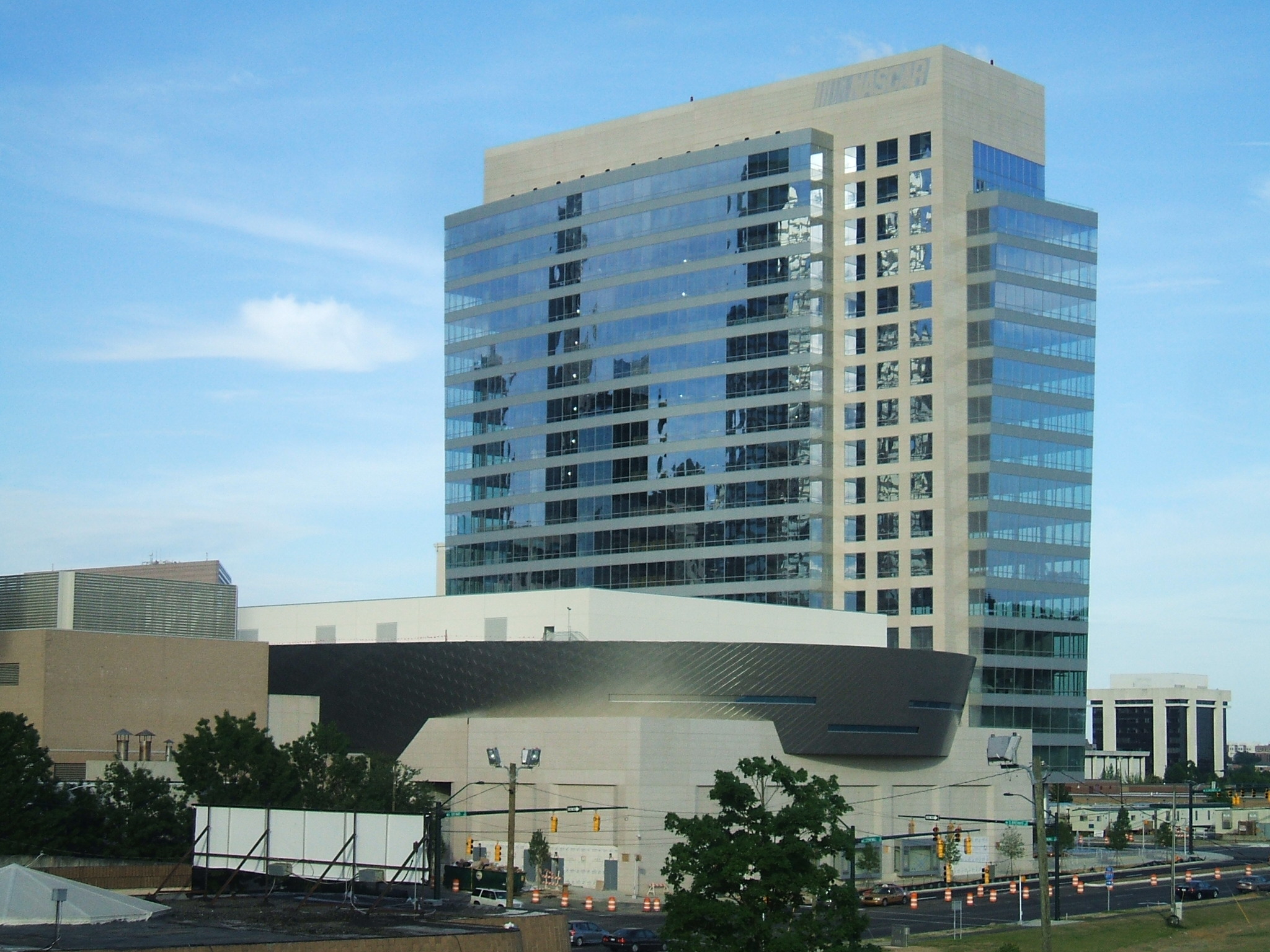
NASCAR Hall of Fame
Richard Petty lifted a velvet drape and revealed a powder-blue Plymouth Belvedere -- the very car he had driven to 27 wins in 1967. It was October 2008, and the King himself was unveiling the first artifact to enter a building that did not yet exist. Two years later, on May 11, 2010, the NASCAR Hall of Fame opened its doors in Uptown Charlotte, and that Belvedere was waiting inside. The $160 million museum stands as the definitive monument to stock car racing, a sport born on the back roads of the Carolina Piedmont that grew into the second-most-watched professional sport in America.
Built Where Racing Lives
Charlotte beat out Atlanta and Daytona Beach for the honor of hosting the Hall, and the reasons run deeper than civic pride. Over 73 percent of all motorsports employees in the United States work within the Charlotte metro area, in what the selection committee called "NASCAR Valley." The three major NASCAR series -- Cup, Xfinity, and Truck -- draw their lifeblood from the shops and garages clustered along the interstates ringing the city. The bid was led by team owner Rick Hendrick and then-Mayor Pat McCrory, and when NASCAR announced Charlotte as the winner on March 6, 2006, it felt less like a surprise than a homecoming. The slogan said it plainly: "Racing Was Built Here. Racing Belongs Here." Ground was broken on January 26, 2007, and the Hall sits just 25 minutes south of Charlotte Motor Speedway, placing it squarely in the heartland of the sport.
Steel Ribbons and Banked Curves
The architecture itself moves at speed. Pei Cobb Freed & Partners -- the firm behind the National Gallery of Art's East Building and the Rock and Roll Hall of Fame -- designed a structure wrapped in a gleaming stainless steel Mobius strip, fabricated by Zahner of Kansas City. The twisted ribbon of metal catches Carolina sunlight and seems to accelerate around the building's glass facade. Inside, the centerpiece is Glory Road, a 33-degree banked ramp that matches the fearsome incline of Talladega Superspeedway. Eighteen historic race cars line its surface, representing 46 past and current tracks. Walking up that slope, feeling the angle pull at your ankles, is the closest most visitors will ever come to understanding what drivers experience at 190 miles per hour. The 150,000-square-foot museum spreads across four floors, crowned by Heritage Speedway on the top level, where seven decades of stock car history unfold behind glass.
From Dirt Tracks to the Hall of Honor
The third floor holds the emotional center of the building: the Hall of Honor, a 360-degree wall where each inductee has a dedicated exhibit. As of 2025, 67 individuals have been enshrined. Fifty-one earned their place behind the wheel, though many wore multiple hats -- driver and owner, crew chief and broadcaster. Twenty-two were inducted for their work as team owners, the business minds who turned a regional pastime into a national industry. Six were crew chiefs, the strategists whose split-second pit-call decisions could make or lose a championship. Five were promoters who built the tracks, sold the tickets, and convinced television networks that stock cars deserved prime time. The selection process itself is rigorous: drivers must have competed for at least 10 years and been retired for at least three, though veterans with 30 or more years of competition can be considered regardless of retirement status.
More Than a Museum
The Hall of Fame is designed to be experienced, not just observed. On the second floor, the Great Hall serves as a Times Square of racing, with a massive video screen cycling through archival footage and rotating exhibits. Studio 43 -- named for Richard Petty's iconic car number -- is a working television production facility. On the third floor, iRacing simulators let visitors climb into a stock car cockpit and feel the rumble of a virtual superspeedway. The "Inside NASCAR" exhibit walks visitors through an actual race week: car preparation, technical inspection, practice sessions, time trials, and race day. Below it all, on the first floor, the High Octane Theater screens introductory films in a below-ground screening room. The building also houses a 20-story office tower, NASCAR Plaza, which opened in May 2009 and serves as headquarters for NASCAR Digital Media and the sport's licensing division.
A Living Monument
Every January, the Hall inducts a new class, and the ceremony has become one of Charlotte's premier events. The voting process involves 65 ballots cast across two categories -- Modern Era and Pioneer Era -- ensuring that both the sport's contemporary stars and its founding legends receive their due. A fan vote is included in the tally, a nod to the spectators who pack grandstands from Daytona to Martinsville. The Hall of Fame is more than a repository of trophies and firesuits. It is the living memory of a sport that began when bootleggers souped up their coupes to outrun federal agents on Carolina back roads, and it tracks that wild origin story through decades of innovation, tragedy, and triumph to the high-tech, billion-dollar spectacle NASCAR has become today.
From the Air
The NASCAR Hall of Fame sits at 35.22N, 80.84W in Uptown Charlotte, North Carolina. From the air, look for the distinctive curved glass and steel structure near the Charlotte Convention Center, adjacent to the 20-story NASCAR Plaza office tower. Charlotte Douglas International Airport (KCLT) is approximately 7 miles to the west. Charlotte Motor Speedway (near Concord Regional Airport, KJQF) lies about 13 miles to the northeast. Best viewed at 3,000-5,000 feet AGL for building detail. The Uptown Charlotte skyline provides an unmistakable reference point.