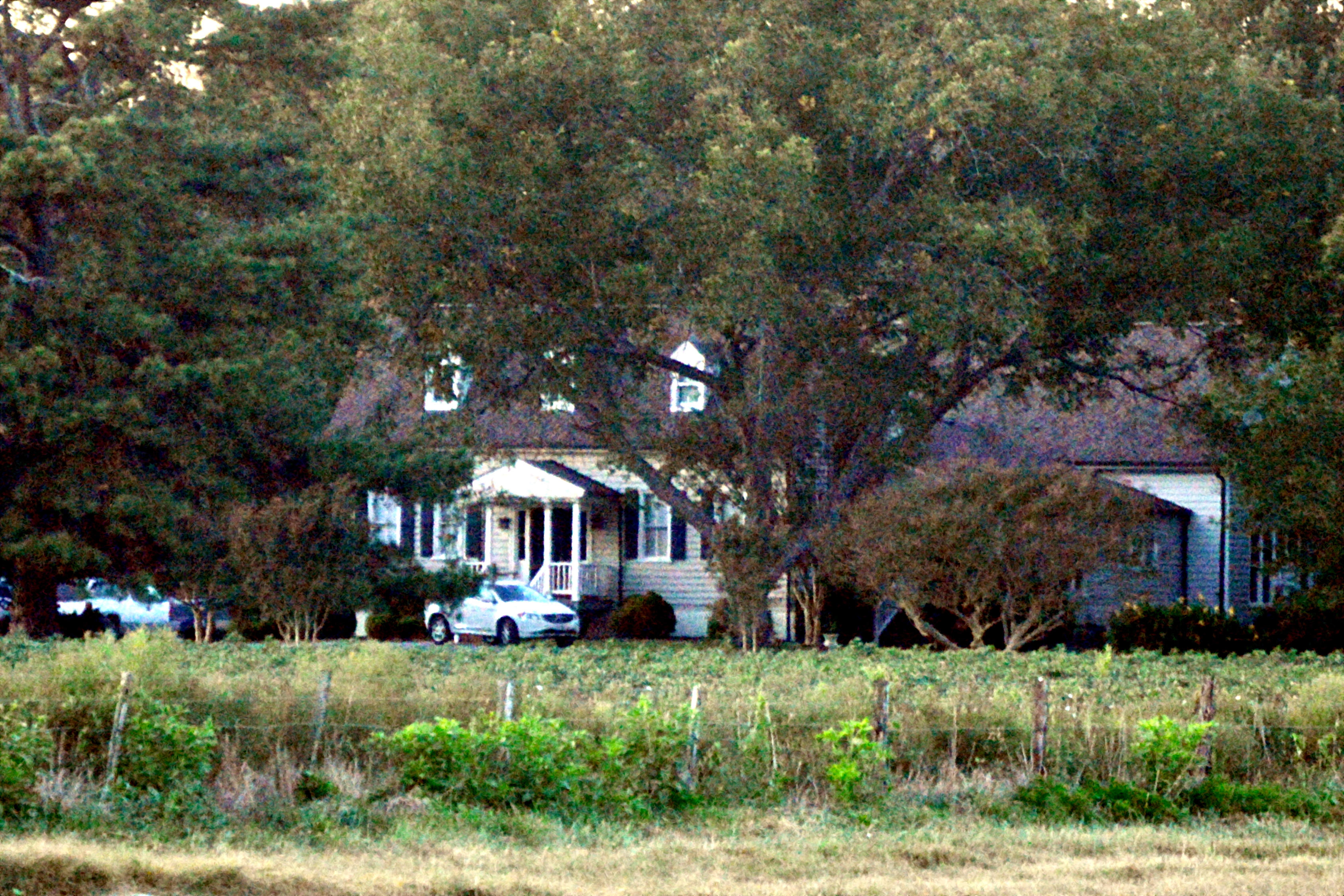
Nat Turner's Rebellion
On August 13, 1831, the sun over Virginia turned bluish-green. The atmospheric disturbance, likely caused by volcanic activity off the coast of Sicily, was a strange and unsettling sight. For Nat Turner, an enslaved preacher in Southampton County who had spent years waiting for a divine sign, the discolored sky was unmistakable. One week later, he launched the most consequential slave rebellion in American history. Over 48 hours in late August, Turner and a growing band of rebels moved farm to farm through the flat, rural landscape of southeastern Virginia, killing between 55 and 65 white people. The rebellion lasted only days, but the fear it ignited burned for decades, reshaping the laws and politics of the entire slaveholding South.
A Prophet in Chains
Nat Turner was not the rebel that slaveholders expected. He was literate, deeply religious, and known throughout his neighborhood as a preacher of unusual intensity. He had been planning an uprising for years. His wife Cherry knew his "most secret plans and papers." Turner communicated with a small circle of trusted conspirators, fellow enslaved men named Henry, Hark, Nelson, and Sam, using songs and covert meetings to coordinate without detection. The original date was the Fourth of July, 1831, but illness forced a delay. When the eerie bluish-green sun appeared on August 13, Turner read it as God's command. Armed with knives, hatchets, and blunt instruments, the rebels began on the night of August 21. Turner's slaveowner and his family were the first to die. As the group moved from house to house, their numbers swelled from fifteen to as many as sixty. Turner himself confessed to killing only one person directly: Margaret Whitehead, struck with a fence post.
Forty-Eight Hours of Terror
The rebellion tore through Southampton County with a speed that stunned the surrounding region. For two days, the rebels traveled from farm to farm, freeing enslaved people and killing white inhabitants. Turner later stated that indiscriminate killing was not their permanent intention; it was meant to "strike terror and alarm" until they had gathered sufficient force. A few homes of poor white families were spared because Turner believed they "thought no better of themselves than they did of negroes." But the violence was devastating. Between 55 and 65 white people were killed, of whom 20 to 30 were children. By August 23, the rebellion was effectively crushed at Belmont Plantation. The local militia, with twice the manpower and three companies of artillery, overwhelmed the rebels. Turner escaped into the countryside, surviving alone for ten weeks, hiding in a depression beneath a fallen tree covered with fence rails. He was finally discovered on October 30 by a farmer named Benjamin Phipps.
A Fury of Retaliation
The white response to the rebellion was savage and indiscriminate. Within a day, local militias were reinforced by detachments from Norfolk and neighboring counties in Virginia and North Carolina. Militias and mobs killed as many as 120 enslaved people and free Black Americans in retaliation, many of whom had nothing to do with the uprising. In Southampton County, the heads of Black people suspected of involvement were severed and mounted on poles at crossroads. Rumors spread as far as Alabama that the rebellion was expanding. In North Carolina, panicked reports described slave "armies" marching on the state capital. A company of militia from Hertford County, North Carolina, reportedly killed forty Black people in a single day. General Eppes finally ordered a halt to the killing, expressing "deepest sorrow" that anyone believed such atrocities were necessary.
Trial and Transformation
Turner was tried on November 5, 1831, for "conspiring to rebel and making insurrection." He was convicted and hanged on November 11 in the county seat of Jerusalem, Virginia, now called Courtland. According to some accounts, his body was beheaded, dissected, and flayed, with his skin used to make souvenir purses. Thirty enslaved people were convicted in total; eighteen were hanged and twelve were sold out of state. But the rebellion's impact reached far beyond the courtroom. In November 1831, Thomas R. Gray published The Confessions of Nat Turner, based on conversations with Turner before the trial. The pamphlet sold between 40,000 and 50,000 copies. Southern state legislatures responded with sweeping new restrictions. Laws criminalizing the teaching of Black people to read and write were passed across the slaveholding South. Free Black people lost rights of assembly. Religious gatherings required a licensed white minister to be present. Virginia's leaders debated removing all Black people from the Tidewater and Piedmont regions entirely.
The Long Shadow
The fear that Nat Turner's rebellion generated hardened the South's commitment to slavery. Politicians and writers began defending the institution as a "positive good" rather than a necessary evil. Thomas Dew and others constructed elaborate justifications for the system, arguments that would carry the nation toward civil war three decades later. Yet Turner's legacy cuts in another direction as well. In 1843, the formerly enslaved abolitionist Henry Highland Garnet called Turner "patriotic," predicting that "future generations will remember him among the noble and brave." In 1861, Thomas Wentworth Higginson praised Turner in the Atlantic Monthly as a man "who knew no book but the Bible, and that by heart, who devoted himself soul and body to the cause of his race." Lonnie Bunch, who later became the 14th Secretary of the Smithsonian Institution, called the rebellion "probably the most significant uprising in American history." Today, historic markers along Virginia State Routes 30 and 35 near Courtland trace the path of those violent August days through a landscape that looks much as it did in 1831: flat, rural, and quiet beneath the Virginia sky.
From the Air
Southampton County is located at 36.77N, 77.16W in southeastern Virginia, near the North Carolina border. The landscape is flat and agricultural, typical of the Virginia Tidewater. The town of Courtland (formerly Jerusalem), where Turner was tried and executed, is the county seat. From 2,000 feet, the rural farms and crossroads that defined Turner's path are visible across the gently rolling countryside. Nearest airport is Franklin Municipal-John Beverly Rose (KFKN) approximately 12 nm northeast. Suffolk Executive (KSFQ) is about 30 nm east. The Nottoway River runs through the county's western edge.