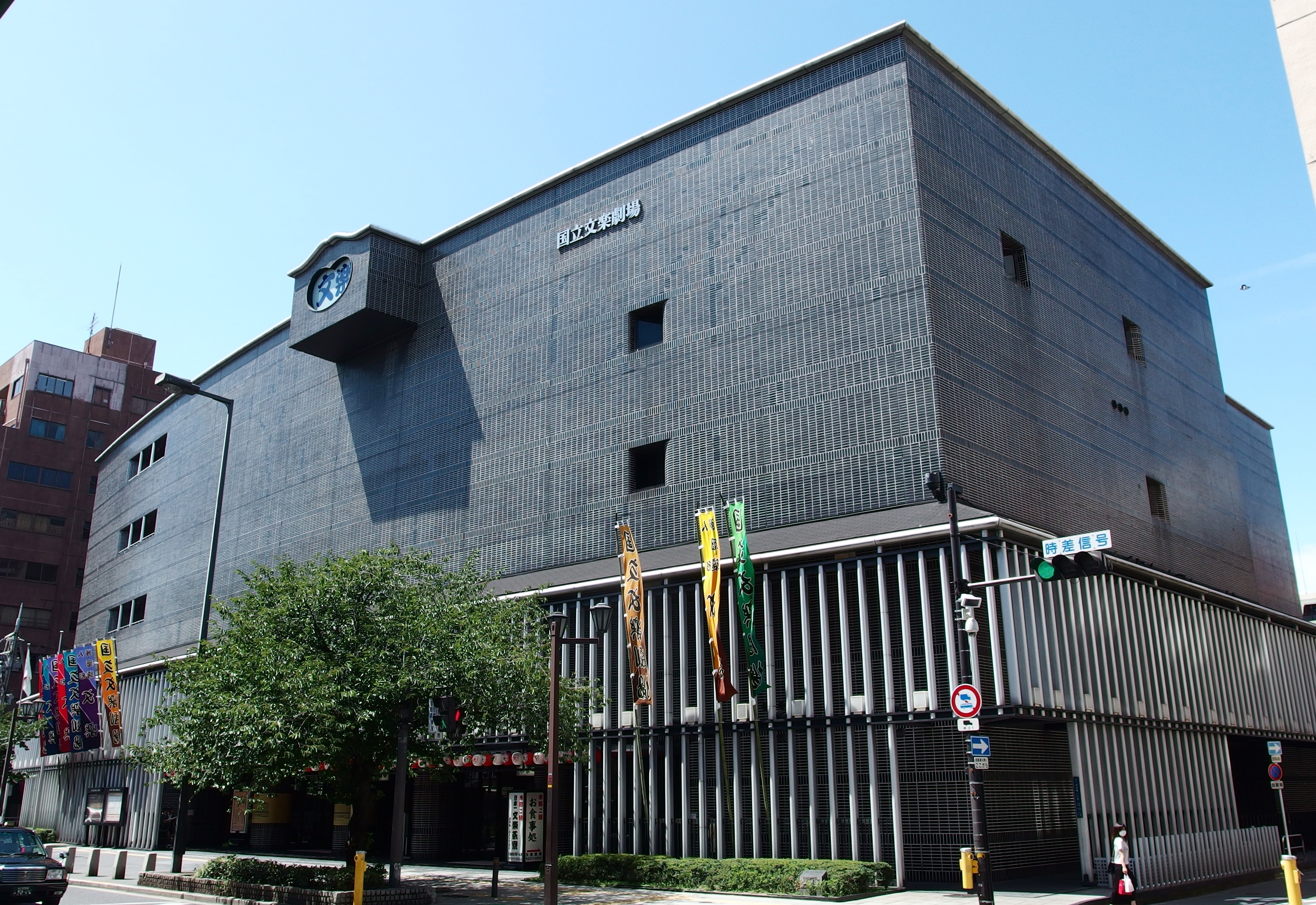
National Bunraku Theatre
Three puppeteers move as one body. The lead manipulates the head and right hand, a second controls the left, and a third works the legs, all while draped in black to disappear behind the puppet they animate. Nearby, a single chanter shifts his voice between warrior, maiden, and merchant, while a shamisen player sets the rhythm for the entire drama. This is bunraku, Japan's extraordinary puppet theatre, and since 1984, its global headquarters has stood in the Chuo-ku district of Osaka -- a building designed by Kisho Kurokawa that marries traditional Japanese aesthetics with modern architectural ambition.
Puppets That Breathe
Bunraku is no children's puppet show. The art form ranks alongside Noh and Kabuki as one of Japan's foremost stage traditions, earning UNESCO Intangible Cultural Heritage status in 2003. The puppets themselves stand roughly half human height, with articulated hands that can grip a sword, wipe a tear, or tremble with rage. Their faces are carved by master craftsmen, each one capable of subtle transformations -- eyebrows that furrow, mouths that open mid-cry. The three puppeteers who operate each figure train for decades. An apprentice spends ten years on the legs alone before graduating to the left hand, and another ten before touching the head. The coordination required is so precise that veteran troupes move with a fluidity that makes audiences forget they are watching wood and silk.
Voice, Strings, and Silence
What sets bunraku apart from puppet traditions worldwide is the visible interplay of its three performing elements. The tayu, or chanter, sits on a raised platform at stage right, narrating every character's dialogue and inner thoughts with shifts in pitch, pacing, and emotional register that verge on athletic. Beside him, the shamisen player does far more than accompany -- his rhythmic strumming governs the tempo of the entire performance. Neither watches the puppeteers directly. Instead, all three elements lock together through rehearsal and intuition, creating a synchronicity that audiences describe as hypnotic. The repertoire draws from roughly 160 surviving plays out of more than 700 composed during the Edo period, ranging from feudal historical dramas to intimate stories of love colliding with social obligation.
Kurokawa's Stage for Tradition
When the Japanese government decided to build a national home for bunraku, they chose Osaka -- the city where the art form had flourished since the early 1600s, near the historic Dotonbori theatre district that had nurtured it for centuries. Architect Kisho Kurokawa, a leading figure of the Metabolist movement, designed the complex around black lattice patterns that echo traditional Japanese screens while asserting a thoroughly modern presence. The building opened in 1984 as Japan's fourth national theatre. Its Large Hall seats approximately 700 and serves as the primary bunraku stage, while the Small Hall hosts rakugo storytelling, manzai comedy, and traditional Japanese music. An exhibition room introduces visitors to the mechanics and history of the puppets themselves.
Osaka's Living Art
The National Bunraku Theatre is not a museum piece. It operates as the active working home of Japan's premier bunraku troupe, which performs regular seasons here before touring to Tokyo and regional venues. The Japan Arts Council manages the theatre as part of the national system, ensuring that training programs continue to produce new generations of puppeteers, chanters, and shamisen players. For visitors, attending a performance here means witnessing an unbroken chain of artistic transmission stretching back four centuries -- experienced in the very building purpose-built to preserve it. Regular performances run throughout the year, with English-language audio guides and program notes making the art accessible to international audiences.
From the Air
Located at 34.6675°N, 135.5086°E in central Osaka's Chuo-ku district, near the Dotonbori entertainment area. The theatre sits in dense urban fabric and is not individually distinguishable from the air, but the Dotonbori canal and surrounding neon district provide visual reference. Nearest airports: Osaka Itami (RJOO) approximately 15 km north, Kansai International (RJBB) approximately 40 km south on its artificial island in Osaka Bay. Best viewed at lower altitudes when following the Dotonbori canal corridor through central Osaka.