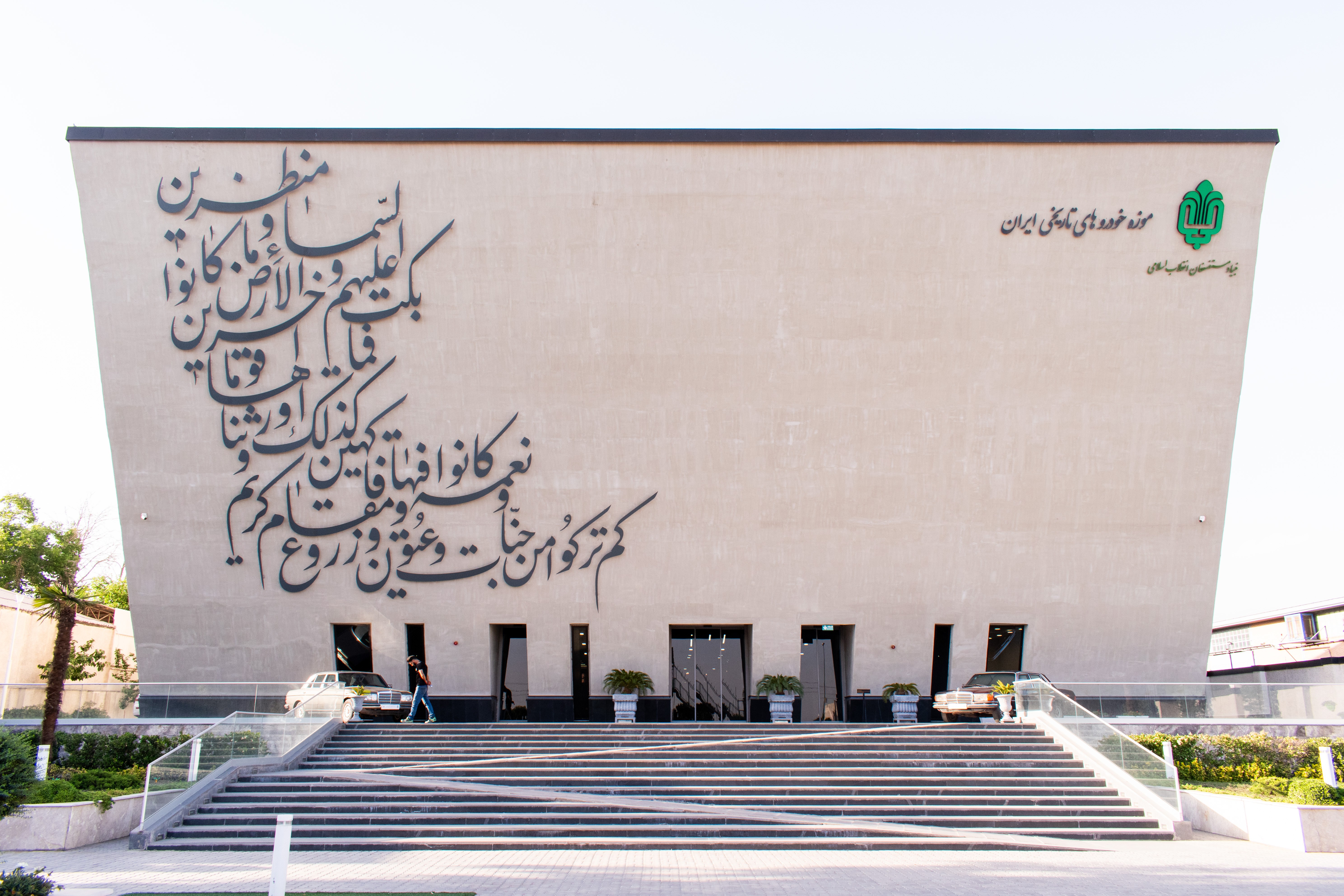
National Car Museum of Iran
A metallic red Lamborghini Countach sits in a museum near Karaj, about thirty kilometers west of Tehran. According to the placard, it was a gift from Mohammad Reza Shah's aunt, presented after the young monarch passed his driving test. The car is absurd and beautiful, and the story behind it captures something essential about the collection surrounding it -- the extravagance, the personal touch, the world that vanished in 1979 and left its possessions behind.
The Shah's Garage
Mohammad Reza Shah Pahlavi loved cars the way some people love horses -- as objects of beauty, status, and pure mechanical thrill. Before the Iranian Revolution forced him and his family to flee the country, his collection reportedly numbered around 1,200 vehicles. They ranged from stately Rolls-Royces to screaming Italian exotics, from vintage carriages to motorcycles. His wife, Empress Farah Diba, had her own silver Cadillac Eldorado and a 1976 Honda Gold Wing motorcycle. The fleet was not just transportation. It was autobiography in chrome and leather -- a record of diplomatic gifts, personal tastes, and the kind of spending that only absolute power permits.
What Survived the Revolution
When the Shah fled Iran in January 1979, the cars stayed. Revolution is hard on luxury goods. Some vehicles were lost, damaged, or dispersed in the chaos that followed. But a portion survived, scattered across royal garages and government storage. For two decades, they sat largely forgotten. Then, in 2001, Iranian car enthusiasts organized a private initiative to recover what remained and open a museum to the public. Only a fraction of the original 1,200 vehicles made it into the collection, but what survived is extraordinary. The roster reads like an encyclopedia of twentieth-century automotive engineering: a Rolls-Royce Silver Ghost in black, Phantom models spanning generations I through VI, a Mercedes-Benz 500K that is one of only two surviving W29 Autobahn-Kurier models. A one-off 1956 Chrysler 300 K300, its body designed by Ghia, was reportedly a wedding gift from the Shah to his second wife, Queen Soraya. It came equipped with a refrigerator and a record player.
Rarity Upon Rarity
Certain vehicles in the museum would stop traffic at any concours d'elegance in the world. The Mercedes-Benz 600 collection alone includes two of the Landaulet variant, of which only 59 were ever produced. A Bizzarrini 5300 GT Strada, a Ferrari 500 Superfast Superamerica, a Porsche 934 described as a Le Mans winner with 600 horsepower -- each would be the centerpiece of any other museum. A Porsche 928 shows just 29 kilometers on its odometer. The Shah's personal BMW R 100 RS motorcycle reads 692 kilometers. Then there is the MPV Tehran Type, said to have been designed collaboratively by Mercedes-Benz, Porsche, and Volkswagen specifically for Crown Prince Reza Pahlavi. Behind the public galleries, a restoration center works to preserve what time and revolution have worn down.
Power, Loss, and Chrome
The National Car Museum of Iran is not a celebration of monarchy. It is something stranger -- a physical residue of a regime that evaporated, preserved by the enthusiasts of a country that overthrew the man who bought these machines. The Panther Lazer one-off, the Jensen Interceptor III, the white Lamborghini Miura -- none of them chose sides in a revolution. They are steel and glass and rubber, indifferent to politics. Yet walking among them, you cannot avoid the human story they embody: wealth accumulated under a dynasty, abandoned in flight, neglected for decades, and finally curated by citizens who saw value worth saving. The cars outlasted their owner. Whether that is irony or simply the nature of well-built machines depends on your perspective.
From the Air
Located at 35.715N, 51.222E near Karaj, approximately 30 km west of central Tehran. The museum compound sits in the urban sprawl between Tehran and Karaj. Mehrabad International Airport (OIII) is about 20 km to the east; Payam International Airport (OIIP) in Karaj is closer at roughly 15 km to the west. Best viewed at low altitude, though the building is not a prominent landmark from the air. The Alborz mountain range provides orientation to the north.