National Centre for the Performing Arts (China)
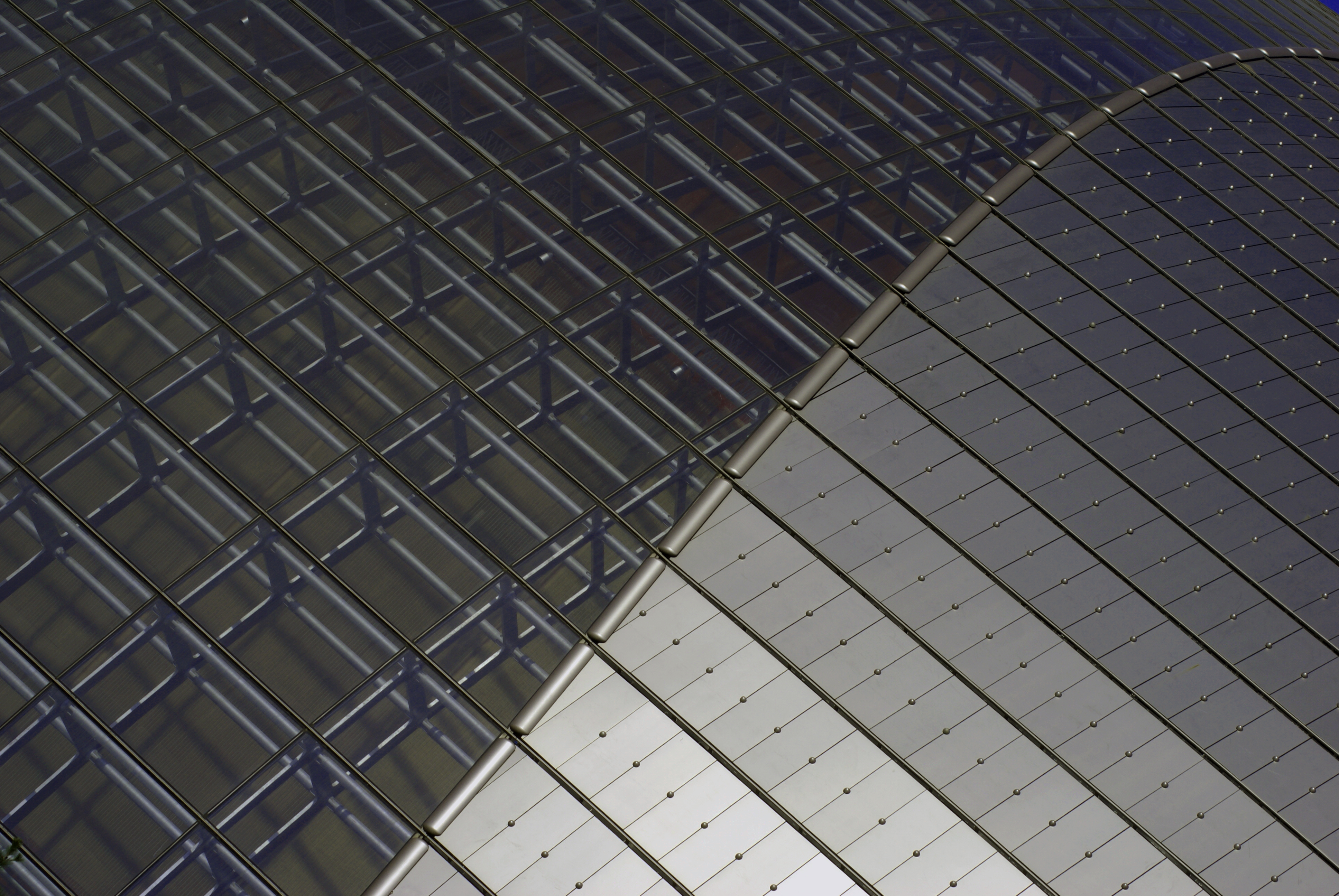
To enter the National Centre for the Performing Arts, you walk underground, through an 80-meter passage beneath an artificial lake. Above you, 34,300 square meters of water surround a dome clad in more than 18,000 titanium plates, of which only four share the same shape. Beijingers call it The Giant Egg. French architect Paul Andreu designed it to sit on the south side of Chang'an Street, within sight of the Great Hall of the People and the ancient red walls of the Forbidden City. It opened in 2007 as Asia's largest theater complex, a building that is simultaneously an engineering marvel, a political statement, and the subject of one of the most sustained architectural controversies in modern Chinese history.
Engineering the Impossible
The NCPA's most daunting challenge was invisible: groundwater. Seventeen meters below the building lies the ancient river channel of the Yongding River, saturated with water that generates enough buoyancy to theoretically float a million-ton aircraft carrier. The conventional solution, pumping the groundwater continuously, would have created a five-kilometer-wide depression in the water table, potentially cracking the foundations of surrounding buildings including the Great Hall of the People. Engineers solved this by pouring concrete walls from the highest water level down to a clay layer 60 meters underground, creating an enormous sealed "bucket" around the foundation. Water is pumped from inside this enclosure without affecting anything outside it. The building extends ten stories below ground, making 60 percent of its 165,000 square meters of floor space subterranean, the deepest underground public building in Beijing. The stage of the opera hall sits 32.5 meters below the surface.
A Dome Without Pillars
The NCPA's shell is supported by a 6,750-ton steel beam frame that creates one of the world's largest unsupported domes. The exterior combines the titanium plates, specially oxidized to maintain their metallic luster for fifteen years, with more than 1,200 pieces of ultra-white glass arranged in an involute curtain wall along the dome's midsection. The outer surface is coated with nanomaterials that prevent water stains from rain and reduce dust adhesion. Acoustic engineers conducted extensive experiments on how rain would sound striking the dome's surface, discovering that without intervention, a rainstorm would fill the interior with the sound of drumming. They solved this with a technique called "sound gate" that isolates the acoustic environments of each theater from one another and from the exterior. The result is a building where you can stand inside during a downpour and hear nothing but the performance.
Three Halls Under One Shell
Inside the dome, three major performance venues share space without acoustically interfering with one another. The Opera Hall, the most elaborate, seats 2,207 in a gold-toned auditorium across one performance pool floor and three balcony levels. Its stage can push, pull, ascend, descend, and rotate, and includes a tiltable ballet floor and an elevating orchestra pit that can accommodate three full bands. The Music Hall provides a different acoustic environment for symphonic and chamber performances. A third theater handles dramatic productions. The total cost reached 3.067 billion yuan, up from an initial estimate of 2.688 billion, the increase largely caused by delays for safety reevaluation after a Paris airport terminal designed by the same architect collapsed. When averaged across the roughly 6,000 seats in all three halls, each seat cost approximately half a million yuan, a figure that fueled public debate about whether the investment was justified for a venue that operates with substantial government subsidies.
Ancient and Modern in One Sightline
Paul Andreu defended his design against critics who argued that a futuristic titanium dome was incompatible with Beijing's historic center. He countered that the capital of a major country must include modern architecture alongside its ancient treasures. The dome's height was deliberately set 3.32 meters below the roofline of the Great Hall of the People, respecting Beijing's planning regulations while asserting the NCPA's own presence. His design placed water and open space between the dome and surrounding structures, creating a buffer that was intended to complement rather than compete with the red walls nearby. From the air, the NCPA appears as an oval mirror on the south side of Chang'an Street, its reflective surface catching the sky and blending with the surrounding water. At night, the glass curtain wall glows, revealing the internal structure in a way that transforms the building from solid shell to illuminated lantern. The contrast with the Great Hall of the People next door, with its classical columns and squared proportions, could hardly be sharper, which may have been exactly the point.
From the Air
Located at 39.90°N, 116.38°E, on the south side of Chang'an Street west of Tiananmen Square. The dome-shaped building surrounded by an artificial lake is unmistakable from the air, appearing as a reflective oval. Best viewed at 2,000-4,000 feet. Nearest airport: Beijing Capital International (ZBAA), approximately 26 km northeast.