National Coach Museum
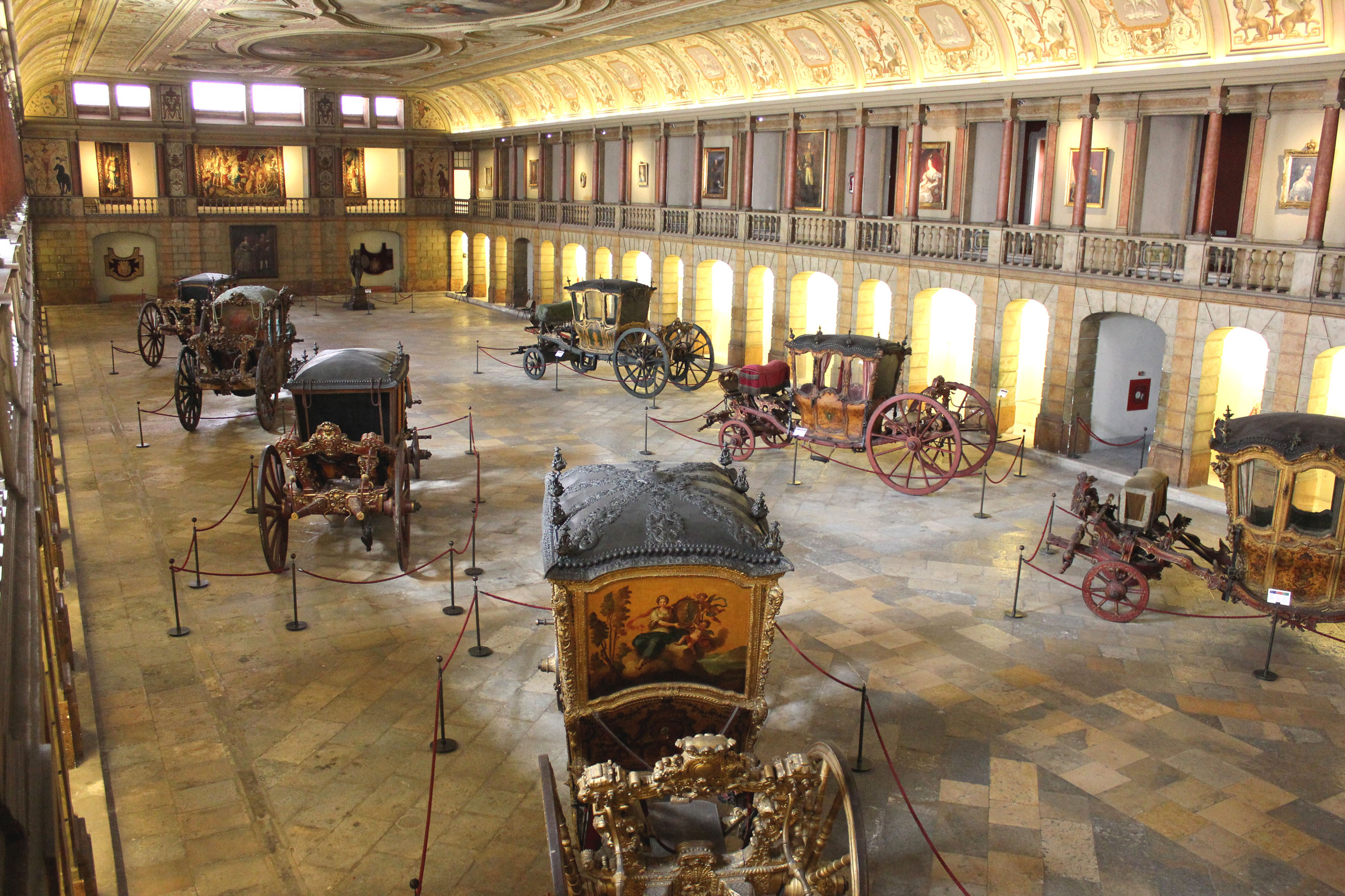
Queen Amélia saved the coaches. When Portugal's last queen proposed converting the Royal Riding School into a museum in 1905, she was preserving what might otherwise have been scattered or destroyed in the republican revolution that would follow five years later. The Royal Coaches Museum opened on 23 May 1905 in the 1787 riding school of the Belém Palace, its soaring interior perfectly suited to display the gilded, painted, and elaborately carved ceremonial vehicles that had carried Portuguese royalty for centuries. What Amélia could not have anticipated is that her museum would become the most visited national museum in Portugal, drawing 382,593 visitors in 2016 alone, or that it would eventually need a second building across the street to hold it all.
Gilded Wheels of Empire
The collection comprises around 9,000 objects, but it is the coaches themselves that command attention. These are not merely vehicles but rolling works of art — baroque confections of carved wood, painted panels, gilded surfaces, and upholstered interiors that served as mobile thrones for Portuguese monarchs from the 16th through the 19th centuries. The most spectacular are the ceremonial and gala coaches, designed to project royal power during processions, diplomatic missions, and state occasions. Each tells a story of the period that produced it: the heavy formality of the Habsburg era, the extravagance of the Brazilian gold period, the restrained elegance of the late monarchy. Equestrian accessories, harnesses, and livery complete the picture of a world where a king's journey through the streets was as carefully choreographed as any court ceremony.
Two Buildings, Two Centuries
The original museum occupies the former Royal Riding School on Afonso de Albuquerque Square, a graceful 18th-century space with high ceilings and natural light that flatters the coaches' gilded surfaces. But the collection outgrew its home. In 2015, a second building opened directly across Avenida da Índia — a modernist concrete-and-glass pavilion designed by Brazilian architect Paulo Mendes da Rocha in partnership with Portuguese architect Ricardo Bak Gordon and engineer Rui Furtado. The contrast is deliberate: where the riding school is intimate and historical, the new building is vast and minimal, its open floor plan allowing visitors to view the coaches from multiple angles and levels. The old building has been repurposed for temporary exhibitions and educational programs, while the new structure houses the bulk of the permanent collection.
A Queen's Legacy
Amélia of Orléans understood preservation as a form of resistance. Born into French royalty and married into Portuguese, she watched as republics replaced monarchies across Europe and recognized that the material culture of her world was fragile. By establishing the museum before the 1910 revolution, she ensured that the coaches survived the transition intact, protected by their status as cultural patrimony rather than royal property. The irony is rich: the vehicles that once carried kings through cheering crowds now belong to the republic that deposed them. Today the museum continues to evolve under new leadership, offering kitchen workshops and educational activities alongside its permanent collection — a working institution rather than a frozen shrine.
Belém's Museum Mile
The National Coach Museum sits in the heart of Belém's cultural district, within walking distance of the Jerónimos Monastery, the Monument of the Discoveries, and the Tower of Belém. This concentration of museums and monuments along the Tagus waterfront makes Belém one of Lisbon's richest cultural corridors. The museum's location beside the Belém Palace — still the official residence of the Portuguese president — adds a layer of continuity: royal vehicles parked, in effect, where royal vehicles once departed. For visitors approaching by air, the museum's modernist pavilion provides an unexpected visual contrast to the limestone grandeur of the monastery nearby, a reminder that Lisbon's relationship with its past remains active and evolving.
From the Air
Located at 38.697°N, 9.200°W in the Belém district of western Lisbon, adjacent to the Belém Palace (Portuguese presidential residence). The modernist 2015 building is a rectangular concrete-and-glass structure visible from altitude, contrasting with the historic riding school across Avenida da Índia. Recommended viewing altitude: 2,000-3,000 ft. Part of the Belém waterfront cluster including the Jerónimos Monastery and Tower of Belém. Nearest airport: Lisbon/Humberto Delgado (LPPT) approximately 10 km east.