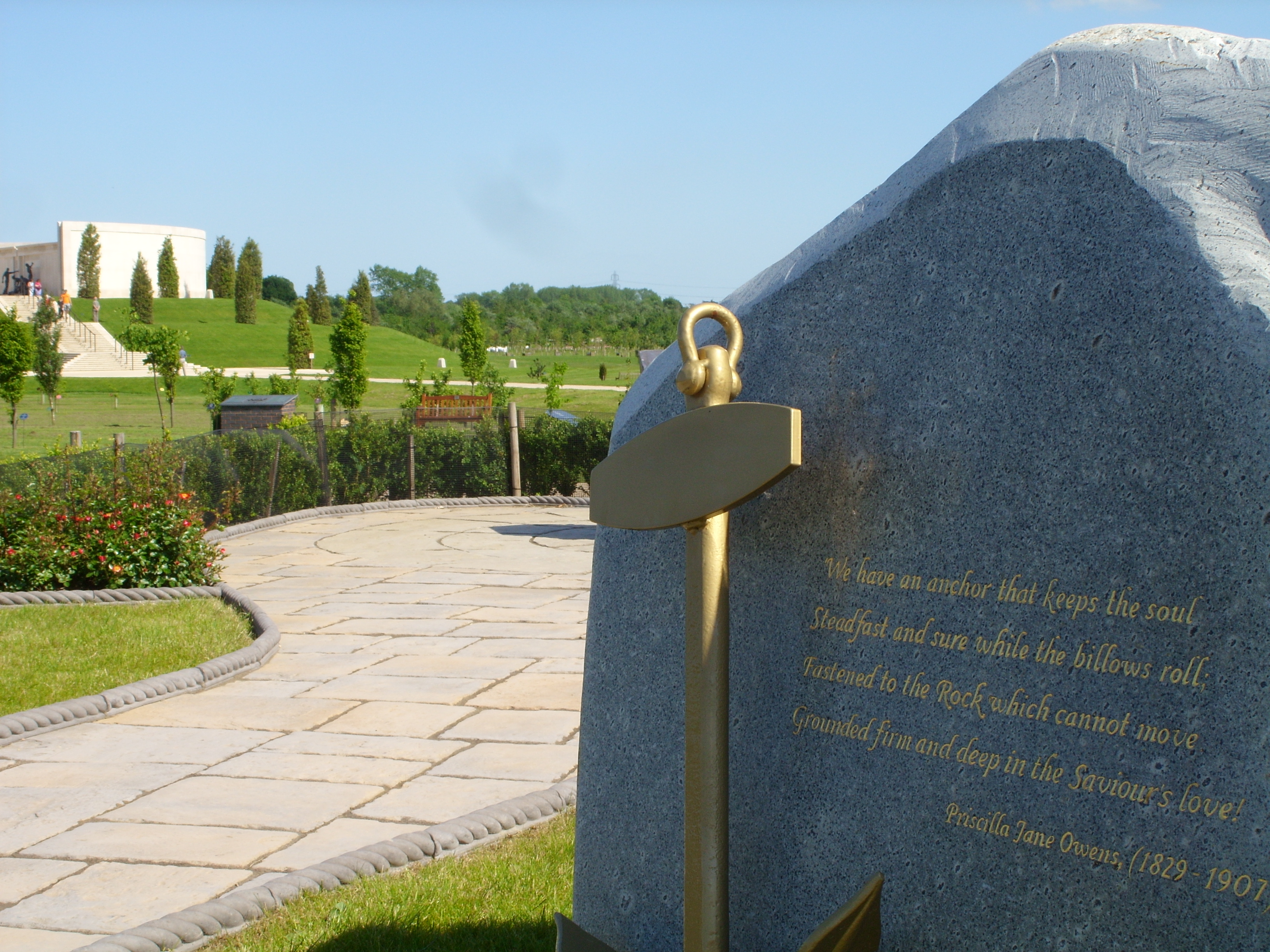
National Memorial Arboretum
Every day at 11 am, a bugle sounds the Last Post across 150 acres of Staffordshire woodland. Two minutes of silence follow, then the Reveille. This happens regardless of weather, regardless of who is watching, regardless of whether it is the 11th of November or an ordinary Tuesday in March. The National Memorial Arboretum near Alrewas exists for exactly this purpose: to ensure that remembrance is not confined to a single day but woven into every day of the year. What began in 1988 as one man's idea, with no money, no land, and no trees, has grown into Britain's most significant landscape of commemoration, home to more than 400 memorials beneath a canopy of 25,000 trees.
From Gravel Pits to Sacred Ground
The arboretum's origins lie with Commander David Childs, a Royal Navy officer who envisioned a national centre for year-round remembrance. After meeting Group Captain Leonard Cheshire, the legendary wartime pilot and Victoria Cross recipient, Childs refined his concept. Prime Minister John Major launched a formal appeal in 1994. The chosen site, old gravel workings south of Alrewas, sits where the River Tame meets the River Trent, at the western edge of the National Forest. The Millennium Commission provided forty per cent of the funding; thousands of donations from military and civilian organisations covered the rest. The Royal British Legion accepted stewardship of the site, and the Ministry of Defence guaranteed free public entry. Trees were planted, paths laid, and the first memorials erected on land that had been, until recently, exhausted industrial ground.
A Shaft of November Light
At the heart of the arboretum stands the Armed Forces Memorial, dedicated in 2007 by the Archbishop of Canterbury in the presence of Queen Elizabeth II. It honours the more than 16,000 service personnel who have died in conflict or through terrorism since the end of the Second World War. The memorial's design carries a precise piece of engineering: at 11 am on 11 November each year, sunlight passes through two carefully positioned slits in the outer and inner walls, casting a shaft of light across a wreath at the centre. It is a moment of alignment between architecture and calendar, light and loss, designed to occur at the exact hour of the Armistice. Around this centrepiece, the arboretum sprawls outward through RAF, naval, and army sections, with civilian areas honouring police forces, wartime nurses, and emergency services.
The Memorials That Haunt
Some of the arboretum's 400-plus memorials carry stories that stop visitors in their tracks. The Shot at Dawn memorial depicts Private Herbert Burden of the Northumberland Fusiliers, executed at Ypres in 1915 at the age of seventeen. He was one of 306 British and Commonwealth soldiers shot for desertion or cowardice during the First World War, many of whom suffered from what would now be recognised as post-traumatic stress disorder. The Sumatra Railway Memorial, designed by survivor Jack Plant, commemorates the 700 Allied prisoners of war who died building a hundred miles of railway under Japanese captivity. The Christmas Truce Memorial, unveiled in 2014 by Prince William, marks the extraordinary moment in December 1914 when British and German soldiers stopped fighting and played football in no man's land. A ten-year-old schoolboy named Spencer Turner designed the memorial after winning a national competition.
Living Remembrance
The arboretum is deliberately a living landscape rather than a static monument. Trees grow, seasons turn, and the character of the place shifts with the light. A remembrance glade unveiled in 2021 features plants chosen for their symbolic connections to grief and renewal. More than 260 volunteers contribute over 52,000 hours annually, leading guided walks, operating buggy tours, and conducting the daily act of remembrance. Their efforts earned the Queen's Award for Voluntary Service in 2010. The Remembrance Centre, opened in 2017, houses three exhibition galleries alongside spaces designed less for education than for reflection. The arboretum is not a museum in any conventional sense. It is a place where the weight of collective sacrifice is made tangible, spread across acres of Staffordshire earth, one tree and one name at a time.
From the Air
Located at 52.726N, 1.728W near Alrewas, Staffordshire. The site lies along the River Trent, 5 miles north of Lichfield. Nearest airports: East Midlands (EGNX, 20nm east), Birmingham (EGBB, 20nm south). The large open parkland with scattered memorials is visible from 2,000-3,000ft AGL. Look for the distinctive Armed Forces Memorial structure.