National Memorial for Peace and Justice
Eight hundred and five steel rectangles hang suspended from the ceiling, each the size and shape of a coffin. They bear the names of counties across America and the people murdered there by racial terror lynching. As visitors walk through the memorial square, the floor gradually descends while the monuments remain fixed overhead, so the coffin-shaped columns that began at eye level slowly rise above, until visitors crane their necks upward at silhouettes that evoke hanging bodies against the sky. The Washington Post's Philip Kennicott called it "one of the most powerful and effective new memorials created in a generation." Bryan Stevenson, the civil rights lawyer who founded the Equal Justice Initiative and built this place, wanted visitors to feel something that words alone cannot convey.
A Reckoning on Six Acres
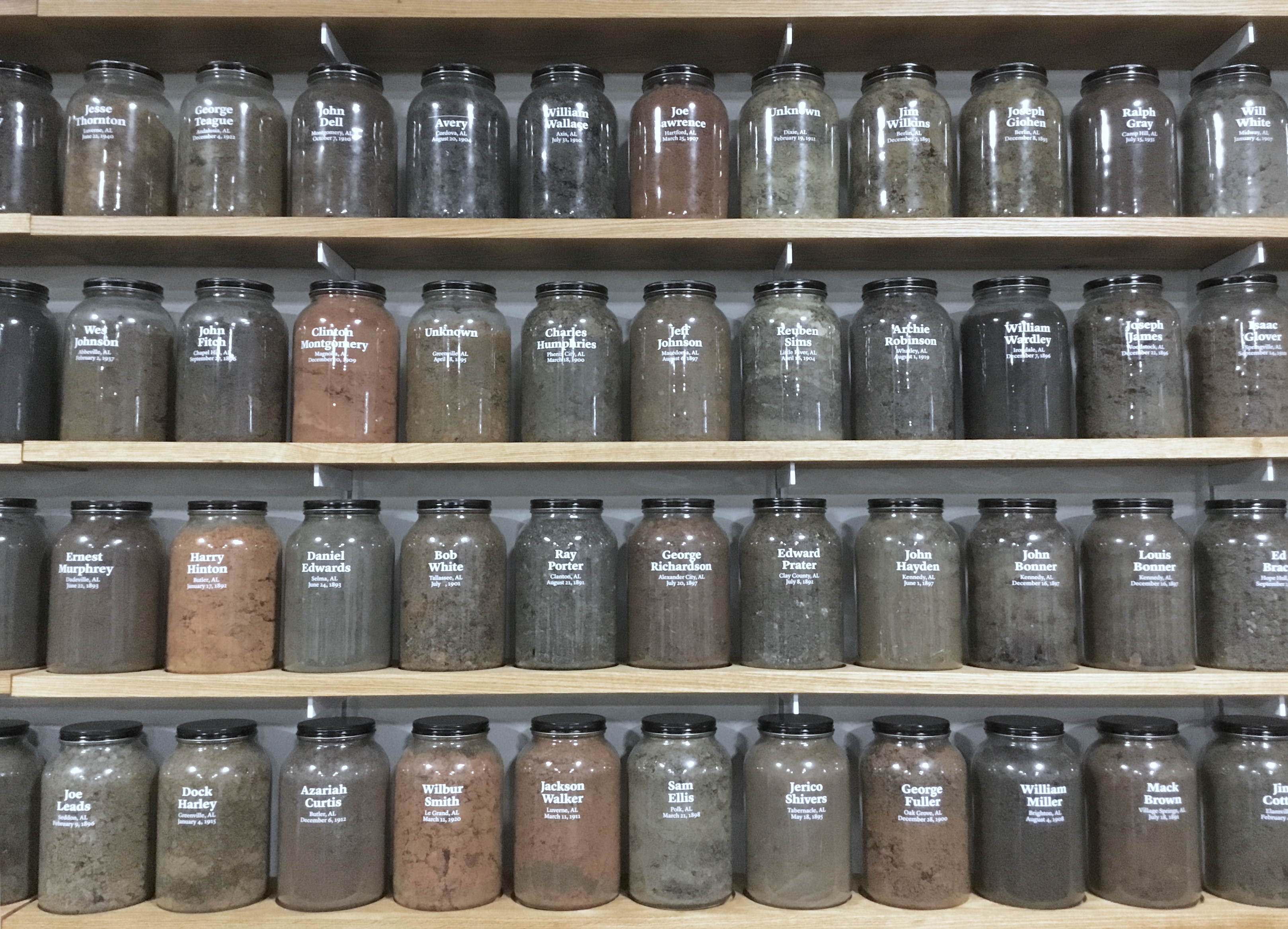
The National Memorial for Peace and Justice opened on April 26, 2018, on a six-acre hilltop in downtown Montgomery, Alabama. The Equal Justice Initiative spent years and an estimated $20 million in privately raised funds to build it. Stevenson drew inspiration from the Memorial to the Murdered Jews of Europe in Berlin and the Apartheid Museum in Johannesburg, places where nations confronted their darkest chapters. America, he believed, had no equivalent. EJI's multi-year research documented nearly 4,400 racial terror lynchings in the post-Reconstruction era between 1877 and 1950, concentrated in twelve Southern states. Each of the memorial's six-foot steel beams is engraved with the names and locations of victims. Where names were lost to history, the word "unknown" stands in their place. This is the first major memorial in the nation to name and honor these victims.
The Journey Through Darkness
The memorial unfolds in three acts. Visitors first encounter Ghanaian artist Kwame Akoto-Bamfo's sculpture Nkyinkyim -- meaning "twisted," from a proverb that life is a twisted journey. Seven shackled figures of all ages stand interlocked, representing the Middle Passage that stripped African people of their names, families, and identities. Akoto-Bamfo gives them back: "Daughter of a Royal," "Uncle's Brother," "The Lost Guardian." Next comes Dana King's Guided by Justice, three bronze women -- a grandmother, a teacher, and a pregnant woman -- depicting the Montgomery Bus Boycott. Footprints on the ground nearby invite visitors to join them. King's piece makes a deliberate point: the boycott's success depended not on any single hero but on thousands of ordinary people who walked rather than ride segregated buses.
Hands Up, Eyes Closed
Hank Willis Thomas's sculpture Raise Up confronts the present. Ten Black men stand encased in concrete, some with their heads sunken into it, arms raised, eyes shut. The piece connects the memorial's historical narrative to modern policing. "I see the work that I make as asking questions," Thomas has said. Lee Sentell of the Alabama Department of Tourism acknowledged what distinguishes this place: "Most museums are somewhat objective and benign. This one is not. This is aggressive, political. It's a part of American history that has never been addressed as much in your face as this story is being told." Outside the central monument, benches honor activists like journalist Ida B. Wells, who risked her life in the 1890s to expose the economic motivations behind lynchings.
Monuments Waiting to Go Home
Laid in rows on the ground outside the memorial are 805 duplicate steel columns, one for each county represented inside. These duplicates are temporary. EJI asks each county to claim its monument, bring it home, and install it as a local memorial to the lynching victims from that community. The process is the final step of EJI's Community Remembrance Project: before a county receives its column, the community must engage in honest discussion about racial violence in its past and present. On opening day, the Montgomery Advertiser, a newspaper founded in 1829, published a formal apology for its historic coverage of lynchings, calling it "our shame" and admitting "we were wrong." The Legacy Museum, which opened the same day nearby on the site of a former slave market, traces the line from enslavement through lynching to mass incarceration.
From the Air
Located at 32.37N, 86.31W on a hilltop in downtown Montgomery, Alabama. The six-acre memorial site sits on elevated ground visible from low-altitude approaches. Montgomery Regional Airport (KMGM) is approximately 7 miles southwest. From the air, downtown Montgomery's grid is visible at the bend of the Alabama River, with the Alabama State Capitol dome on Goat Hill as a primary landmark. The memorial is in the northwest quadrant of downtown. Best appreciated at lower altitudes in clear conditions.