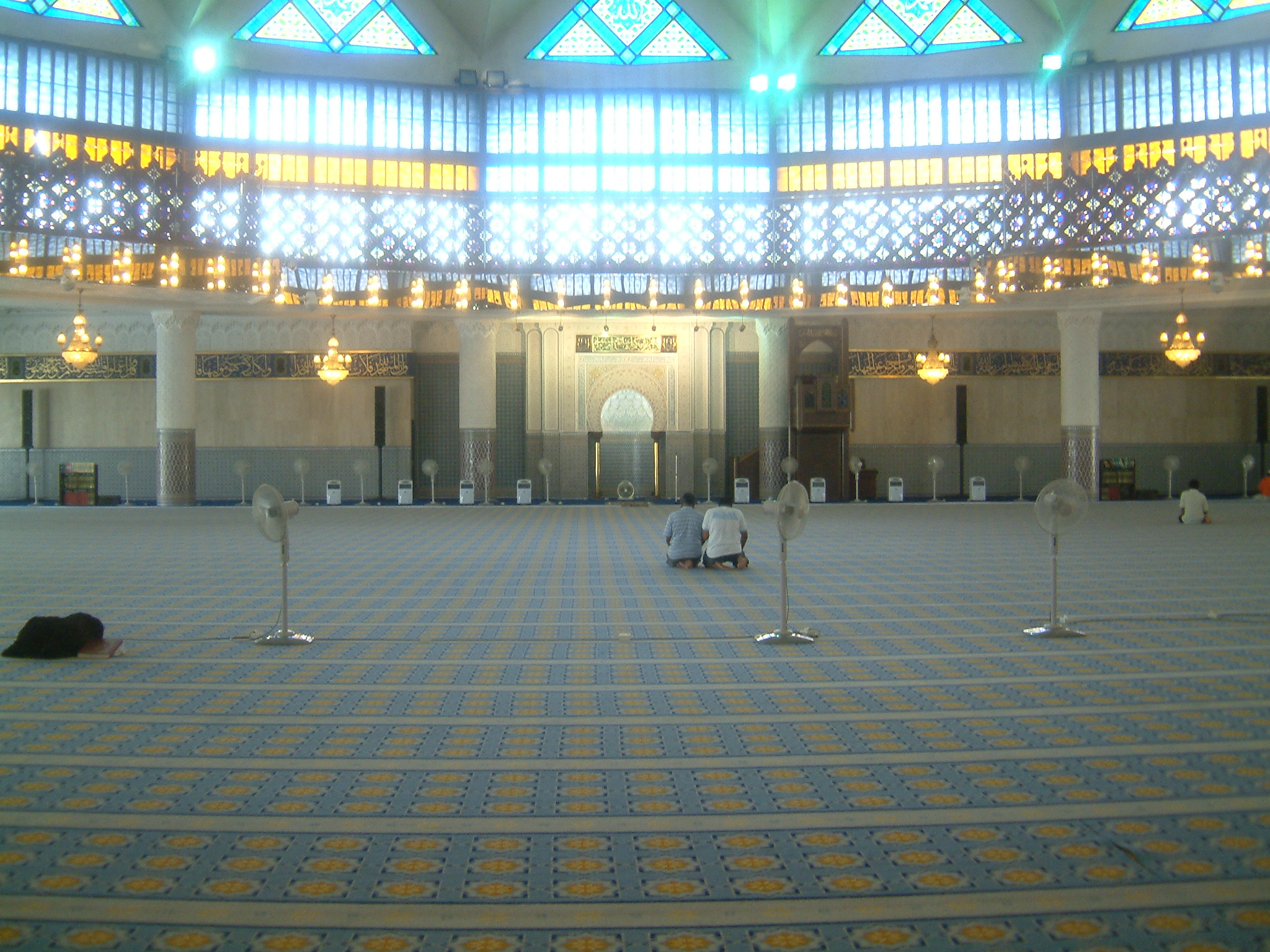
National Mosque of Malaysia
They offered to name it after him. Tunku Abdul Rahman, the man who had steered Malaya to independence without a single shot fired, was the obvious choice for the country's first national mosque. He refused. The mosque, he insisted, should be called Masjid Negara -- the National Mosque -- a thanksgiving for the peaceful birth of a nation. It was a gesture that set the tone for everything that followed: a building designed not to glorify any individual, but to embody the aspirations of an entire people stepping into self-governance for the first time.
Erasing the Colonial Footprint
The site chosen for Masjid Negara told its own story. Where the mosque now stands, there had been a Masonic lodge, a NAAFI club for British servicemen, a Brethren Gospel Hall, government quarters, and a railway commission building. In 1961, the government acquired them all and cleared the ground. The symbolism was difficult to miss -- colonial institutions swept away to make room for a structure that would define the new Malaysia's skyline. Baharuddin Abu Kassim led the design team from the Public Works Department, joined by Ikmal Hisham Albakri and British architect Howard Ashley. Together they produced something neither traditionally Islamic nor conventionally Western, but genuinely new: a modernist mosque in reinforced concrete that drew from tropical logic as much as from faith.
An Umbrella Against the Tropical Sun
Look at Masjid Negara from the air and its most striking feature reveals itself: the main roof is a 16-pointed star, its folded concrete plates radiating outward like an open umbrella. The comparison is deliberate. In the Malaysian tropics, the umbrella is not mere accessory but daily companion, and the architects wove it into the building's DNA. The 73-meter minaret rises beside the prayer hall, its conical cap shaped like a furled umbrella -- closed, waiting. Between these two gestures, open and folded, the entire building reads as a conversation between shelter and aspiration. The roof's engineering was as bold as its symbolism: the folded-plate concrete design solved the structural challenge of spanning the vast prayer hall, which accommodates 15,000 worshippers across 13 acres of landscaped gardens, reflecting pools, and fountains.
A Nation's Living Room
When the third Yang di-Pertuan Agong, Tuanku Syed Putra of Perlis, declared the mosque open on 27 August 1965, the RM10 million project had taken four years to build. Its original pink concrete roof has since been clad in green and blue tiles, softening the brutalist edges without diminishing the modernist intent. An underground passage connects the mosque to the nearby Kuala Lumpur railway station, threading sacred and secular infrastructure together beneath the city streets. Beside the main mosque stands the Makam Pahlawan, the Heroes' Mausoleum, where several Malaysian Muslim leaders are buried beneath a seven-pointed star concrete roof -- a quieter echo of the mosque's own geometry. For decades, Masjid Negara held the distinction of being Malaysia's largest mosque, a title it carried until the Sultan Salahuddin Abdul Aziz Mosque in Shah Alam was completed in 1988.
Heritage Written in Concrete
In July 2007, the Malaysian government declared Masjid Negara and its mausoleum heritage sites under the National Heritage Act. The designation was gazetted in 2009 and elevated to "national heritage" status in November 2012, recognizing the mosque not just as a place of worship but as an architectural landmark of postcolonial identity. The mosque celebrated its Golden Jubilee on 27 August 2015, half a century after it first opened its doors. Walking the grounds today, visitors encounter a building that still feels strikingly contemporary -- its clean lines and geometric discipline aging with a grace that brick-and-mortar revivalism rarely achieves. The reflecting pools carry the minaret's image, the fountains cool the humid air, and the call to prayer rises from the same concrete tower that Tunku Abdul Rahman refused to have bear his name.
From the Air
Located at 3.142N, 101.692E in central Kuala Lumpur, adjacent to the KL Railway Station. The mosque's distinctive 16-pointed star roof and 73m minaret are visible landmarks when approaching from the west. Sultan Abdul Aziz Shah Airport (WMSA/SZB) at Subang is 18nm west; Kuala Lumpur International Airport (WMKK/KUL) is 30nm south. Best viewed at 2,000-3,000 feet AGL. The Perdana Botanical Gardens and KL Tower provide useful visual references nearby.