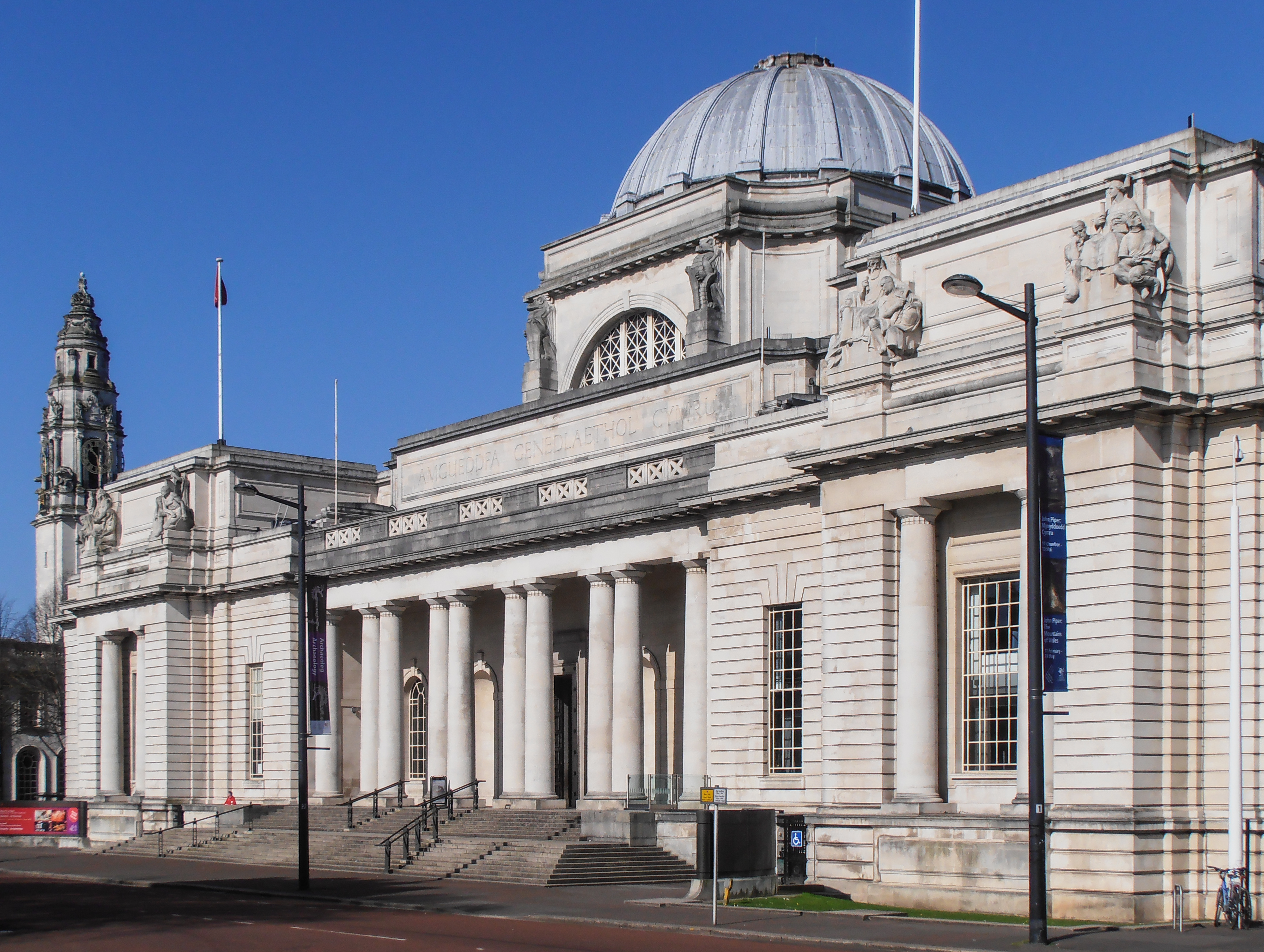
National Museum Cardiff
For years, a painting in the galleries of National Museum Cardiff was catalogued as a copy. A pleasant enough Madonna, attributed to no one in particular, it hung without fanfare until 2019, when a BBC art detective noticed something the curators had missed: a preparatory sketch on the back that matched Botticelli's known methods. The painting was genuine, worth tens of millions, and it had been sitting in plain sight in Wales all along. This is the kind of place National Museum Cardiff is. Treasures hide in unlikely corners, and the building itself, a grand sweep of Portland stone in the civic heart of Cathays Park, contains multitudes that reward the patient visitor.
A Museum Born Slowly
The National Museum of Wales was founded in 1905, its royal charter granted in 1907 as Cardiff staked its claim as a capital worthy of the name. Construction of the new building in Cathays Park began in 1912, designed by architects Arnold Dunbar Smith and Cecil Brewer in a confident Edwardian Baroque style. But the First World War intervened, and the museum did not open to the public until 1922, with the official ceremony following in 1927. What stands today is a heavily truncated version of the architects' original vision. The elaborate sculptural programme, devised by Sir W. Goscombe John, adorns the facade with allegorical groups representing Mining, Shipping, Music, and Art, all carved by different sculptors. Dragons guard the base of the dome. The building was always intended as a statement: Wales deserved a national museum to rival any in Britain.
The Davies Sisters' Gift
The museum's art collection punches far above what you might expect from a regional gallery, and the reason has two names: Gwendoline and Margaret Davies. These granddaughters of a Welsh industrial magnate assembled one of the finest collections of Impressionist and Post-Impressionist art in Britain, then bequeathed it to the nation. Renoir, Monet, Cezanne, and Van Gogh hang in Cardiff because two sisters from rural Montgomeryshire had exquisite taste and deep pockets. The collection sits alongside works spanning centuries of European and Welsh art, including paintings by Richard Wilson, the father of British landscape painting, and Thomas Jones, whose small oil sketches of Italian buildings were centuries ahead of their time. A Rembrandt portrait valued at 35 million pounds has also graced these walls.
Seven and a Half Million Objects
Beyond the art galleries, the museum holds collections of botany, geology, and zoology that number 7.5 million items. The Clore Discovery Centre, opened in 2011, lets visitors handle objects normally locked in storage: insects pinned in drawers, fossils from Welsh quarries, Bronze Age weapons wrapped in careful tissue. The geology collection tells the deep story of Wales itself, from Precambrian rocks to the coal measures that built and broke the valleys to the south. Archaeology has since moved to St Fagans, but what remains is still staggering in its scope. This is a museum where you can stand before a Monet water lily painting, walk thirty paces, and find yourself examining the jawbone of a creature that swam Welsh seas 200 million years ago.
Reckoning with Picton
In 2020, as the Black Lives Matter movement prompted reckonings with colonial history across Britain, attention turned to the museum's portrait of Sir Thomas Picton. The highest-ranking British officer to die at the Battle of Waterloo in 1815, Picton was long celebrated as a Welsh hero. But his record as governor of Trinidad was controversial even in his own time. He was convicted of authorising the torture of a fourteen-year-old enslaved girl named Luisa Calderon. The museum chose not to remove the portrait but to recontextualize it, commissioning new work from artists of Trinidadian heritage to tell the fuller story. It was a characteristically Welsh approach: honest about the past, unwilling to look away, but thoughtful about how to frame what the looking reveals.
From the Air
Located at 51.49N, 3.18W in Cathays Park, central Cardiff. The museum's white Portland stone facade is visible among the civic buildings of Cathays Park. Cardiff Airport (EGFF) lies 12 miles southwest. Best viewed at 2,000-3,000 feet in clear conditions.