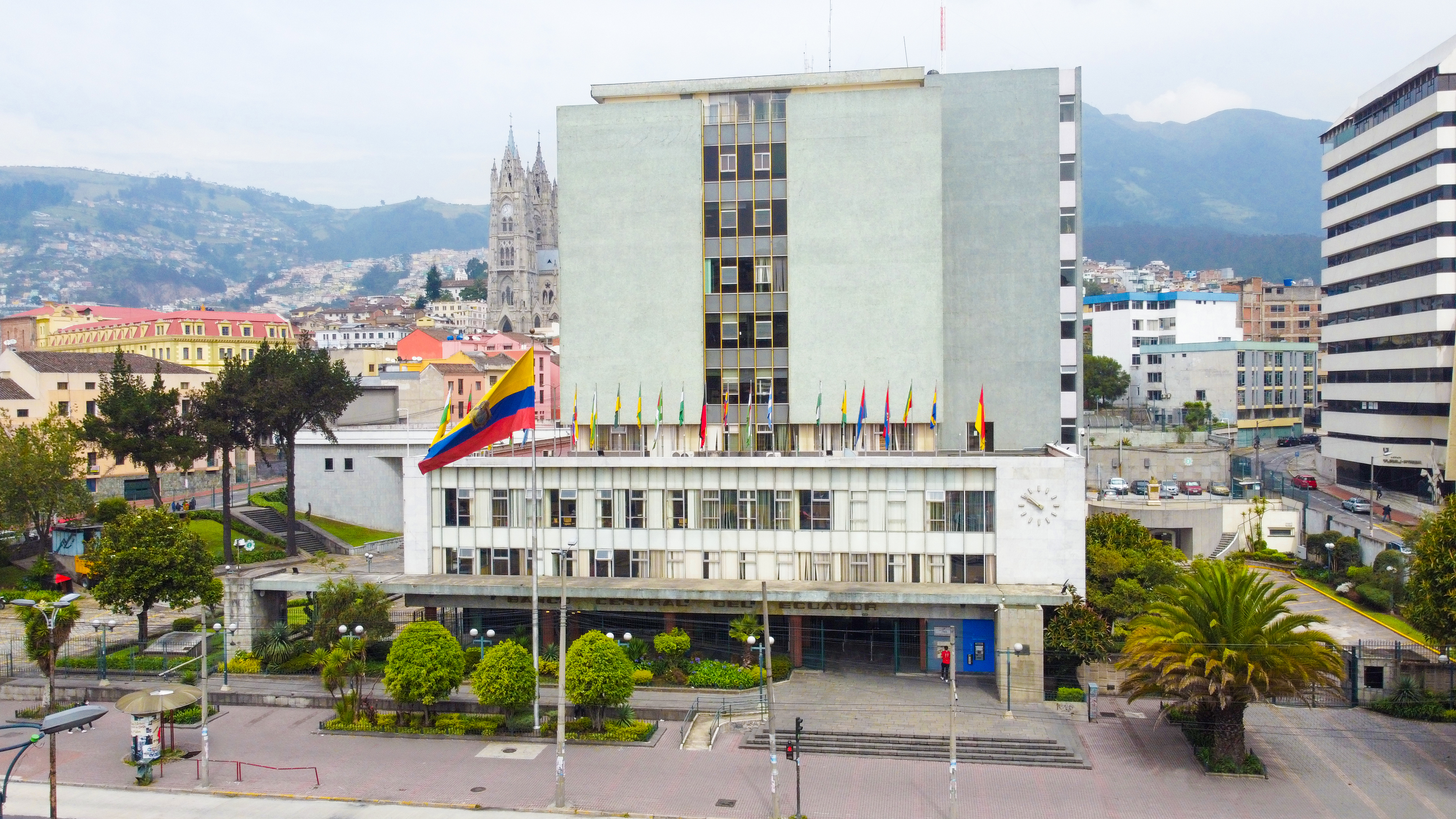
National Museum of Ecuador
The collection began, in a sense, with gold. When Ecuador's Central Bank was created in 1927, it was required by law to maintain a gold standard, so it bought gold - lots of it, including objects of obvious archaeological value that the bank's laboratory director, Julio Arauz, had the foresight to set aside rather than melt down. The pre-Hispanic artifacts piled up in vaults decade after decade. By the late 1950s the bank had also acquired major private collections, including the Max Konanz collection containing the Golden Sun of La Tolita - the luminous, rayed disc that would become the bank's own logo. It was clear the bank had, accidentally, assembled one of the most important archaeological collections in South America. In 1969 it decided to share it.
Before the Bank
Ecuador had wanted a national museum for more than a century before it got one that stuck. The first attempt came in 1839, under President Vicente Rocafuerte, who established a museum in the old Jesuit college in Quito's historic center. The project died; by 1859 its collections had been absorbed into the Central University. In 1917 President Alfredo Baquerizo decreed a new Museum of Archaeology and National Galleries, which finally opened in 1929 in the Romo-Leroux Palace. That institution in turn handed its holdings to the House of Ecuadorian Culture in 1944. Each attempt faltered for the same reasons - funding, politics, indifference - but the idea of a national museum never quite died. It kept surfacing, waiting for someone with both the money and the patience to make it real.
Two Floors of the Central Bank
The Museum of the Central Bank of Ecuador opened on December 1, 1969, on the fifth and sixth floors of the bank's Quito headquarters. Its founding director was Hernan Crespo Toral, an architect still young enough to be full of ideas. He had help from anthropologist Pedro Armillas and the bank director Guillermo Perez Chiriboga, who believed a museum could do something a currency never could: give Ecuadorians a sense of who they had always been. The timing was lucky. Ecuador's oil boom of the 1970s poured money into the country, and the bank funded archaeological and anthropological research across the entire territory. The museum's network spread to Guayaquil and Cuenca, each with its own cultural directorate. The two floors in Quito were supposed to be temporary. The museum stayed there for over twenty years.
Decline and Rebirth
Ecuador's return to democracy in 1979 should have been good news for everything, but the museum's fortunes reversed. Political appointments replaced curators. The collection kept growing; the building refused to. In 1991 the museum closed entirely. It reopened in 1995 at the House of Ecuadorian Culture, then closed again in 2015 to make way for Habitat III, the United Nations housing conference that Quito hosted in 2016. When it reopened in 2018, the museum emerged with a new identity: MuNa, the leading institution of a national network governed by the Ministry of Culture and Heritage. The graphic designer Peter Mussfeldt, a pioneer of Ecuadorian design who would die in 2021, created the new logo. Attendance peaked in 2019 at over 90,000 visitors. Then the pandemic closed it again.
What Is on the Floor
The full collection holds over 63,000 archaeological objects and 8,000 works of art - about 70,000 pieces in total, of which roughly one percent is on display. The visible galleries are arranged around themes rather than strict chronologies. There is a room about the museum itself and the scientists who built knowledge of Ecuador's past, including Federico Gonzalez Suarez and Jacinto Jijon y Caamano. Another room addresses plurinationalism and pluriculturalism, the ideas that now guide Ecuadorian self-understanding. Then come the native societies - the ceramic, stone, and metalwork of peoples who lived in the Andes long before the Inca arrived - followed by the Colonial galleries with works of the Quito school of painting and sculpture, the Republic gallery covering the young nation, and finally the modern and contemporary art that has built Ecuador's 20th and 21st century identity.
A Museum Under Pressure
The third floor remains closed for lack of funds. The government has announced plans for a new building by 2027, but in Ecuador such promises are heard carefully. Recent temporary exhibitions have included retrospectives of Olga Duenas in 2022, Judith Gutierrez in 2023, and Oswaldo Viteri in 2025 - Ecuadorian artists whose work deserved more attention than it received in their lifetimes. MuNa also administers a network of museums across northern Ecuador: the Camilo Egas Museum in Quito's old town, the Esmeraldas Museum, smaller institutions in Ibarra and Atuntaqui, and the Mariscal Sucre cultural center in Chillogallo. For a museum that began as an accounting consequence of the gold standard, it has become something its founders would have struggled to imagine - the official memory of a country still working out what that memory should contain.
From the Air
The National Museum sits near downtown Quito at 0.21°S, 78.50°W, inside the House of Ecuadorian Culture near La Alameda Park. Quito's Mariscal Sucre International (SEQM) is the primary airport, located 18 km east of the historic center at 2,400 m elevation. Quito itself sits at 2,850 m in a long narrow Andean valley flanked by active volcanoes - Pichincha to the west, Cotopaxi visible to the south on clear days. Approaches require careful attention to terrain; the airport sits in a depression with high peaks on both sides. Clear weather typically mornings, afternoon cloudbuild common.