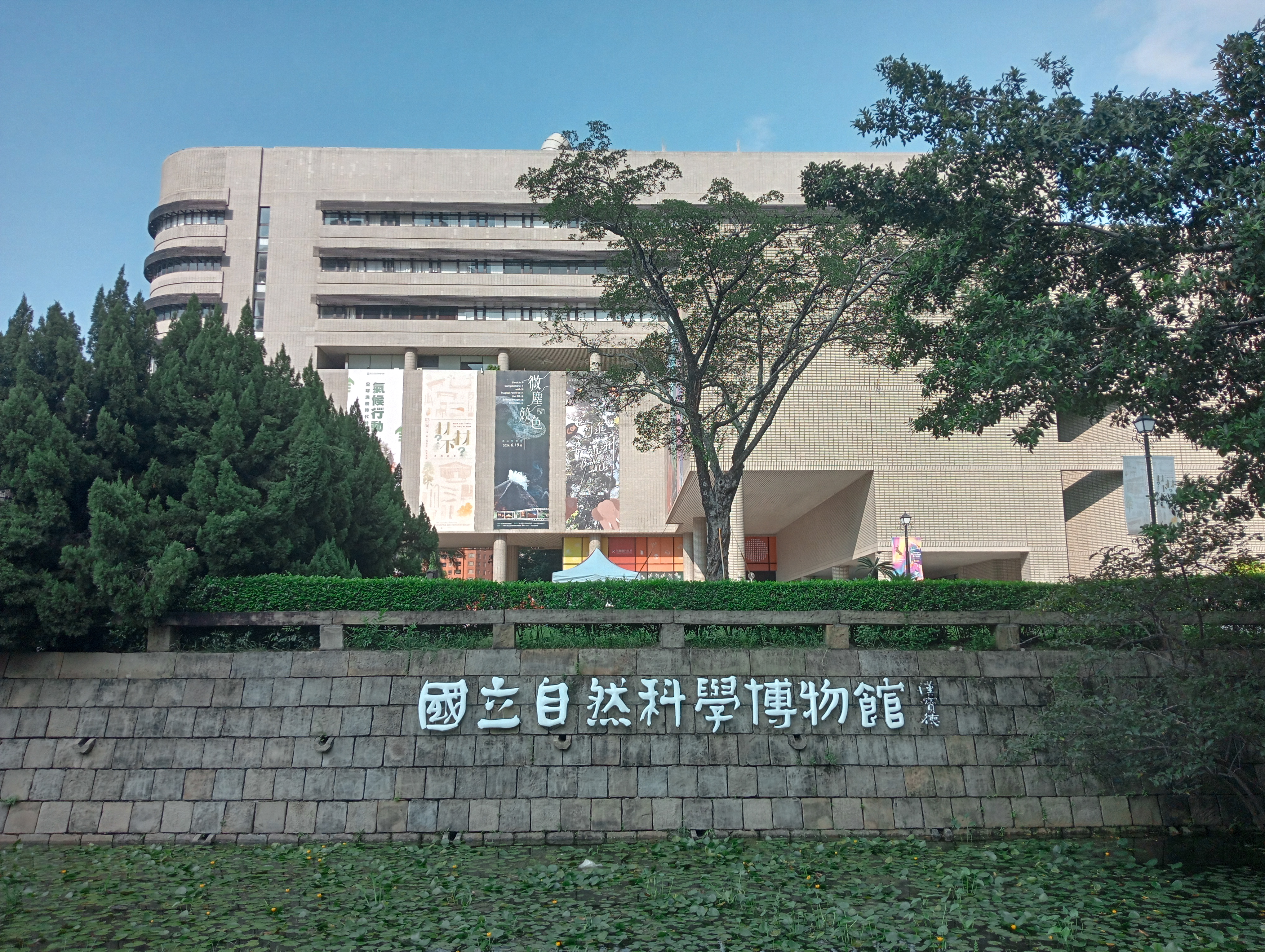
National Museum of Natural Science
The centerpiece of the Human Cultures Hall is a full-sized replica of a clock that runs on water. Built in 1092 AD during the Song Dynasty, Su Sung's Astronomical Hydro-driven Clock was one of the great engineering achievements of the medieval world, and the version standing in Taichung's National Museum of Natural Science is the only full-scale reconstruction anywhere. It is a fitting symbol for a museum that was itself an experiment in timing: when it opened on New Year's Day 1986, the institution had no existing collection to display. That absence was deliberate. The museum was designed not as a warehouse of specimens but as a place where visitors would learn by doing.
Built to Teach, Not to Store
The idea for a national science museum surfaced in 1980. The following year, architect and educator Han Pao-teh was appointed Chair of the Preparation Committee while serving as Dean of Engineering at National Chung Hsing University. Han was not merely an administrator overseeing the project; as an architect, he was intimately involved in the design. His vision was radical for its era: an exploratory, experiential museum where education came first and collections followed. The first phase, completed in 1986, included the Science Center, a Space Theater, and outdoor grounds. Han became the museum's inaugural director, a position he held for nearly a decade.
Phased into Existence
The museum grew in stages across the Taichung landscape. For the second phase, the Life Sciences Hall, Han Pao-teh brought in James Gardner, the British designer who had worked on the British Museum, to create the exhibitions. That hall opened in August 1988. The third and fourth phases, the Human Cultures Hall and Global Environment Hall, were completed in August 1993, giving the museum its full six-venue shape: Space Theater, Science Center, Life Science Hall, Human Cultures Hall, Global Environment Hall, and Botanical Garden. The Botanical Garden, including a Tropical Rainforest Greenhouse, was the final addition, completed in 1999. By that year, the museum's collection had grown from nothing to 551,705 specimens across zoology, botany, geology, and anthropology.
Twenty-Two Acres of Wonder
The museum covers 22 acres in Taichung's North District, a sprawling campus that ranges from the controlled darkness of the Space Theater to the humid warmth of the tropical greenhouse. Its satellite facilities extend the experience beyond the main campus: the 921 Earthquake Museum, opened in 2004, preserves the geological and human story of the devastating 1999 Jiji earthquake. The Chelungpu Fault Preservation Park, opened in 2013, lets visitors stand directly above the fault line that caused that earthquake. The Fenghuanggu Bird and Ecology Park, also opened in 2013, adds natural habitat to the museum's network. Together, these satellites transform the museum from a single building into a distributed system for understanding Taiwan's natural and geological identity.
The Clock Still Turns
Su Sung's original clock tower stood approximately 12 meters tall, driven by a constant flow of water that powered an escapement mechanism centuries before European clockmakers developed their own. The replica in Taichung's Human Cultures Hall captures the ingenuity of a civilization that measured time with fluid precision. It sits at the center of a museum that was itself an act of faith in timing. Han Pao-teh bet that a science museum without a founding collection could build relevance through experience rather than artifacts. Four decades later, the museum draws over a million visitors annually, and its collection has grown from zero to hundreds of thousands of specimens. The experiment worked.
From the Air
Located at 24.16N, 120.67E in North District, Taichung, Taiwan. The museum's 22-acre campus is visible as a large institutional complex with greenhouse structures and green space in the northern part of the Taichung urban area. Nearest airport: Taichung Airport (RCLG/RMQ), approximately 12 km north-northwest. The Space Theater dome and Tropical Rainforest Greenhouse are distinctive features from lower altitudes.