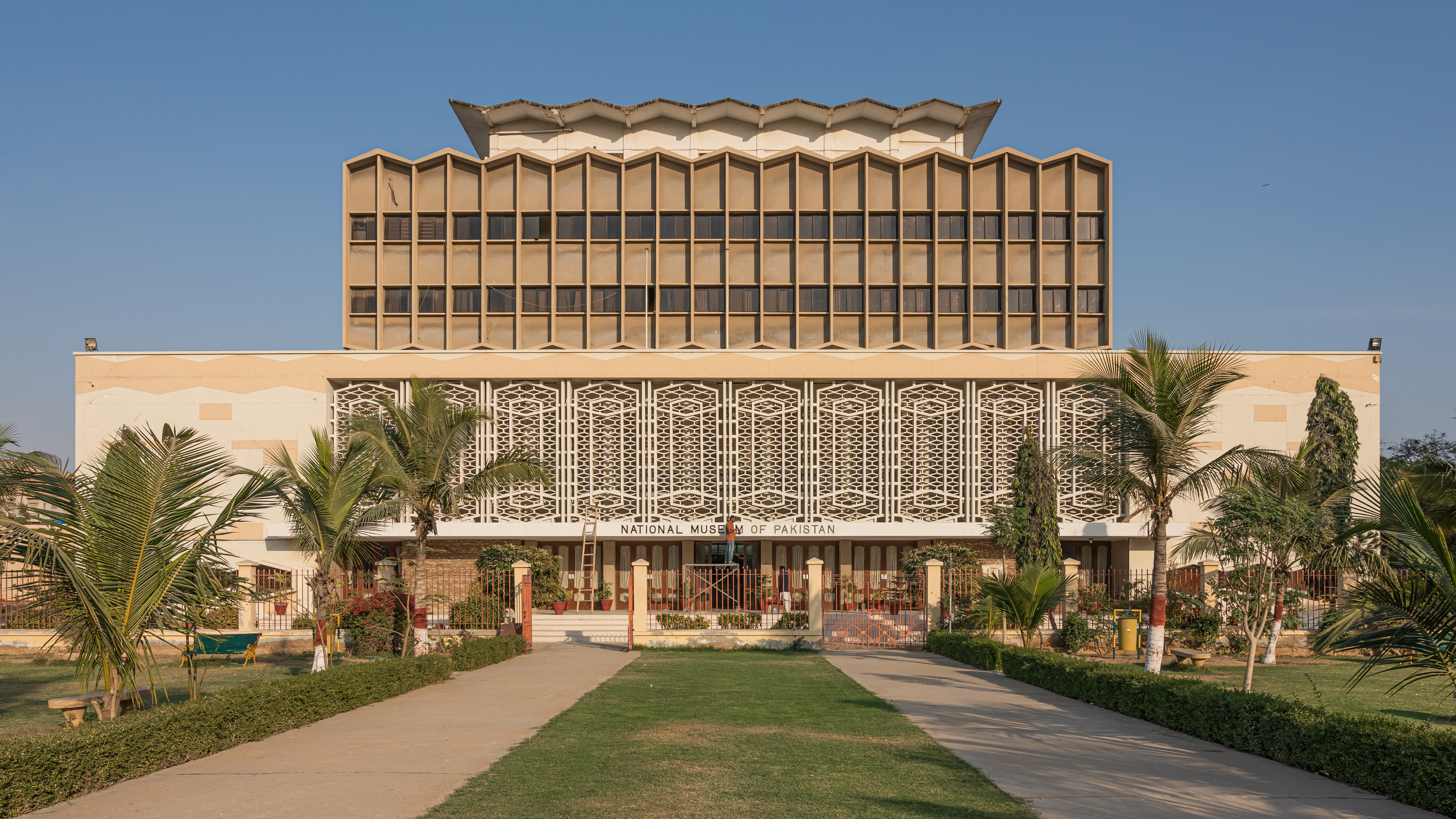
National Museum of Pakistan
Behind glass in the National Museum of Pakistan sits a small steatite sculpture, barely 17.5 centimeters tall, carved between 2400 and 1900 BCE. It is known as the Priest-King, and it may be the most famous artwork to emerge from the Indus Valley civilization. The figure wears a cloak decorated with trefoil patterns and a headband with a circular ornament. Its half-closed eyes project an authority that has lasted four thousand years. The sculpture was excavated at Mohenjo-daro, and its presence in Karachi connects Pakistan's largest modern city to one of humanity's earliest urban civilizations.
From Frere Hall to Burns Garden
The National Museum was established on 17 April 1950 inside Frere Hall, replacing the defunct Victoria Museum. That same year, the government constituted an advisory council tasked with enriching the collection through acquisitions and purchases of antiquities. But Frere Hall was a nineteenth-century town hall, not a purpose-built museum, and the collection quickly outgrew it. In 1959, architect F. A. Khan proposed a modern building that would use local materials and be, in his words, "truly representative of our great cultural heritage." The museum moved to its current premises in Burns Garden in 1970, starting with four galleries and gradually expanding to eleven.
Eleven Galleries, Four Thousand Years
The museum's galleries span Pakistan's cultural history from the Indus Valley civilization to the modern state. Mohenjo-daro artifacts include the Priest-King, terracotta toys, and stamp seals. Gandhara civilization sculptures display the Greco-Buddhist art that flourished in what is now northern Pakistan. Islamic art and miniature paintings occupy their own galleries. A Quran Gallery houses more than 300 copies of the Quran, with approximately 52 rare manuscripts on display. An Ethnological Gallery presents life-size figures representing the different ethnicities living across Pakistan's four provinces. The range is extraordinary: from a tiny carved figure made before written history to the pen of Quaid-e-Azam Muhammad Ali Jinnah.
Relics of the Founders
Among the museum's most personal holdings are belongings of Pakistan's national heroes. Quaid-e-Azam's pen, cuffs, and sword sit alongside Allama Iqbal's personal chair and pen. Liaquat Ali Khan's itar bottle, watch, and walking stick are displayed nearby. These everyday objects humanize figures who have become monuments themselves. The museum also holds a collection of 58,000 ancient coins, some dating to 74 Al-Hijra, and approximately 70,000 publications, books, and other materials transferred from the Archaeology and Museums Department for public access.
A Quiet Repository
The museum includes a conservation laboratory for preserving its collections and an auditorium seating 250 for lectures and events. Each year, the National Museum hosts roughly a dozen exhibitions tied to national days and other occasions. Despite its extraordinary holdings, the museum has struggled with low visitor numbers. A 2003 report in Dawn newspaper noted that few people visited. The building itself is modest compared to the grandeur of its contents. But for those who do come, the journey from Mohenjo-daro seals to the founding father's pen traces the full arc of civilization on the Indus, all contained within a single building in the heart of Karachi.
From the Air
Located at 24.853N, 67.018E in Burns Garden in central Karachi. The museum building is a modern structure without a particularly distinctive aerial profile. Jinnah International Airport (OPKC) is approximately 14 km to the east. Nearby landmarks include Frere Hall and Bagh-e-Jinnah gardens.