National Museum of Roman Art
Rafael Moneo faced an unusual challenge when he designed a museum for Merida's Roman artifacts: how do you build something new that belongs alongside structures two thousand years old? His answer was to speak Latin in brick. The National Museum of Roman Art, which opened in 1986, uses soaring Roman arches and warm brick walls to create a space that feels like walking through the ruins themselves, only with the artifacts brought inside and illuminated. It was a building so perfectly suited to its purpose that it helped secure Moneo the Pritzker Prize in 1996.
Born From Confiscation
Merida's first archaeology museum was not born of scholarly ambition but of political upheaval. A royal order issued on March 26, 1838, established a museum to house antiquities that had been accumulating as a result of the Ecclesiastical Confiscations of Mendizabal, a massive government seizure of Church properties that redistributed land and emptied monasteries across Spain. A church building was repurposed to hold the collections, and for well over a century, Merida's Roman treasures were displayed in these modest, improvised quarters. It was only in 1975, on the two thousandth anniversary of the city's founding as Emerita Augusta, that the museum was formally reconstituted as a national institution devoted specifically to Roman art.
Moneo's Roman Conversation
The current building, designed by Spanish architect Rafael Moneo and completed in 1986, is itself a work of art. Its massive brick arches echo the forms of the aqueducts and bridges scattered across the city outside, creating a series of soaring nave-like spaces where natural light filters down onto mosaics, sculptures, and architectural fragments. The museum is built directly above Roman remains -- excavated ruins are visible in the basement level, and the building's foundations literally interweave with the ancient city beneath. This was not mere architectural conceit. Moneo understood that in Merida, the past is not something you visit and leave behind; it is the ground under your feet.
Treasures of Augusta Emerita
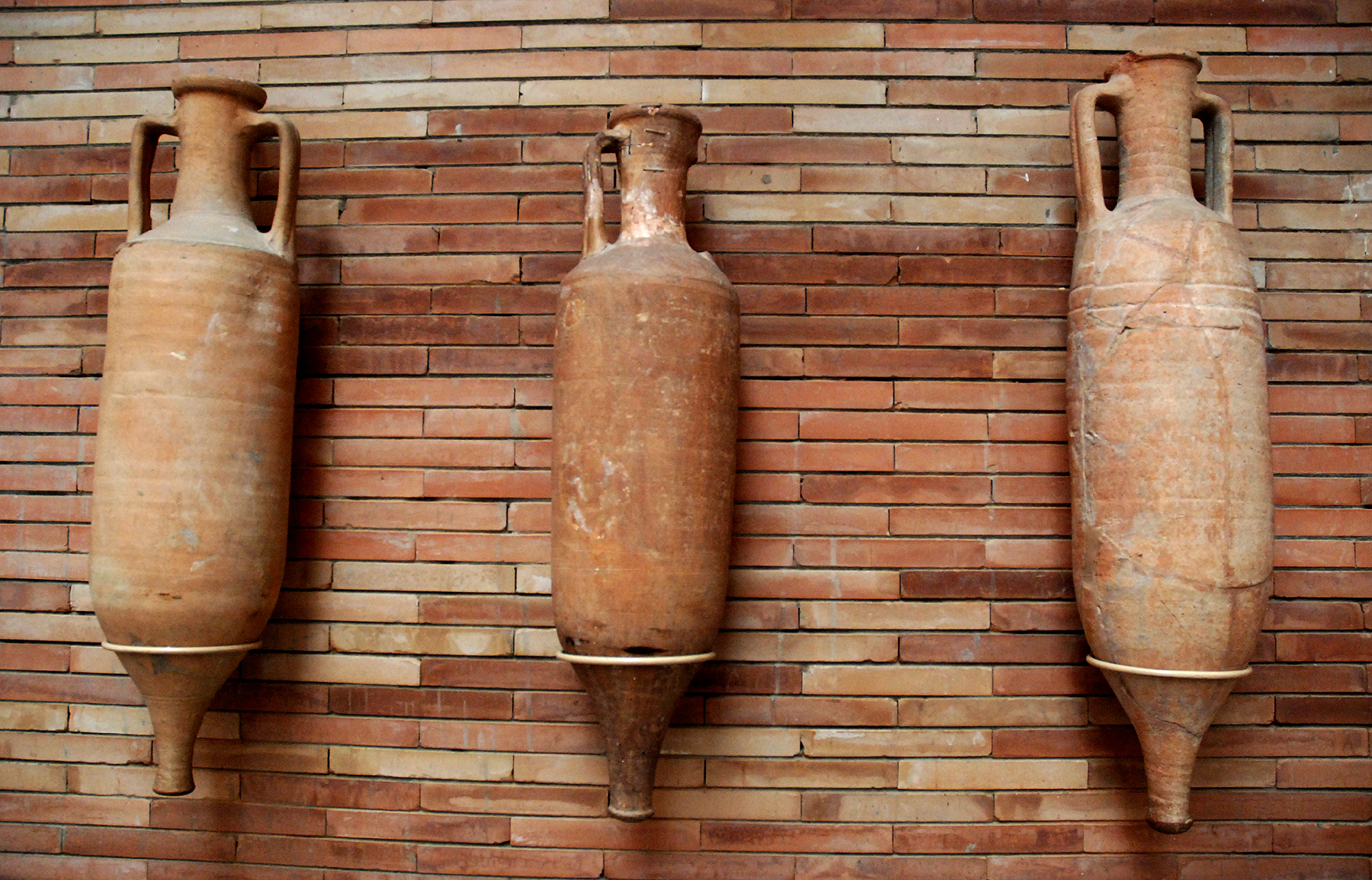
The collection spans the full arc of Roman Merida. Sculptures of emperors and gods from the theatre's scaenae frons -- Ceres, Pluto, Proserpina, togaed figures interpreted as imperial portraits -- stand in gallery spaces that approximate the scale of their original settings. Mosaics pulled from villas and public buildings cover entire floors, their tesserated surfaces depicting mythological scenes, geometric patterns, and the daily life of a provincial capital. Inscriptions, coins, glassware, and ceramic fragments fill out the picture of a city that was not merely an outpost but a center of Roman civilization on the western frontier. As one of Spain's National Museums, attached to the Ministry of Culture, it serves as the primary repository for ongoing excavations across the Archaeological Ensemble of Merida, a UNESCO World Heritage Site since 1993.
Where the Past Stays Present
The museum sits adjacent to the Roman theatre and amphitheatre, making it impossible to separate the artifacts from their context. Visitors often move back and forth between the museum galleries and the ruins outside, seeing a sculptured head in one and the empty niche it once occupied in the other. This dialogue between building and landscape, artifact and ruin, is exactly what Moneo intended. The museum does not merely house the past. It participates in it, its brick arches carrying forward a conversation with the architects of Emerita Augusta that has been running, unbroken, for two millennia.
From the Air
Located at 38.92N, 6.34W in Merida, Extremadura, directly adjacent to the Roman theatre and amphitheatre. The museum's brick architecture is visible from lower altitudes among the archaeological complex on the eastern side of the city. Nearest airport is Badajoz (LEBZ), approximately 60 km west.