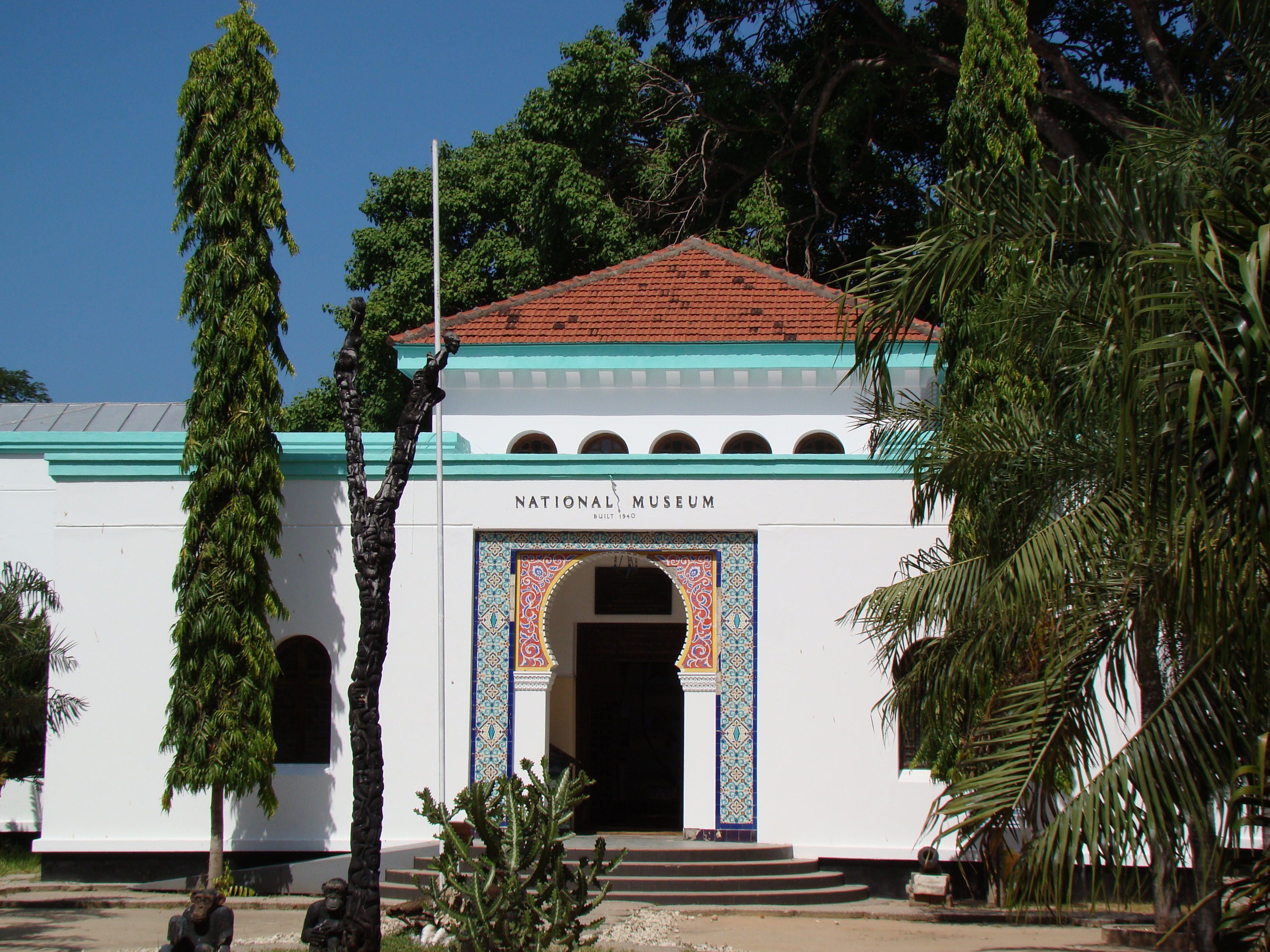
National Museum of Tanzania
The skull is two million years old. A specimen of Paranthropus boisei, it was found by Mary and Louis Leakey at Olduvai Gorge and now sits in a glass case in the National Museum of Dar es Salaam, on Shaaban Robert Street, next to the botanical gardens. Visitors walk past it on their way to exhibits on the Shirazi city-state of Kilwa, Chinese pottery traded across the Indian Ocean centuries ago, and automobiles that once belonged to King George V. The juxtaposition is deliberate, if sprawling -- this museum, and the six others in its consortium, are trying to tell the entire story of a place where human history arguably began.
A King's Memorial Becomes a Nation's Museum
The main museum in Dar es Salaam was established in 1934 under Tanganyika governor Harold MacMichael, originally as a memorial to King George V. It opened to the public in 1940. In 1963, a second building was added, and the institution pivoted from royal tribute to national repository. Today it houses everything from paleontological specimens to colonial-era artifacts -- the Leakey skull bones alongside relics of German and British administration. One of the former king's automobiles remains on display, an artifact that has outlasted the political order that placed it there. The museum sits in Kivukoni ward in Ilala District, a location that puts it within walking distance of the Askari Monument and the harbor, embedding it in the same downtown grid where the city's colonial, commercial, and cultural layers are most densely compressed.
Seven Museums, One Consortium
The National Museum of Tanzania is not a single building but a network. Established as a corporate body under the National Museum Act of 1980, the consortium now encompasses seven institutions scattered across the country. In Arusha, the National Natural History Museum on Boma Road has two permanent exhibits on human evolution and entomology. Down the road, the Arusha Declaration Museum displays documents from the colonial period and from the political vision of Julius Nyerere, Tanzania's first president. Nyerere's own legacy is preserved more personally at the Mwalimu Julius K. Nyerere Memorial Museum in Butiama, his birthplace and burial site. In Songea, the Dr. Rashid M. Kawawa Memorial Museum honors Tanzania's first prime minister, while the Village Museum in Dar es Salaam's Mikocheni ward showcases traditional huts from 16 ethnic groups alongside daily performances of traditional music and dance.
The Mass Grave at Songea
The most sobering member of the consortium is the Majimaji Memorial Museum in Songea. It stands on the site where, on 27 February 1906, German colonial forces hanged 67 Africans and buried them in a mass grave. The executions were part of the suppression of the Maji Maji War, a rebellion against German rule that lasted from 1905 to 1907. Historians estimate that as many as 300,000 people died during the conflict, many from famine caused by the German strategy of destroying crops and villages. A memorial service is held at the site every year on the anniversary. In October 2023, German Federal President Frank-Walter Steinmeier visited the museum and asked for forgiveness for the violence committed during colonial rule. He also announced that the skulls of resistance fighters, which had been taken to Germany as trophies, would be returned -- an act of restitution more than a century overdue.
Ninety Buildings, Two Million Years
According to the consortium's own accounting, 90 historical buildings and monuments are under its care. These range from the colonial Ocean Road Hospital in Dar es Salaam and the first German administrative building -- the Boma -- in Bagamoyo, to the Tendaguru paleontological site in Lindi, where some of the most significant dinosaur fossils in Africa were excavated in the early twentieth century. The scope is almost absurdly ambitious for a single national institution: from Jurassic dinosaurs to a schoolteacher who became president, from Swahili trading networks to Cold War-era declarations of African socialism. Yet the ambition reflects the country itself. Tanzania sits on some of the oldest evidence of human ancestry anywhere on Earth. Its coast has been a crossroads of Indian Ocean trade for over a thousand years. Its colonial history involved three European powers in rapid succession. Any museum that tries to hold all of that will inevitably feel overstuffed. The alternative -- leaving the story untold -- would be worse.
From the Air
The main Dar es Salaam museum is located at approximately 6.81S, 39.29E, on Shaaban Robert Street adjacent to the botanical gardens in central Dar es Salaam. Julius Nyerere International Airport (HTDA) is about 10 km to the west. The museum building is not individually visible from altitude, but the botanical gardens and nearby harbor waterfront are recognizable landmarks. The consortium's other museums are spread across Tanzania: Arusha (near HTKJ/Kilimanjaro International), Butiama (on Lake Victoria's southern shore), and Songea (in southern Tanzania near HTSO).