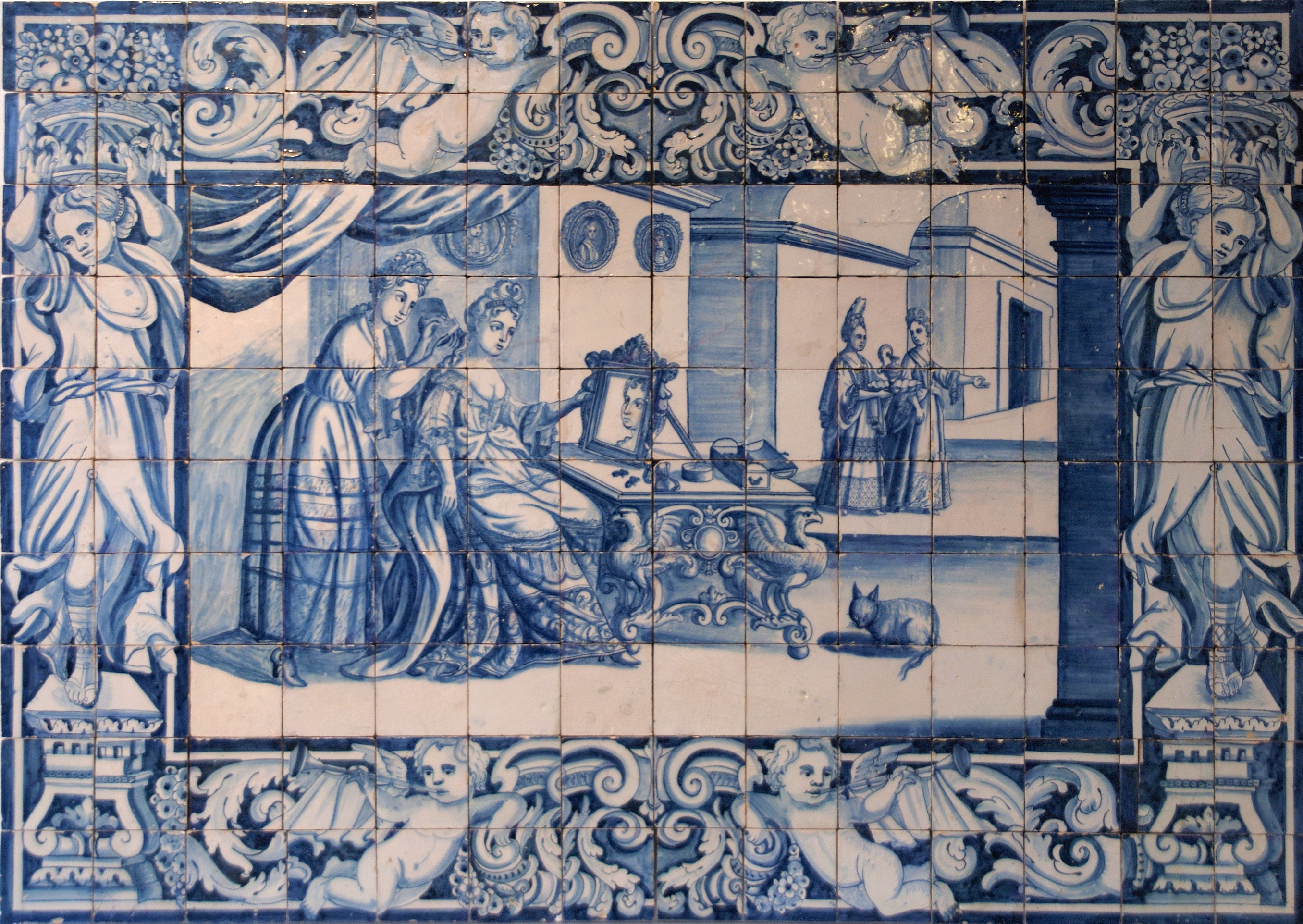
National Museum of the Azulejo
Walk into any building in Lisbon and look at the walls. Chances are they are covered in azulejos, the painted ceramic tiles that have defined Portuguese architecture for over five hundred years. Blue and white scenes of saints and ships, geometric Moorish patterns, Art Nouveau florals, contemporary abstractions: the tradition is so pervasive that Portugal needed an entire museum to contain its history. The Museu Nacional do Azulejo, established in 1965 and granted National Museum status in 1980, is the only museum in the world devoted entirely to the art of the tile.
A Convent Built by a Queen
The museum occupies the former Convent of Madre de Deus, founded in 1509 by Queen Leonor, one of the most culturally influential figures of the Portuguese Renaissance. The convent underwent several building campaigns over the centuries, each adding layers of decoration. The 16th-century Mannerist cloister offers geometric simplicity, while the church interior erupts in Baroque exuberance: the high choir features richly carved and gilded woodwork, the sacristy displays Brazilian hardwood cabinets framing paintings in carved wood, and the Chapel of Saint Anthony wears 18th-century Baroque ornamentation alongside canvases by the painter Andre Goncalves. The building itself is an argument for the museum's thesis: that decorative art is inseparable from Portuguese identity.
Five Centuries on the Wall
The permanent exhibition begins not with finished tiles but with raw materials, walking visitors through the clay, glazes, and firing techniques that transform earth into art. From there, the route follows a chronological path spanning more than five centuries. Hispano-Moorish tiles from the late 15th century give way to the Renaissance-influenced patterns of the 16th, including the Nossa Senhora da Vida retable, a tile panel of striking pictorial complexity. The 17th century brought the large-format narrative panels that became Portugal's signature style, while the 18th century saw the blue-and-white palette reach its zenith. One of the museum's treasures is the Great View of Lisbon, a panoramic tile panel from around 1700 that depicts the city's waterfront before the 1755 earthquake destroyed much of what it records.
The Tile as Living Tradition
What distinguishes this museum from similar collections elsewhere is its insistence that the azulejo is not a relic. The exhibition continues through the 19th and 20th centuries, showing how the tile tradition adapted to industrialization, Art Nouveau aesthetics, and modernist abstraction. Temporary exhibitions have pushed these boundaries further. In 2017, From the Shadows of Kyoto to the Light of Lisbon explored connections between Portuguese tilework and Japanese ceramic traditions, a reminder that the azulejo traveled with Portuguese mariners along the trade routes of the empire. The collection extends beyond tiles to include ceramics, porcelain, and faience, but the azulejo remains the throughline, a deceptively simple technology that the Portuguese elevated into one of the most distinctive artistic traditions in Europe.
From the Air
Located at 38.724N, 9.114W in eastern Lisbon, near the Santa Apolonia train station along the Tagus River waterfront. The Madre de Deus Convent complex is visible from the air as a large institutional building east of the city center. Nearest airport is Lisbon/Humberto Delgado (LPPT), 9 km northwest. Best viewed at 2,000-4,000 ft AGL.