National Museum of Transportation
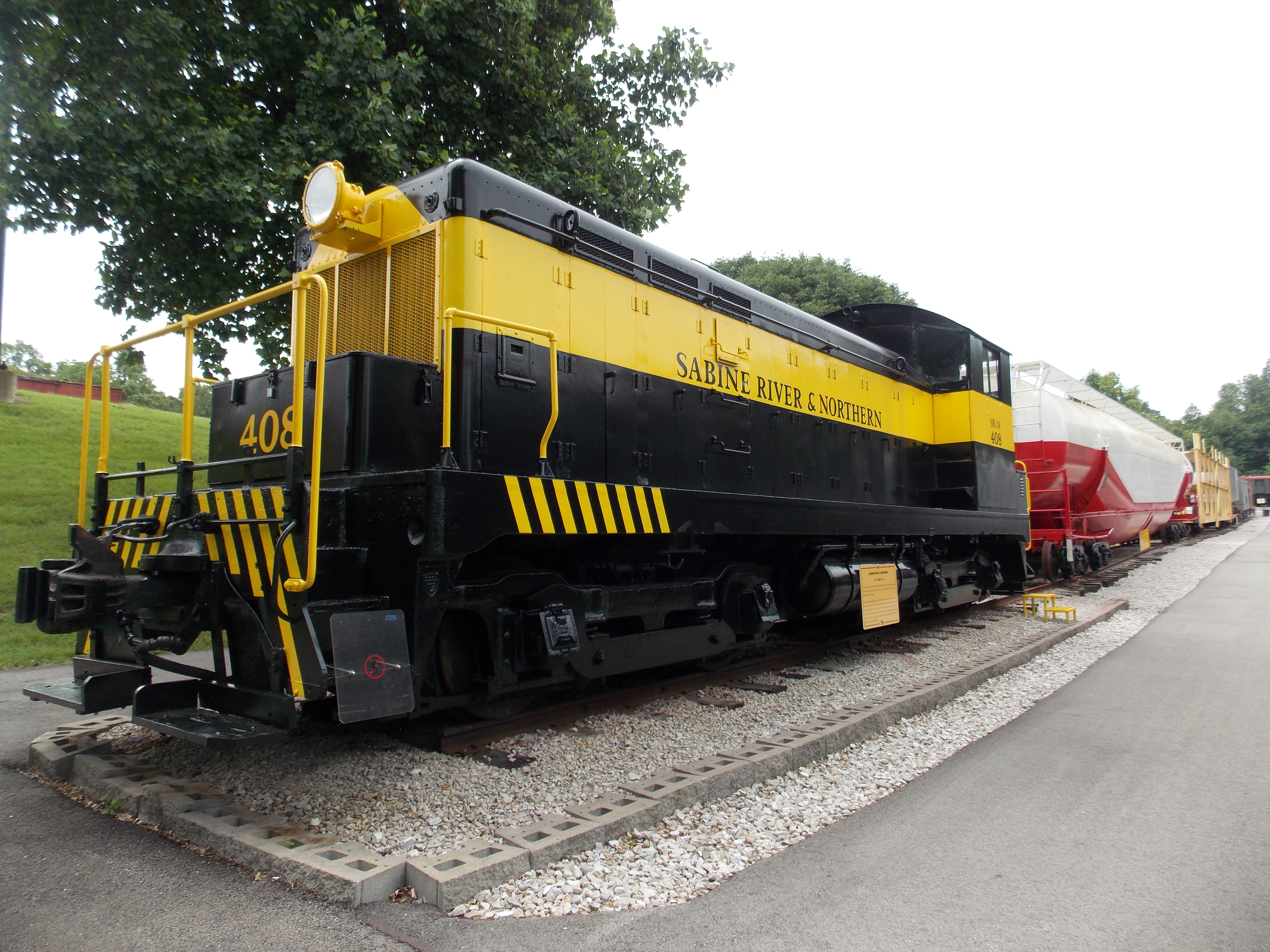
The first thing you notice is the scale. Union Pacific Big Boy No. 4006, one of the largest steam locomotives ever built, sits in the open Missouri air, its boiler stretching so far into the distance that it warps your sense of proportion. Beside it, a Norfolk & Western Y6a 2-8-8-2 -- the strongest-pulling steam locomotive in existence -- anchors another stretch of track. This is the National Museum of Transportation in Kirkwood, a 42-acre collection on the western edge of St. Louis that has been rescuing, restoring, and displaying the machines that moved America since 1944. The museum's secret weapon is a direct railway spur to the Union Pacific mainline, which means that when something enormous needs to come in, it can simply roll through the door.
Through the First Tunnel West
At the southwest corner of the museum property sits West Barretts Tunnel, a stone-lined bore built in 1853 that holds a distinction few structures can claim: it was one of the first railroad tunnels to operate west of the Mississippi River. Added to the National Register of Historic Places in 1978, the tunnel is a physical reminder that St. Louis was once the gateway where eastern rail networks met the western frontier. The museum grew from that same spirit of connection. Founded in 1944, it began collecting the rolling stock that was rapidly becoming obsolete as diesel replaced steam and highways replaced rails. Today the collection spans 15 decades of transportation history, from an 1873 Baltimore and Ohio camelback locomotive to a Hyperloop One XP-2 test pod -- a range so vast it borders on absurd, and is entirely delightful.
Locomotives of Legend
The railroad collection reads like a roll call of American industrial ambition. EMD FT No. 103 is here -- the first F-unit ever built and a National Engineering Landmark, the diesel locomotive that proved steam's days were numbered. The only surviving Milwaukee Road class EP-2 Bi-Polar electric locomotive hums with the memory of Pacific Northwest mountain grades. A Southern Pacific GS-6 'War Baby,' the sole surviving example of its class, recalls the wartime urgency that simplified locomotive design to keep trains running. The Missouri-Kansas-Texas 4-4-0 No. 311, the sole surviving M-K-T steam engine, represents an entire vanished railroad. Chicago, Burlington and Quincy No. 9908, the 'Silver Charger,' pulled the General Pershing Zephyr in the streamlined era when railroads competed on style as much as speed. A restored trolley line operates on site, running vintage streetcars along former Union Pacific track -- a living demonstration rather than a static display.
Dream Cars and Flying Machines
The Earl C. Lindburg Automotive Center houses 25 vehicles that tell their own stories. A 1901 St. Louis Motor Carriage Company car represents the city's early automotive ambitions. A 1963 Chrysler Turbine Car, one of fewer than 50 ever built, embodies the jet-age optimism of midcentury American design. Bobby Darin's DiDia 150 dream car, a $150,000 custom creation that took seven years to build, gleams under museum lights like a fever dream of chrome and ambition. A 1964-and-a-half Ford Mustang and a 1915 Model T bracket the spectrum of American automotive aspiration. Outside, a C-47 Skytrain guards the main gate and a T-33 Shooting Star points skyward. In 2021, the museum opened a permanent exhibition of roughly 100 model airplanes donated by Sanford McDonnell, each connected to the McDonnell Aircraft Corporation that once made St. Louis a center of aerospace engineering.
Volunteers Keeping History Alive
What distinguishes this museum from many of its peers is the dedication of its volunteer corps. The Museum of Transportation Trolley Volunteers have been restoring and operating vintage streetcars since the 1990s, beginning when they acquired St. Louis Public Service car No. 1743 from the San Francisco Municipal Railway and strung approximately 1,000 feet of overhead wire above a section of track near the Abbott Building. In 1998, they fully restored Philadelphia Transportation Company car No. 2740. By 2002, a St. Louis Waterworks Railway car had joined the active fleet after a full rebuild that began as a cosmetic project and expanded when volunteers realized the car was in better shape than expected. Boeing employees began restoring the very first F/A-18 Super Hornet ever manufactured in 2024, a project that connects the museum to St. Louis's deep aerospace heritage. The trolley line was officially named the Neil F. Norkaitis Demonstration Trolley Line in 2024, honoring the former operations director who kept the cars running.
From the Air
Located at 38.57°N, 90.46°W in Kirkwood, Missouri, on the western edge of the St. Louis metropolitan area. The 42-acre museum site is identifiable from the air by its extensive rail yard and large collection of locomotives and rolling stock visible in the open. West Barretts Tunnel is at the southwest corner of the property. Spirit of St. Louis Airport (KSUS) is approximately 5 nm to the north. Lambert-St. Louis International Airport (KSTL) is about 15 nm northeast. The terrain is rolling Missouri at approximately 500 feet MSL. The museum grounds are best distinguished from surrounding suburban development by the density of rail equipment visible from 2,000-4,000 feet.