National Museum (Oman)
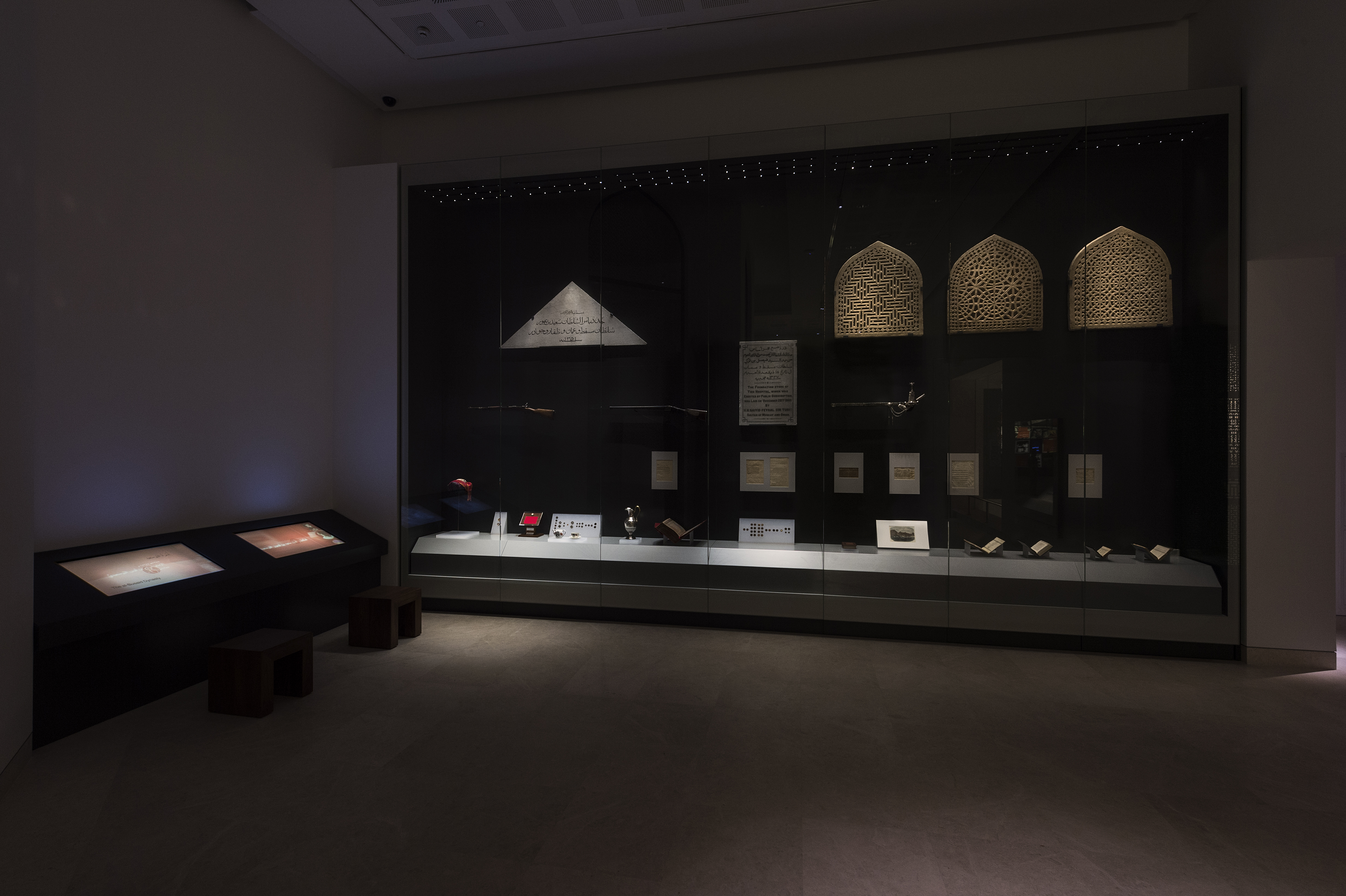
Two million years of human presence on the Oman peninsula fit inside 13,700 square meters. The National Museum of the Sultanate of Oman, which opened in Old Muscat on July 30, 2016, after a decade of development, holds 5,466 objects across 14 permanent galleries. Among them: an internationally significant collection of prehistoric metallic artifacts, evidence of one of Arabia's oldest metallurgical traditions. The museum was the first in the Middle East to adopt Arabic Braille script for visually impaired visitors, a detail that says something about the kind of institution Oman intended to build.
A Decade in the Making
Sultan Qaboos established the museum by royal decree in 2013, but the project had been in development since the mid-2000s. A collaboration between the Ministry of Heritage and Culture, the Royal Estate Affairs, Jasper Jacob Associates, and Arts Architecture International shaped both the building and the curatorial vision. The goal was not merely to display artifacts but to create what the government called its flagship cultural institution -- a place that would anchor Oman's national identity in material evidence rather than mythology. The purpose-designed building sits in the heart of Old Muscat, at the southern end of the 250-meter plaza that faces Al Alam Palace, placing the nation's cultural memory directly across from its ceremonial seat of power.
Silver, Metal, and Deep Time
The museum's prehistoric metallic artifacts rank among the most significant in the region, documenting a copper-working tradition that dates back thousands of years. Oman's position on ancient trade routes meant that metal goods moved through these ports long before anyone wrote the history down. The silverwork collection carries particular interest: curator Mouza Sulaiman Mohamed Al-Wardi is part of an international team studying the legacy of Oman's silver tradition, in which women historically worked as silversmiths. The 14 permanent galleries carry visitors from the earliest evidence of human settlement on the peninsula through maritime history, Islamic civilization, and the modern era, dedicating 4,000 square meters of the building to the permanent collection and 400 square meters to temporary exhibitions.
Behind the Glass, Before the Display
The National Museum adopted the region's first open-plan museum storage concept, an approach that lets visitors observe the processes artifacts undergo before going on display -- conservation, documentation, and preparation. The transparency is deliberate, designed to demystify the work of museums and make visible the labor that usually happens behind closed doors. The building also houses 43 digital immersive experiences, a learning center, conservation facilities, an ultra-high-definition cinema, and discovery areas for children. The infrastructure for visitors with special needs goes beyond the Arabic Braille signage to include accessible pathways and integrated assistive technology throughout the galleries.
A Palace View
Location matters enormously for this museum. Old Muscat is compact, hemmed by mountains and sea, and the National Museum sits on the same ceremonial axis as Al Alam Palace, flanked at a distance by the Portuguese forts of Al Jalali and Al Mirani. Walking from the museum to the palace takes minutes. The effect is to place Oman's collected cultural history -- from prehistoric copper tools to the silver work of female artisans to the documentation of maritime trade -- within sight of the political institutions that claim to be their inheritors. The board of trustees includes figures from across Oman's government and international museum world, including the director general of Russia's Hermitage Museum, signaling ambitions that reach beyond national boundaries.
From the Air
The National Museum is at approximately 23.61N, 58.59E in Old Muscat, directly south of Al Alam Palace on a shared plaza. The museum building is modern and lower-profile than the palace and forts but visible in the context of Old Muscat's compact layout. Best approached from the Gulf of Oman side at low altitude. Nearest airport: Muscat International (OOMS).