National Natural History Museum of China
In the center of the Mesozoic gallery, a Mamenchisaurus skeleton stretches its impossibly long neck toward the ceiling, while smaller dromaeosaur skeletons dart around its feet as if frozen in mid-chase. This is the National Natural History Museum of China, where 200,000 specimens crowd 8,000 square meters of display space in the Dongcheng district of Beijing, and where the story of life on Earth unfolds across three fossil galleries that would make any paleontologist's pulse quicken.
From Central Museum to National Stage
The museum's institutional identity has been as restless as the tectonic plates it documents. Founded in 1951 as the Central Museum of Natural History by the Ministry of Culture and the Chinese Academy of Sciences, it was transferred to the Beijing city government in 1962 during the Great Leap Forward and renamed the Beijing Museum of Natural History. Bureaucratic parentage shifted again in 1975, then 1985, as the museum passed between municipal bureaus. In June 2023, it finally received the grander title of National Natural History Museum of China, though despite the name, it remains a municipal institution rather than a true national museum. The upgrade in title reflects an ambition the collection has long justified: this is one of the most significant natural history collections in all of China.
Where Ancient Worlds Collide
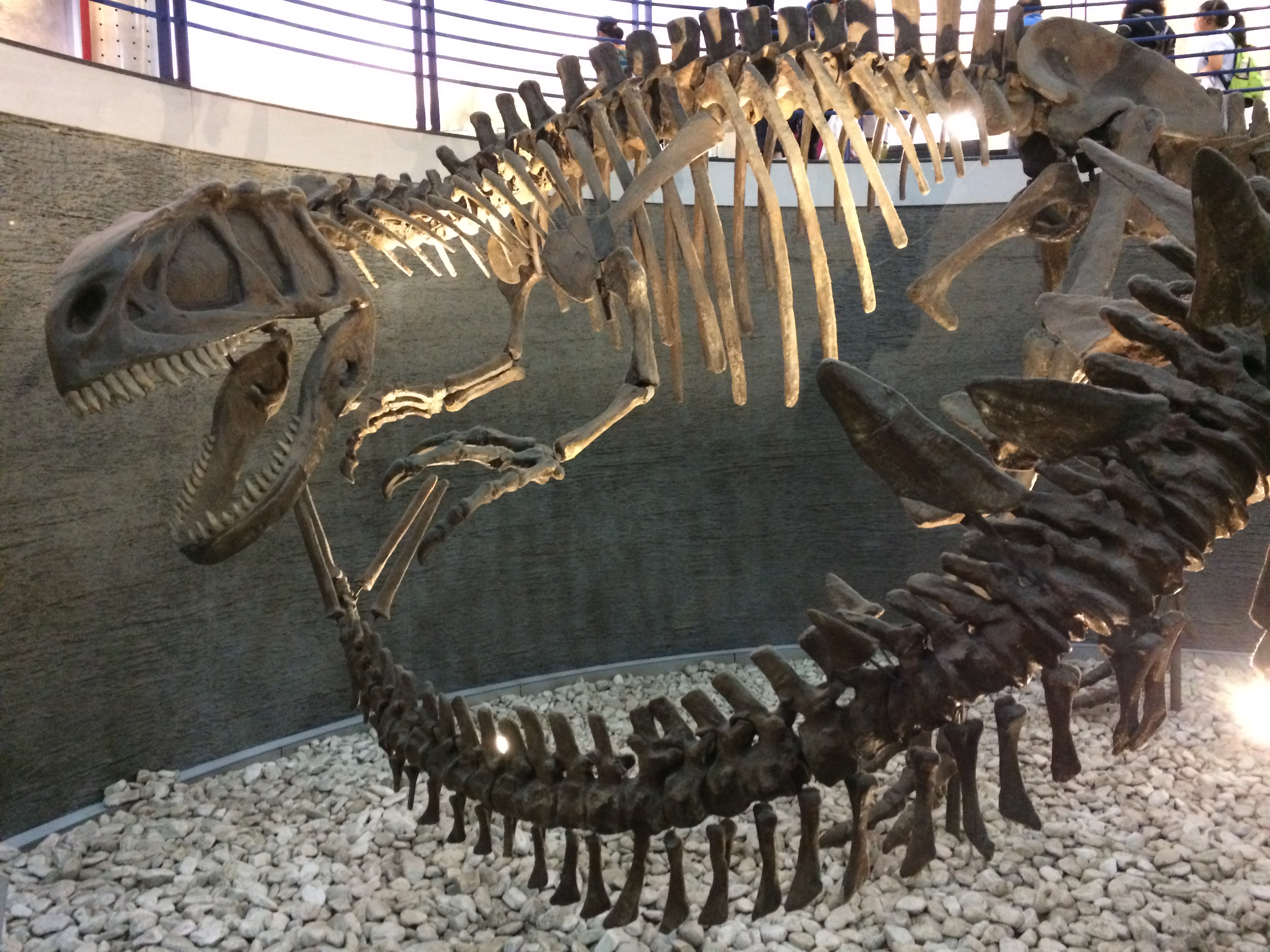
The Mesozoic gallery opens with a large bronze model of the ancient earth, then plunges visitors into a Jurassic tableau. Beyond the towering Mamenchisaurus, a Yangchuanosaurus lunges at a Tuojiangosaurus in the gallery's rear, their poses suggesting a predator-prey drama frozen for eternity. But the gallery's true treasures may be its feathered dinosaurs from Liaoning province -- specimens of Confuciusornis, Microraptor, and Anchiornis that helped revolutionize our understanding of the link between dinosaurs and birds. These delicate fossils, with feather impressions still visible in the stone, represent some of the most important paleontological discoveries of the past century. A connecting hall brings animatronic dinosaurs to life alongside a quieter display of fossilized eggs.
Giants of a Younger Earth
The Cenozoic gallery shifts the scale but not the drama. Paraceratherium, the largest land mammal that ever lived, stands alongside Stegodon and the great Irish elk Megaloceros, their antler spans dwarfing the display cases around them. A woolly mammoth skull anchors one corner while an entelodont skeleton -- the so-called 'terminator pig' of the Eocene -- lurks in a glass case. Sabertooth cat skulls and the bizarre unicorn-like Elasmotherium complete a menagerie that makes the modern world seem almost tame by comparison.
Life's First Experiments
The earliest life gallery reaches further back than the dinosaurs, all the way to the Cambrian explosion some 540 million years ago. A large sculpture of Anomalocaris -- a predator that ruled the seas before fish even existed -- looms over displays of trilobites and the surreal spike-covered Hallucigenia, which appears to burst from the gallery floor. Ammonites are arranged in a helix that mimics the shape of their shells, a design choice that links specimen to sculpture. The museum has published its bimonthly journal Da Ziran ('Great Nature') since 1980, contributing to the scientific conversation its galleries illustrate. Here in southern Beijing, within walking distance of the Temple of Heaven, deep time feels closer than it has any right to.
From the Air
Located at 39.88N, 116.39E in Dongcheng district, southern Beijing. The museum sits near the Temple of Heaven complex. Nearest major airport is Beijing Daxing International Airport (ZBAD) to the south or Beijing Capital International Airport (ZBAA) to the northeast. At cruising altitude, the museum is part of the dense urban fabric south of central Beijing's axis.