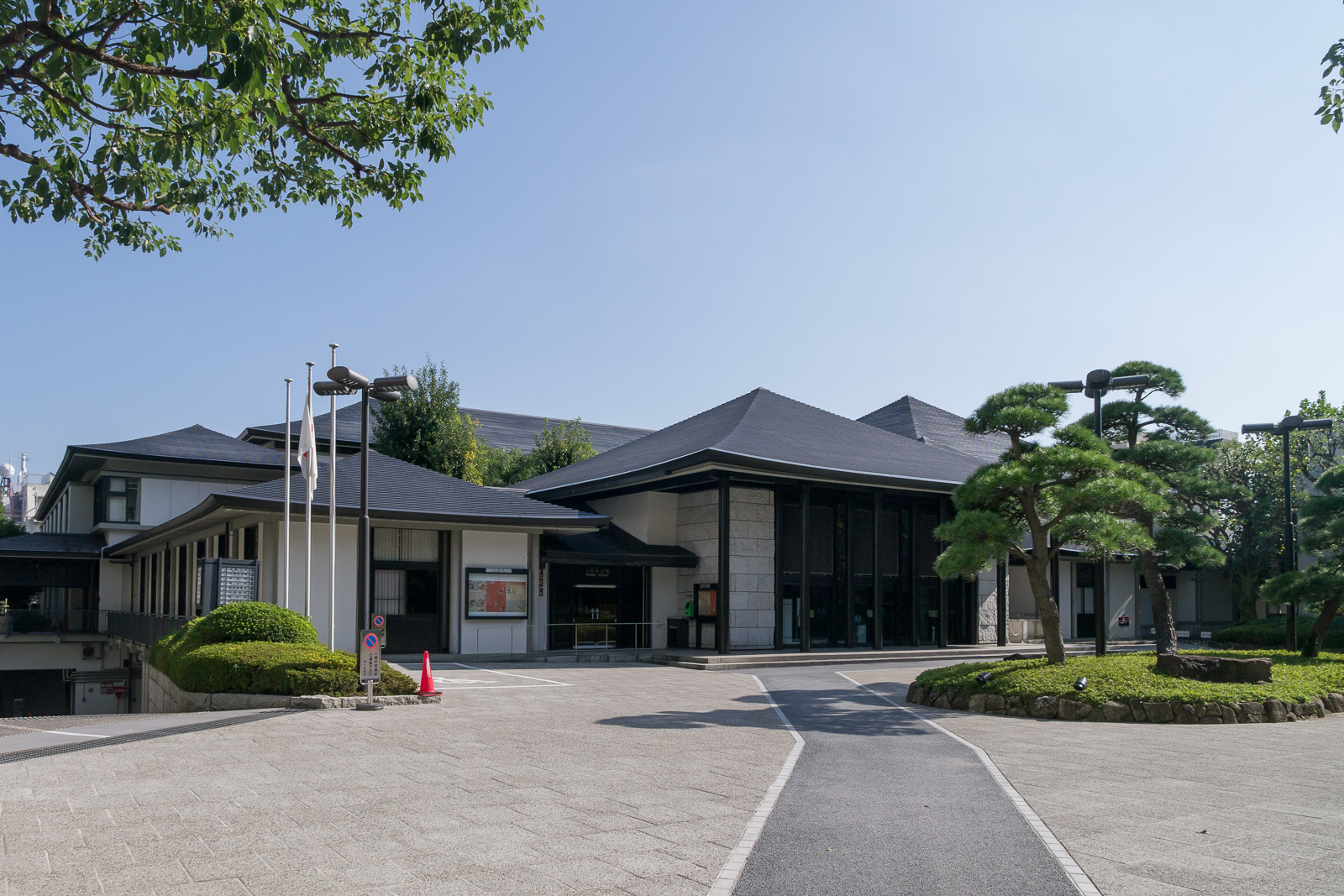
National Noh Theatre
The stage is almost bare. A single painted pine tree -- bold green against pale wood -- fills the back wall. There is no curtain call, no spotlight rig, no orchestra pit. The floor is built from the timber of four-hundred-year-old hinoki cypress trees, polished to a warm glow and left unfinished so that the actors' socked feet slide and stamp with a resonance the audience feels in their chests. This is the National Noh Theatre in Sendagaya, Tokyo, and everything about its design -- its emptiness, its restraint, its careful acoustic engineering -- serves an art form that predates Shakespeare by two centuries.
Six Centuries of Stillness
Noh emerged in fourteenth-century Japan during the Muromachi period, making it the oldest continuously performed professional theater in the world. In 2008, UNESCO inscribed Nogaku -- the combined art of Noh and its comic counterpart Kyogen -- on its Representative List of the Intangible Cultural Heritage of Humanity. Where Western theater evolved through constant reinvention, Noh preserved itself through meticulous transmission. Plays written by Zeami Motokiyo in the 1400s are still performed today with movements, chants, and mask choices passed down through family lineages called iemoto. The result is less a performance and more a living ritual -- slow, hypnotic, deliberate. A single gesture of the hand might take thirty seconds. A masked actor crossing the stage can feel like watching a painting come to life.
A Modern House for an Ancient Art
The National Noh Theatre opened in September 1983 in the quiet Sendagaya neighborhood of Shibuya ward, a deliberate contrast to the commercial noise of nearby Shinjuku. The Japan Arts Council built it as the country's first publicly funded venue dedicated entirely to Noh and Kyogen. Its 591-seat auditorium follows the traditional Noh stage design precisely: the main stage is a raised platform open on three sides, anchored by four pillars that define the performance space. To the left, the hashigakari -- a bridgeway lined with three small pine trees of descending size -- serves as the actors' entrance, creating a forced perspective that stretches the sense of distance. The chorus and musicians enter through a small sliding door at the stage's rear right corner. Nothing is arbitrary. Every element has been refined over centuries.
Masks, Robes, and Resonance
Beyond its stage, the National Noh Theatre houses a collection of approximately 600 items: carved wooden masks depicting demons, old women, young warriors, and divine spirits; elaborate brocade costumes heavy enough to alter how a performer moves; and painted fans, musical instruments, and scholarly manuscripts documenting the tradition. The exhibition room mounts special shows three times a year, offering visitors a chance to study these objects at close range. The masks, in particular, are striking -- hand-carved from a single block of hinoki, each one designed so that the slightest tilt of the performer's head shifts the expression from sorrow to serenity. A rehearsal stage, lecture room, and reference library round out the facilities, making the theatre as much a research center as a performance hall.
Opening the Circle
For most of Noh's history, its performers were exclusively male, trained from childhood within hereditary schools. The National Noh Theatre began challenging that tradition in 2007, when it started annually presenting regular programs by female performers -- a quiet but significant shift in a form defined by its conservatism. The theatre's year-round programming includes full five-act Noh plays, shorter Kyogen comedies, lecture-demonstrations for newcomers, and collaborative events that place Noh alongside contemporary dance and music. For visitors unfamiliar with the form, these introductory programs are the best entry point -- explanations in English are increasingly available, and even without understanding every word, the sheer physical presence of the performance is unmistakable. The stamping foot strikes the hollow resonance chamber beneath the stage. The flute's single note hangs in the air. Stillness becomes the story.
From the Air
Located at 35.68N, 139.71E in the Sendagaya neighborhood of Shibuya ward, central Tokyo. From the air, the theatre sits just south of the New National Stadium (built for the 2020 Olympics) and east of the Meiji Jingu Gaien gardens, identifiable by its low-profile traditional roofline amid modern buildings. Nearest airports: Tokyo Haneda (RJTT) approximately 10 nm south, Narita International (RJAA) approximately 37 nm east. Best viewed at 2,000-4,000 feet AGL. The adjacent tree canopy of Meiji Shrine's forest provides a useful visual reference.