National Nordic Museum
Walk into a bakery in Seattle's Ballard neighborhood and you might find lefse alongside the sourdough. The street names trace Scandinavian geography. The fishing fleet that once defined the waterfront was overwhelmingly Norwegian. Ballard was not merely influenced by Nordic immigration; for decades it was a Nordic colony transplanted to the shores of Puget Sound. The National Nordic Museum exists because that history deserved a permanent home, and because the people who built Ballard's identity wanted their grandchildren to understand where it came from.
From Schoolhouse to Showcase
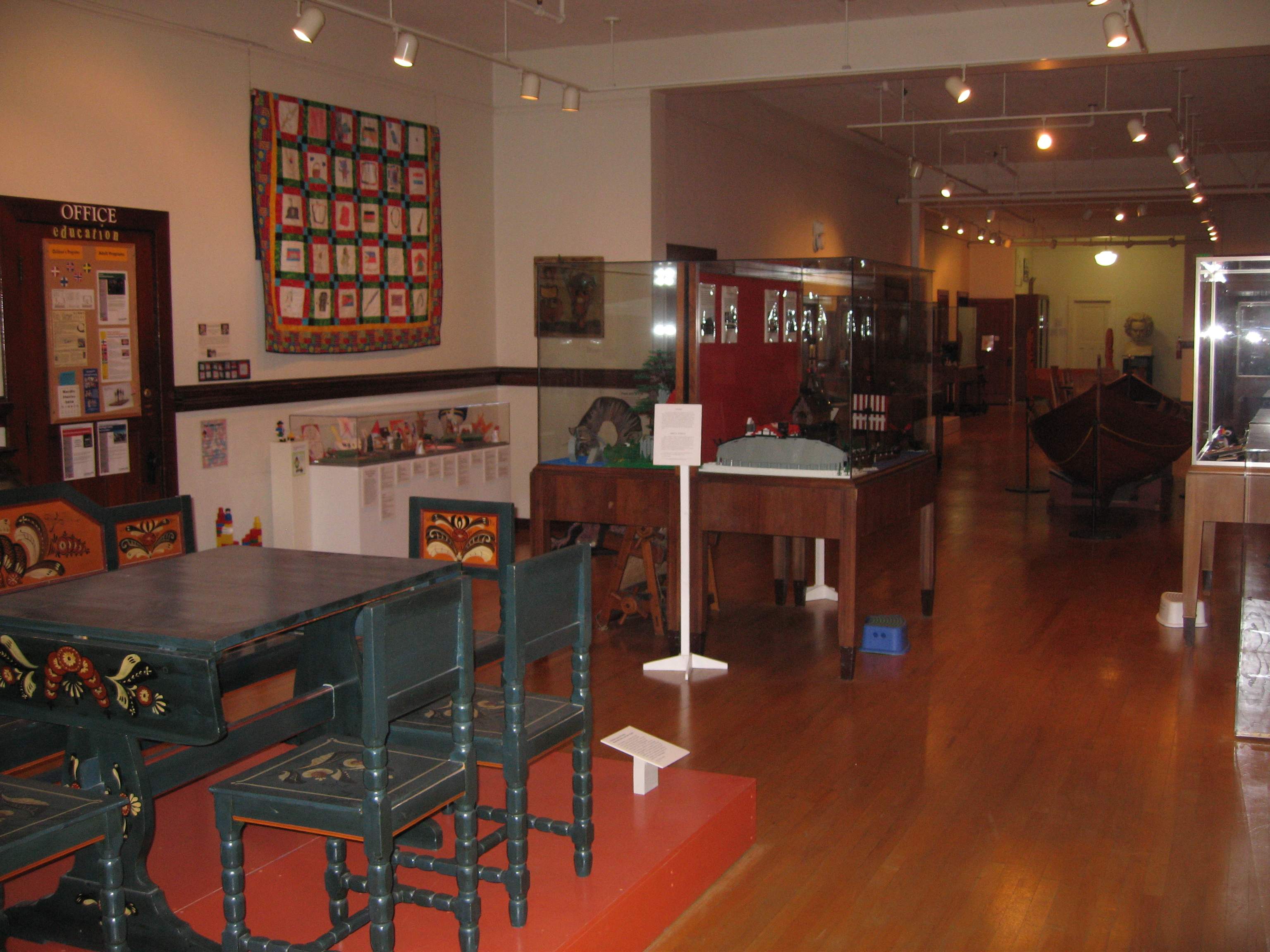
The museum was founded in 1979 as the Nordic Heritage Museum and opened to the public in 1980, occupying the former Daniel Webster Elementary School, a red brick building in a residential section of Ballard that had closed in 1979 due to low enrollment. For nearly four decades, the museum operated in classrooms converted to galleries, each of the five Nordic nations given its own room: Denmark, Finland, Iceland, Norway, and Sweden. A gallery called "Dream of America" told the immigration story that connected them all. The arrangement was charming but cramped. In 2018, the museum moved into a purpose-built 57,000-square-foot facility on NW Market Street, a sleek modern building that announced its ambitions through architecture alone. Icelandic president Gudni Th. Johannesson and Danish crown princess Mary dedicated the new building on May 5, 2018.
A National Designation
In 2019, the museum received its current name when it was designated the National Nordic Museum, a recognition formalized by U.S. senators Maria Cantwell and Lisa Murkowski. The designation made it the only museum in the United States dedicated to the history and culture of all five Nordic nations plus the broader Nordic region, encompassing Estonia, the Faroe Islands, Greenland, Aaland, and the Sami cultural region. The permanent exhibition, "Nordic Journeys," spreads across five galleries and includes over 100 objects on extended loan from national museums in the Nordic countries. The collection ranges from 4,000-year-old stone axes and Viking-era artifacts to examples of contemporary Nordic design, tracing an arc from prehistory to the present.
Living Culture
The museum functions less as a vault of artifacts than as a community gathering space where Nordic culture continues to evolve. A folk school offers classes in Nordic knitting, woodcarving, rosemaling, and cooking. Language classes keep Danish, Finnish, Icelandic, Norwegian, and Swedish alive in a city where those tongues once filled entire neighborhoods. The Walter Johnson Memorial Library, founded alongside the museum in 1980, holds over 15,500 books in Nordic languages. The Gordon Ekvall Tracie Music Collection preserves thousands of recordings, scores, and books focused on Nordic folk music, dance, and folk art. Each year, the museum hosts two major community events: Nordic Sol in summer, which grew from the original 1984 Tivoli Days celebration, and Julefest before Thanksgiving, a Nordic Christmas festival that reached its 42nd year in 2019. These are not museum events in the hushed, reverent sense. They are loud, crowded, full of food and music, the kind of gatherings that Ballard's original settlers would recognize.
From the Air
Located at 47.67N, 122.39W in Seattle's Ballard neighborhood on NW Market Street. The modern museum building is identifiable from low altitude by its distinctive angular architecture. Ballard is located northwest of downtown Seattle, between the Ship Canal to the south and Puget Sound to the west. Nearest airport is Boeing Field/King County International (KBFI), approximately 8 nm south-southeast. Best viewed from 2,000-3,000 ft AGL.