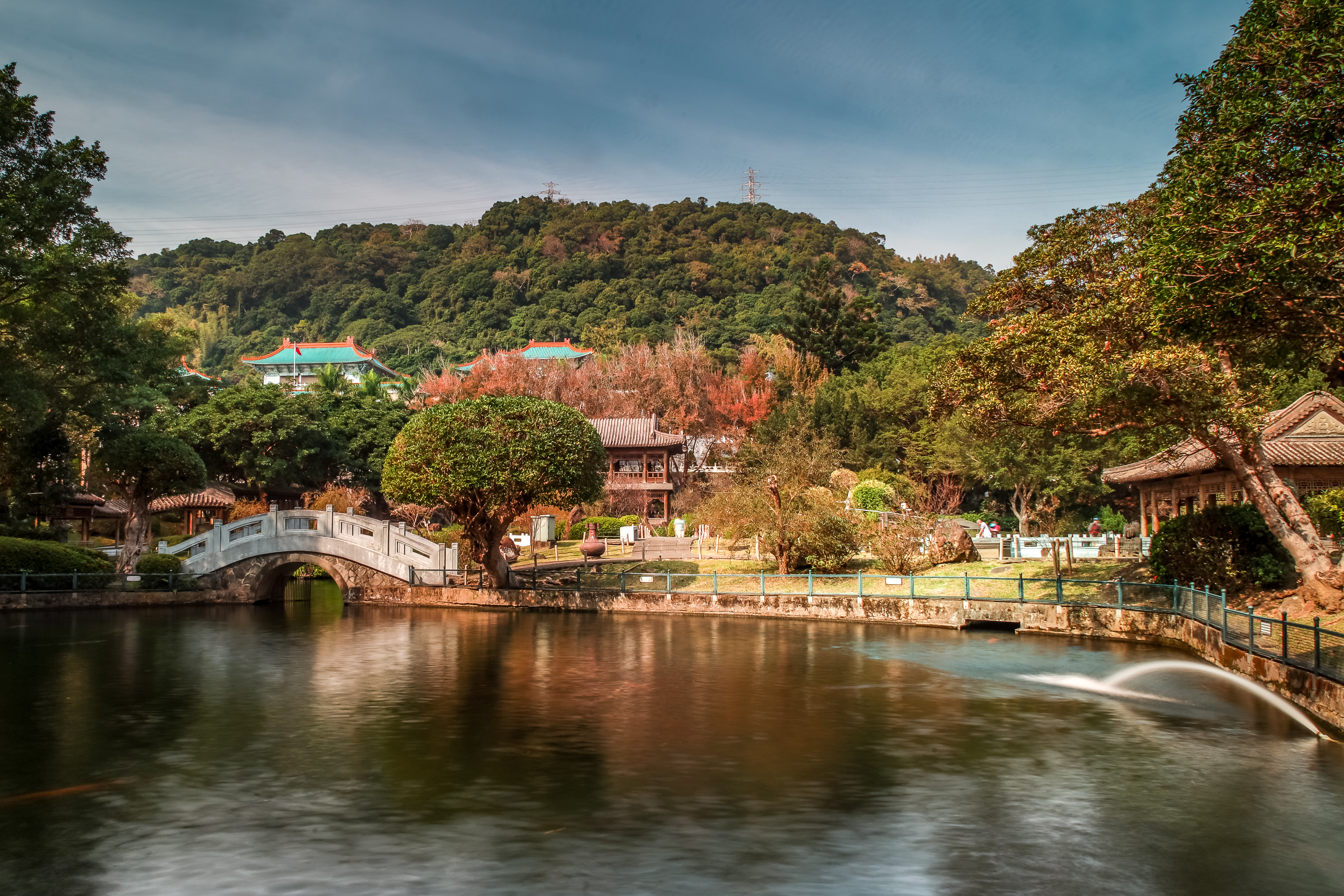
National Palace Museum
Somewhere inside the National Palace Museum in Taipei sits a cabbage carved from jadeite, its white stalk fading into vivid green leaves where two insects perch mid-crawl. It is a small object -- barely 19 centimeters tall -- and yet it is one of the most famous artworks in Asia. The cabbage once belonged to the Forbidden City in Beijing. So did the nearly 700,000 other pieces housed in this museum on a hillside in Shilin. None of them were meant to end up in Taiwan. They arrived here because of revolution, invasion, civil war, and a desperate evacuation that reads more like a heist thriller than a museum acquisition log.
The Emperor's Closet, Opened
The collection's public life began on October 10, 1925, when the Palace Museum opened inside Beijing's Forbidden City. Just a year earlier, warlord Feng Yuxiang had expelled Puyi, the last emperor of China, from the palace grounds. What Puyi left behind was staggering: centuries of imperial acquisitions spanning 8,000 years, from Neolithic jade carvings to Qing dynasty calligraphy scrolls. The Ming and Qing emperors had been relentless collectors, and their taste was both comprehensive and obsessive. Bronze ritual vessels from the Shang dynasty, Song dynasty celadon ceramics, Tang dynasty paintings -- the collection was essentially a material history of Chinese civilization, assembled by the people who ruled it.
Thirteen Thousand Crates on the Run
In 1931, the Mukden Incident signaled Japan's intent to swallow Manchuria, and the Nationalist Government ordered the museum to prepare for evacuation. Between February and May 1933, workers packed 13,491 crates from the Palace Museum and another 6,066 from related institutions and shipped them south to Shanghai, then onward to Nanjing. When the Japanese advanced further, the crates were split into three convoys and scattered across China's interior -- to Sichuan, Guizhou, and beyond. For over a decade, these treasures moved through a country at war, carried by truck, rail, boat, and occasionally on the backs of porters through mountain passes. Remarkably, almost nothing was lost or damaged during the entire odyssey.
The Crossing That Split a Collection
The Chinese Civil War forced a final reckoning. In late 1948, as Communist forces advanced, Hang Li-wu supervised the transport of the most prized items from Nanjing to the port of Keelung, Taiwan, in three shipments between December 1948 and February 1949. Only a fraction of the total collection made the crossing -- roughly 600,000 items out of millions. The rest remained in Beijing, where the Communist government reopened the Palace Museum in the Forbidden City. The result was two museums, on opposite sides of the Taiwan Strait, each claiming to be the rightful custodian of the same imperial legacy. The legal ownership of the Taipei collection remains politically sensitive to this day. Beijing insists the items were illegally removed; Taipei argues the evacuation saved them from the destruction of the Cultural Revolution.
A Hillside Home for a Nation's Memory
The collection spent its first years in Taiwan stored in a sugar warehouse in Taichung and a tunnel carved into the mountains at Wufen Hill. A purpose-built museum finally opened in Shilin, Taipei, in 1965, designed in a traditional Chinese palace style that echoed the Forbidden City the collection had left behind. Expansions followed in 1967, 1970, and 1984, and the museum now occupies a commanding position on a hillside backed by green mountains. A southern branch opened in Taibao, Chiayi County, in 2015, its contemporary design by Taiwanese architect Kris Yao a deliberate contrast to the northern building's imperial aesthetic. Together, the two branches display only a rotating fraction of the collection at any time -- the full holdings are too vast for any single exhibition.
Eight Thousand Years Under One Roof
Walking through the galleries, the scope is almost disorienting. A Shang dynasty bronze vessel sits near Tang dynasty gold, which gives way to Song porcelain, then Ming lacquerware, then Qing imperial robes embroidered with five-clawed dragons. The collection includes one of the finest assemblages of Chinese calligraphy in the world, along with rare books, Buddhist sculptures, and an imperial collection of snuff bottles that reveals the private tastes of emperors at leisure. The museum receives over six million visitors annually, making it one of the most visited art museums on Earth. Each visitor walks past objects that survived a century of upheaval -- revolution, world war, civil war, exile -- to arrive in glass cases on a quiet hillside in Taipei.
From the Air
Coordinates: 25.102N, 121.549E. Located on a hillside in the Shilin District of northern Taipei, backed by lush green mountains. The museum's traditional Chinese palace-style architecture with its characteristic yellow-tiled roofs is visible against the mountainside. Nearby airport: RCSS (Taipei Songshan Airport, ~8 km south). Best viewed at 2,000-4,000 feet. Look for the large complex at the base of the mountains north of the Keelung River.