National Ranching Heritage Center
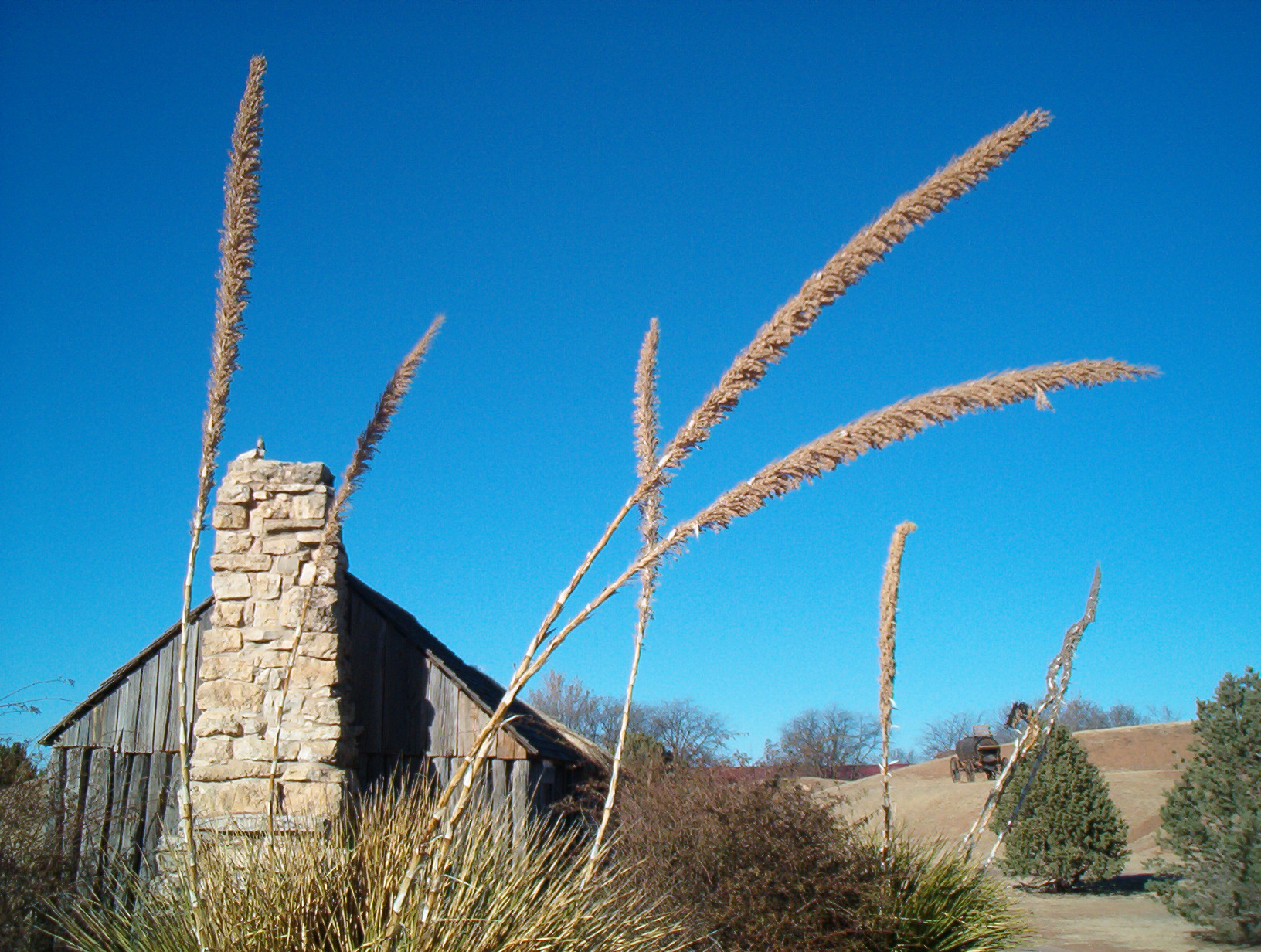
The Jowell House came from Palo Pinto County with an outside ladder to the second floor because in 1872 Texas, getting upstairs ahead of Comanche raiders was a matter of survival, not style. A small cemetery came with it, containing children who died before their tenth birthdays, ordinary casualties on a frontier where childhood itself was dangerous. These structures now stand on 19 acres of the Texas Tech University campus in Lubbock, along with dozens of other authentic ranch buildings relocated from across the American West. The National Ranching Heritage Center opened in 1976 as a living museum dedicated to preserving the physical evidence of ranching culture, from half-dugouts on the treeless plains to elaborate Queen Anne homes that cattlemen built once they could afford them.
Buildings That Tell Stories
The collection spans nearly two centuries of ranching history. The Hedwig's Hill Dogtrot House from Mason County dates to 1855, two log cabins under a common roof separated by an open breezeway, a design that caught any hint of wind on the hot Texas frontier. The half-dugout from the Matador Ranch in Dickens County shows how cowboys lived in 1888: half-buried in the earth for insulation, with a sod roof and hardly room to stand. The 6666 Barn stood near Samuel Burk Burnett's headquarters in Guthrie before it was dismantled, transported, and reassembled here. The Waggoner Ranch commissary from Wichita County, the Pitchfork Ranch cookhouse, a pioneer mail station from Knox County, and a one-room schoolhouse used in Donley and Armstrong counties until 1937 all found their way to this campus. Each building was saved from demolition or decay, transported piece by piece, and restored to working condition.
The Cattle That Built an Empire
An exhibit launched in 2019 traces the breeds that shaped the American West. The first cattle arrived with Christopher Columbus on his second voyage: Andalusian stock that would evolve into the rangy, hardy Texas Longhorn over centuries of feral survival in the brush country. Later imports changed the industry. Hereford cattle from England brought heavier frames and better beef quality. Angus from Scotland added marbling and cold tolerance. Each breed left its mark on the landscape and economy of the plains. The center displays artifacts, tools, and memorabilia alongside the living history of the buildings, showing visitors how ranchers worked, what they ate, how they doctored cattle, and how they survived droughts, blizzards, and economic crashes that would have destroyed less stubborn people.
A $28 Million Future
In 2024, the Texas Tech System Board of Regents approved a major expansion of the Heritage Center. The Red Steagall Institute of Western Art will bring interactive classes and public displays focused on Western culture, named for the actor, musician, and cowboy poet who donated his collection of songs, poetry, and television recordings. Steagall grew up in Gainesville, Texas, and has spent decades preserving and performing the artistic traditions of ranch life. The expansion reflects the center's evolution from a repository of old buildings into an active cultural institution, hosting annual events, educational programs, and demonstrations that keep ranching traditions alive for audiences who may never rope a calf or brand a steer but still feel the pull of that heritage.
The Heritage Center From Above
From the air, the National Ranching Heritage Center appears as a distinctive cluster of small, historic structures set apart from the modern architecture of Texas Tech University to the east. The 19-acre site lies on the university's west side, clearly visible as an open-air arrangement of individual buildings, corrals, and pathways. The Barton House, with its Queen Anne turret, stands out among the simpler frontier structures. A Santa Fe Railroad depot marks one edge of the collection. The contrast between this preserved ranch landscape and the surrounding academic campus is striking: a pocket of the 19th century embedded in a 21st-century university, visible from any approach into Lubbock.
From the Air
The National Ranching Heritage Center is located at 33.591N, 101.884W on the western edge of the Texas Tech University campus in Lubbock. The site appears as a collection of small historic structures distinct from the larger university buildings. It lies approximately 4 nm west-southwest of Lubbock Preston Smith International Airport (KLBB). The Texas Tech campus and its distinctive football stadium provide orientation landmarks. Best viewed in clear conditions when the individual ranch buildings and period architecture are distinguishable from surrounding modern development.