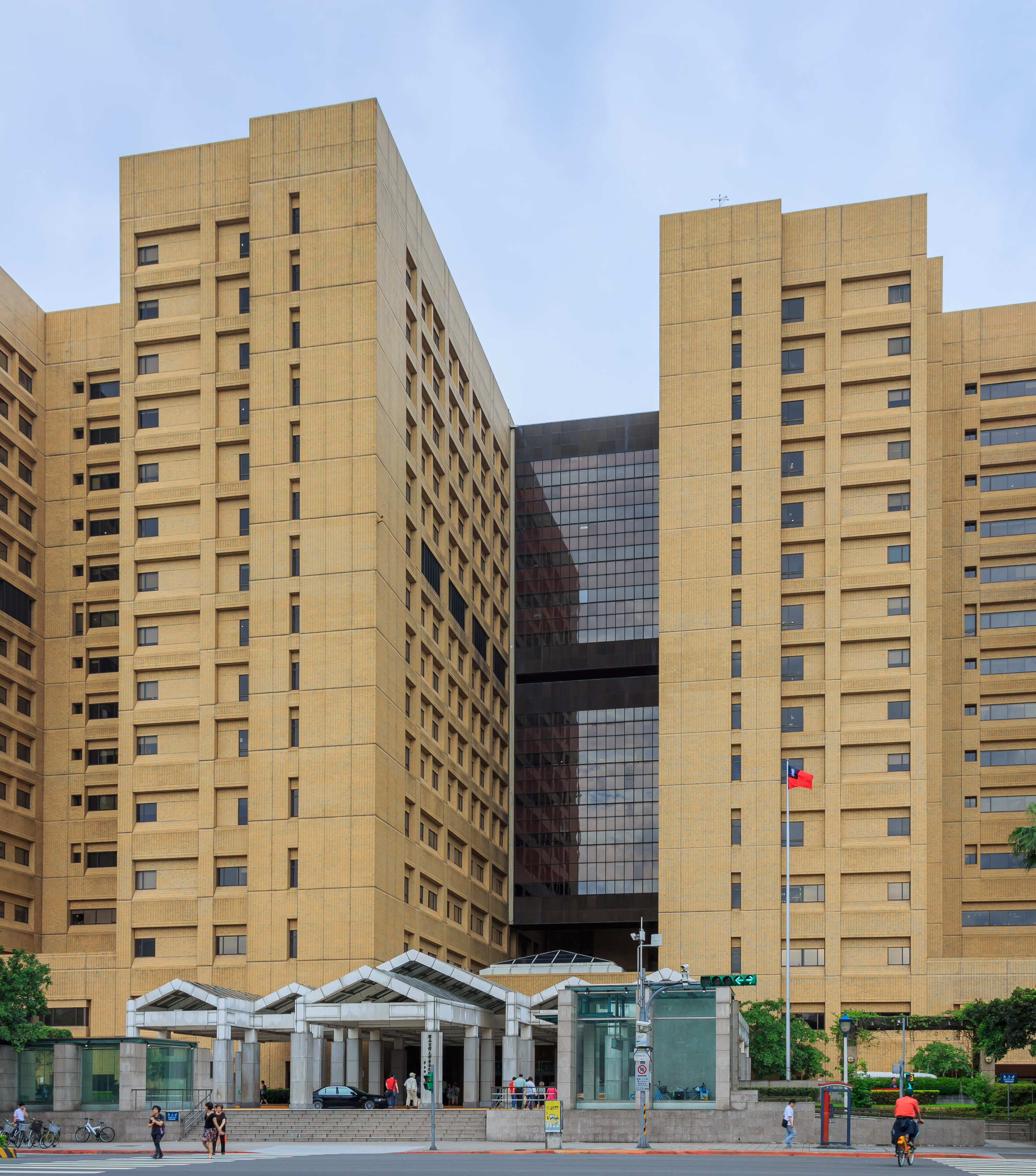
National Taiwan University
The Fu Bell rings twenty-one times at the end of each school period, its sound carrying across a campus that has educated more of Taiwan's leaders than any other institution. Five of the Republic of China's presidents graduated from National Taiwan University. So did the island's first Nobel Prize winner. In a country where the college entrance exam is treated with the gravity of a national event, NTU sits at the top of nearly every applicant's wish list -- a status it has held since it stopped being a Japanese imperial university and became something that belonged to Taiwan.
An Imperial Foundation
The university began as Taihoku Imperial University, established on March 16, 1928, during the Japanese colonial administration of Taiwan. It was the seventh of the Empire of Japan's imperial universities, created after Governor-General Den Kenjiro proposed the idea in 1922 and Prime Minister Tanaka Giichi pushed a founding bill through the cabinet in 1928. The campus was built on the grounds of the Taihoku Senior School of Agriculture and Forestry, and its early focus reflected colonial priorities -- tropical agriculture, medicine, and the natural sciences that would help Japan exploit its southern territories. The College of Liberal Arts, constructed in Romanesque style during this period, still stands as one of the campus's architectural anchors.
From Imperial to National
Japan's surrender in 1945 triggered the university's transformation. The incoming Republic of China government renamed it National Taiwan University and appointed Lo Tsung-lo as its first postwar president. The transition was not seamless. Japanese faculty departed, curricula were overhauled, and the language of instruction shifted from Japanese to Mandarin. But the physical campus survived intact, and the institution's academic reputation provided a foundation on which the new administration could build. Under subsequent presidents, particularly the influential Fu Ssu-nien, whose tenure from 1949 to 1950 established principles of academic freedom that the university still invokes, NTU evolved from a colonial instrument into an institution that Taiwanese society claimed as its own.
A Campus Between Eras
The main campus occupies the Gongguan neighborhood of Daan District in Taipei, a leafy enclave where Japanese-era Romanesque buildings sit alongside postwar structures designed by architect Wang Da-hong, who shaped twenty of the campus buildings in a hybrid Chinese-Western style. The result is a campus that reads like an architectural timeline. Royal palm trees line the main boulevard, their height and symmetry lending a tropical grandeur that contrasts with the utilitarian research buildings behind them. Beyond the main campus, NTU operates satellite facilities across Taiwan, including campuses in Zhongzheng District, Yunlin, and Zhushan, plus an experimental forest that covers over 32,000 hectares in the Central Mountain Range.
The Numbers Behind the Prestige
NTU hosts over 200 degree programs across 17 colleges and 61 departments, supported by 152 affiliated research institutes and more than 100 national research centers, including the National Taiwan University Hospital. Its endowment of NT$67.3 billion -- roughly US$2.24 billion -- is the largest of any university in Taiwan and among the largest in Asia. The university holds institutional affiliations with the Harvard-Yenching Institute, the Max Planck Society, and the Institute for Advanced Study. In global rankings, NTU placed 63rd worldwide in the QS World University Rankings for 2026 and 140th in the Times Higher Education rankings. Its alumni roster includes presidents Lee Teng-hui, Chen Shui-bian, Ma Ying-jeou, Tsai Ing-wen, and Lai Ching-te, along with Nobel Chemistry laureate Yuan T. Lee.
From the Air
Coordinates: 25.016N, 121.536E. Located in the Gongguan neighborhood of Daan District, south-central Taipei. The main campus is identifiable by its palm-lined central boulevard and mix of historic and modern buildings. The main library faces east down a long axis. Nearby airport: RCSS (Taipei Songshan Airport, ~7 km north). Best viewed at 2,000-4,000 feet. Look for the large green campus area south of the Taipei city center, west of the Xindian River.