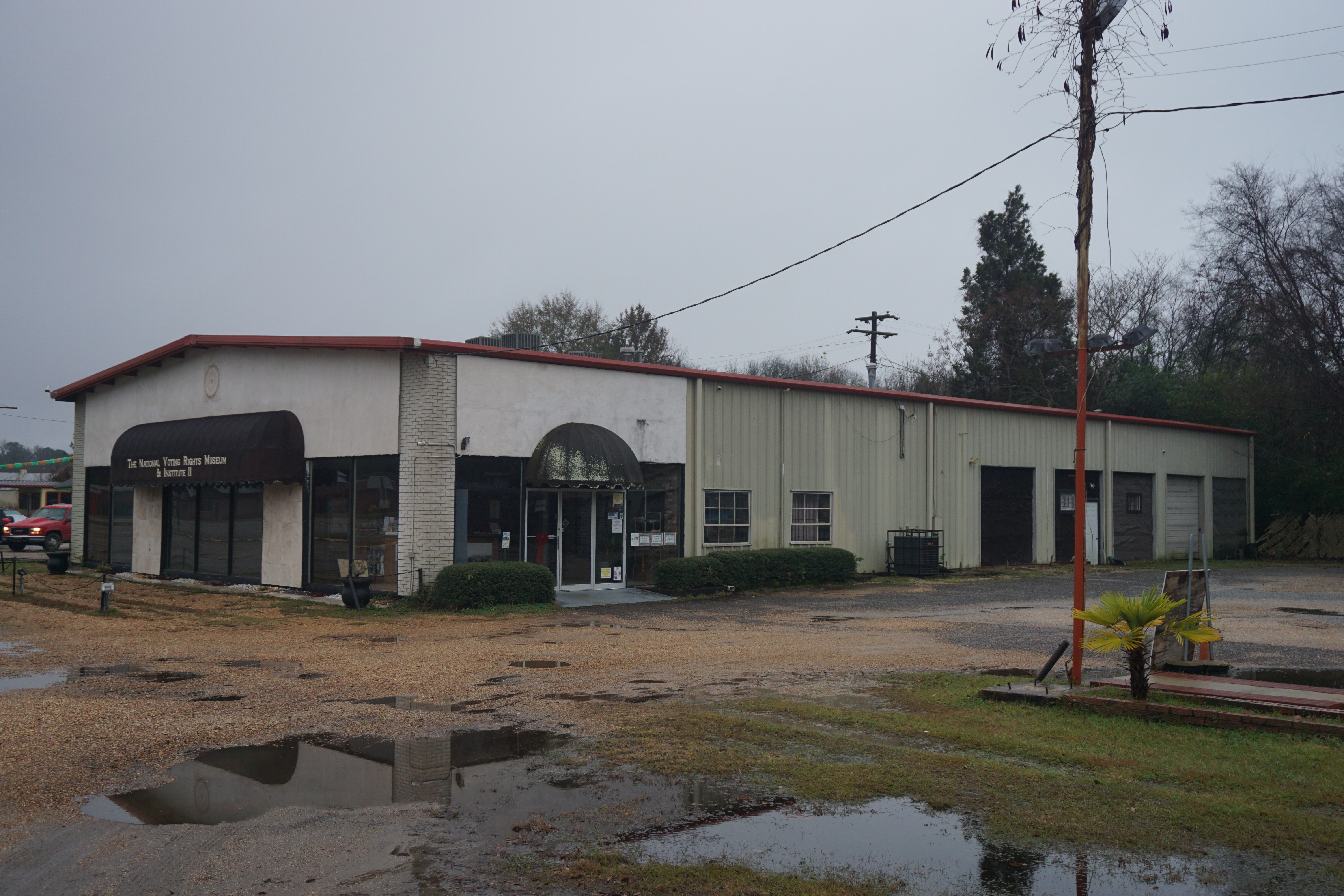
National Voting Rights Museum
The footprints are literal. In the "Footprints to Freedom" room of the National Voting Rights Museum, molded casts preserve the actual foot impressions of men and women who marched from Selma to Montgomery in 1965. Some of those feet were beaten. Some were tear-gassed. All of them kept walking. Opened in 1993 at the foot of the Edmund Pettus Bridge, this small museum in Selma, Alabama, holds what most civil rights monuments cannot: the physical artifacts of struggle. Torn clothing worn by marchers on Bloody Sunday. Voting records that document the systematic exclusion of Black citizens. And a quiet room where aging participants still come to leave handwritten accounts of what they saw, what they suffered, and what they won.
Two Women and a Mission
The museum exists because of Faya Ora Rose Toure and Marie Foster, two women who understood that memory is fragile. Toure, a civil rights attorney and activist, and Foster, a voting rights organizer who had spent years teaching Black citizens how to pass Alabama's deliberately impossible literacy tests, founded the museum in 1991. They recognized that the generation who had marched and bled was aging, and that the physical evidence of their struggle was scattering into attics and landfills. The museum opened its doors two years later, deliberately positioned near the bridge where state troopers had attacked peaceful marchers on March 7, 1965. Its mission statement reaches back further than Selma, honoring everyone who fought for the franchise since the Founding Fathers first planted the seeds of democracy in 1776, including the women's suffrage movement that secured women's right to vote.
Rooms That Remember
The museum is organized as a series of rooms, each carrying a different weight. The "Footprints to Freedom" gallery holds the cast footprints of march participants, a visceral reminder that this history was walked, step by painful step, for 54 miles from Selma to the state capitol in Montgomery. The "Women's Suffrage Room" honors the contributions of African American and other women who fought for voting rights, a thread that runs from the Seneca Falls Convention of 1848 through the Selma marches and beyond. The "Selma Room," also known as the "Marie Foster Room" in honor of the museum's co-founder, displays voting records, clothing worn by people beaten during the march, and other artifacts of the movement. A large reproduction of an iconic photograph taken during the march by Look magazine photographer James Karales dominates one wall, capturing the silhouetted line of marchers against the Alabama sky.
Living Testimony
Perhaps the museum's most powerful space is the room where participants in the 1960s marches can leave personal messages and chronicle their memories. This is not a static archive. It is a living document, growing with each visit from someone who was there. The accounts are handwritten, unedited, and raw. They describe fear and courage in the same paragraph. They name neighbors who were beaten and strangers who offered water. They record the small details that official histories overlook: the sound of horses' hooves on pavement, the sting of tear gas in the throat, the long walk back to Selma after the troopers charged. These first-person testimonies transform the museum from a collection of objects into a conversation across generations, connecting visitors directly to the voices of those who risked everything for a ballot.
The Bridge Outside the Door
The museum's location is no accident. Step outside and you are standing at the foot of the Edmund Pettus Bridge, the exact spot where 600 marchers set out on Bloody Sunday and where state troopers were waiting on the other side. On March 7, 1965, those marchers were beaten and gassed as television cameras broadcast the violence into American living rooms. The national outrage that followed helped push the Voting Rights Act of 1965 through Congress that summer. President Lyndon B. Johnson signed it into law, and the legal architecture of voter suppression across the South began to crumble. The museum sits in the shadow of that bridge as a deliberate act of witness. It says: this happened here. These people did this. And the democracy you participate in today was purchased at this price.
From the Air
Located at 32.4025N, 87.0173W in Selma, Alabama, immediately adjacent to the Edmund Pettus Bridge on the south bank of the Alabama River. The museum building itself is not distinctly visible from altitude, but its location at the foot of the bridge's prominent steel arch helps orient viewers. Best identified by the bridge landmark. Nearest airport is Craig Field (KSEM), 4 miles southeast of Selma. Montgomery Regional Airport (KMGM) lies approximately 50 miles east. The museum sits within the same viewshed as the bridge and downtown Selma's grid, visible at 2,000-3,000 feet AGL in clear conditions.