Nationalmuseum Robbery
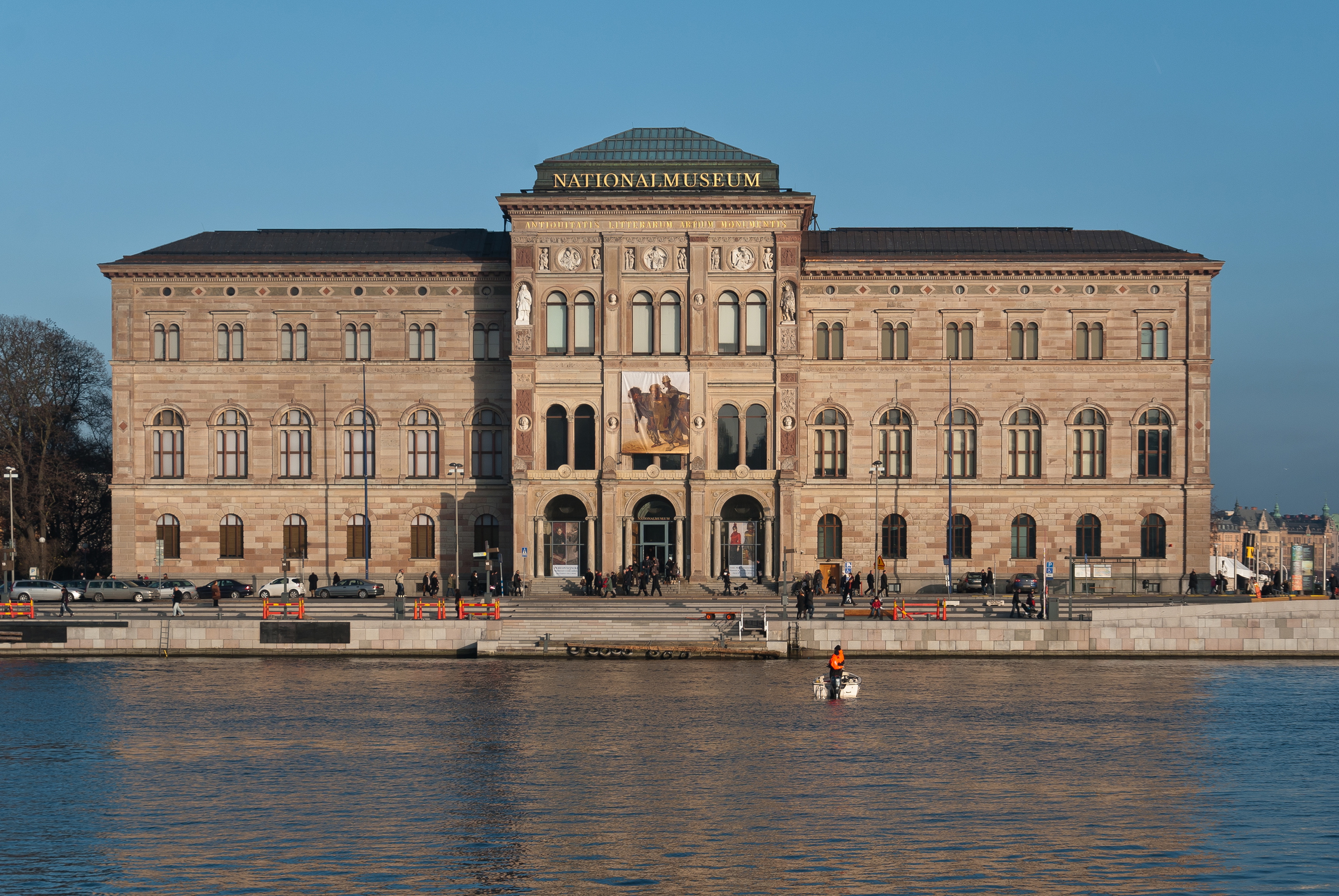
At 4:55 p.m. on December 22, 2000, two car bombs exploded at hotels near Stockholm's waterfront. As police rushed toward the blasts, three armed men entered the Nationalmuseum. One carried a submachine gun. In minutes, they had stripped three paintings from the walls: a Rembrandt self-portrait, a Renoir, and a work by Watteau's student. They fled to a motorboat moored in the nearby waterway, scattering nails on the road behind them to shred police tires. The paintings, valued at $30-45 million combined, vanished into the December darkness. It would take five years and three continents to bring them all home.
Thirty-Seven Minutes of Chaos
The robbers had planned meticulously. The car bombs served as decoys, drawing emergency responders away from the museum during the crucial minutes. The getaway boat eliminated any possibility of a car chase through Stockholm's congested streets. The nails ensured no police vehicle could follow even if officers responded in time. Inside the museum, guards faced a man with a submachine gun and two accomplices with handguns. There was no resistance. The thieves grabbed a Rembrandt self-portrait from 1630, Renoir's Young Parisian from 1875, and Conversation by Renoir. These were not random selections. Someone knew exactly which walls to approach, which frames to lift. By 5:32 p.m., the boat had disappeared into Stockholm's archipelago, carrying nearly fifty million dollars in canvas and oil paint.
Quick Arrests, Slow Recovery
Justice moved faster than recovery. In January 2001, police received a ransom demand for several million kronor, accompanied by photographs proving the thieves possessed the paintings. They refused to pay. That same month, investigators arrested the masterminds: Alexander Petrov and Stefan Nordstrom, along with the lawyer who had brokered the ransom negotiation and several accomplices. By July 2001, Petrov, Nordstrom, and three others were convicted. Yet the paintings remained missing. Two months after the arrests, Conversation surfaced unexpectedly during an unrelated drug raid. An official police statement captured the moment perfectly: 'We weren't looking for the painting so it was a bonus when we found it.' Two masterworks still remained in the wind.
From Los Angeles to Copenhagen
The trail went cold until September 2005, when the FBI in Los Angeles began investigating a Bulgarian criminal syndicate for drug trafficking. During surveillance, agents heard talk of the Young Parisian. They arrested Boris Kostov, one of the syndicate's leaders, and under interrogation he produced the Renoir. He also revealed that the Rembrandt was in Denmark. The FBI contacted Danish authorities, and together they orchestrated a sting operation in Copenhagen. Agent Robert K. Wittman posed as a buyer. The sellers, unable to move the painting for five years, had grown desperate. They offered the $42 million Rembrandt for just $100,000. When they arrived to complete the sale, Danish police arrested four men, who were subsequently extradited to Sweden.
The Museum Made Whole
All three paintings eventually returned to the Nationalmuseum. The Rembrandt self-portrait, painted when the artist was just 24, once again hangs where it had for generations. The Renoir and the Ottini occupy their original places on the gallery walls. The heist had exposed vulnerabilities that museums worldwide subsequently addressed. The coordinated distraction, the waterborne escape, the international movement of stolen art through criminal networks all became case studies in museum security and art crime investigation. The December darkness that swallowed the speedboat eventually yielded its secrets across Stockholm, Los Angeles, and Copenhagen. The paintings' journey ended where it began, on the walls of a museum that had stood on Stockholm's waterfront since 1866, its collection once again complete.
From the Air
Located at 59.33N, 18.08E on the Blasieholmen peninsula in central Stockholm. The Nationalmuseum is a distinctive Renaissance Revival building on the waterfront, recognizable by its red brick exterior and central dome. The waterway used for the getaway runs along the museum's edge, connecting to Stockholm's extensive archipelago. The Royal Palace lies directly across the water to the west. Stockholm Bromma Airport (ESSB) is 6nm west; Stockholm Arlanda (ESSA) is 22nm north. Best viewed at 1,500-2,500 feet to appreciate the museum's position between the Old Town and the open water.