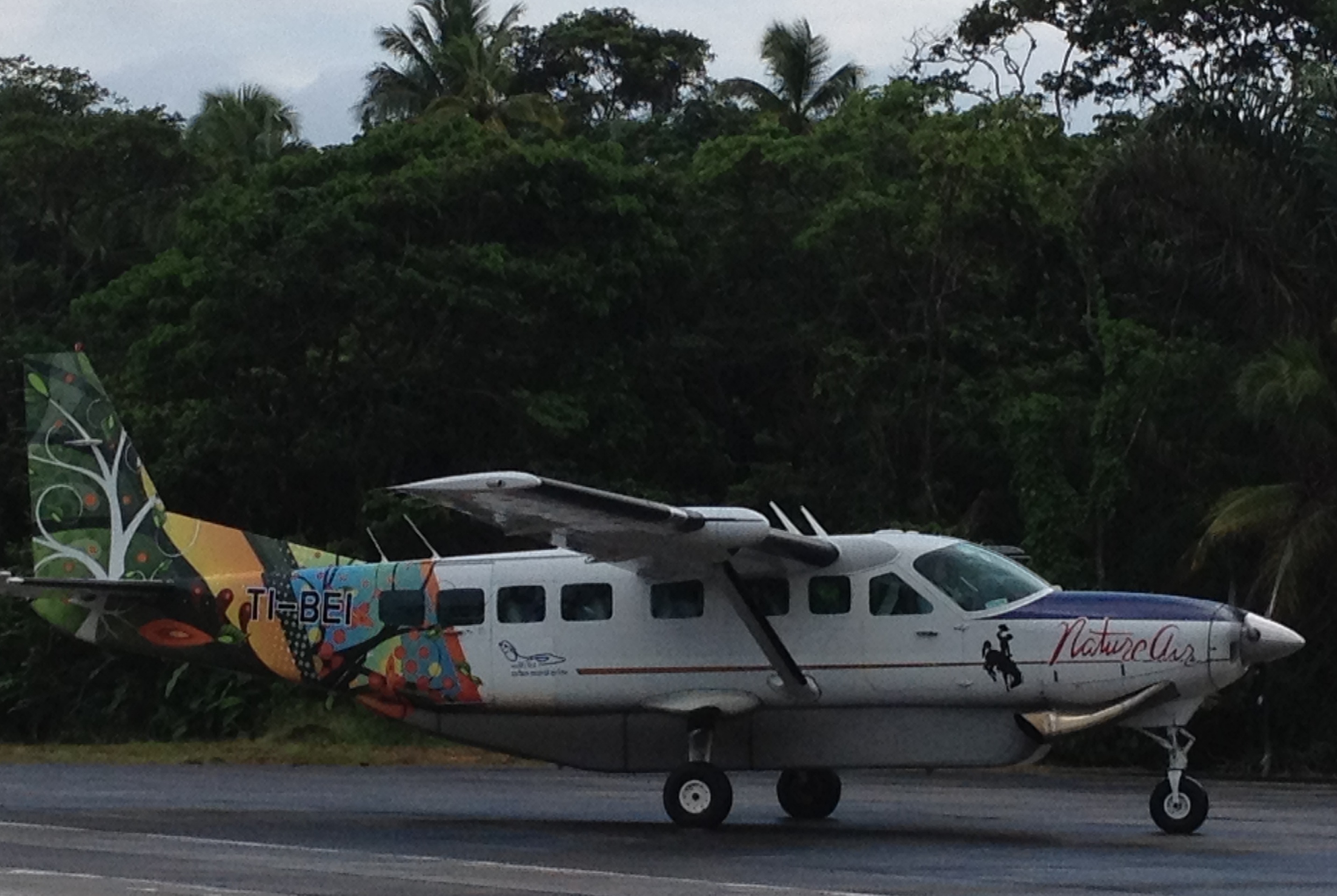
Nature Air Flight 144
The flight was supposed to last forty minutes. A Cessna 208B Caravan, chartered by the adventure travel company Backroads, lifted off from the tiny airstrip at Punta Islita on the Pacific coast of Costa Rica at 12:10 p.m. on December 31, 2017. On board were ten passengers -- mostly American tourists, including two families heading home through San Jose's Juan Santamaria International Airport -- and two Costa Rican pilots. Seconds after departure, the aircraft swayed left, rolled, clipped trees with its wing, and struck rising terrain near the airport. It exploded on impact. There were no survivors.
A Beach Town Runway
Punta Islita sits on the Nicoya Peninsula in Guanacaste Province, a stretch of Costa Rica's Pacific coast known for its dry tropical forests, surf breaks, and small resort communities. The airport there is modest -- a short strip hemmed by hills and forest, the kind of airfield where regional carriers ferry tourists between beach towns and the capital. Nature Air, Costa Rica's domestic airline, had built its business on exactly these routes, connecting remote coastal destinations that would otherwise require hours of driving on unpaved mountain roads. The accident aircraft had already arrived late that morning due to strong winds, and on its outbound leg had stopped at the airstrip in Tambor to wait for better weather conditions before continuing to Punta Islita.
Seconds After Liftoff
What happened next unfolded with terrible speed. The Caravan swayed to the left immediately after departure, then rolled. Its wing clipped the tree canopy, and the aircraft struck the rising terrain near the airport, inverted. It exploded and burst into flames. When the plane could not be contacted, it was declared missing. By 12:30 p.m. -- just twenty minutes later -- emergency services near the airport received reports of a crash in the woods. Twenty emergency vehicles, forty-five firefighters, and volunteers from among the tourists and locals who had witnessed the disaster rushed to the site. The fire chief of Nandayure, Hector Chavez, described what they found as "total destruction." Photos released by Costa Rica's Ministry of Public Security confirmed that the aircraft had been pulverized on impact. By 7:00 p.m. that evening, rescuers had recovered all twelve victims.
The Investigation
Costa Rica's Direccion General de Aviacion Civil opened an investigation on January 1, 2018. Because most of the passengers were American, the U.S. National Transportation Safety Board was expected to assist -- and when Costa Rica formally offered to delegate the investigation in May 2018, the NTSB accepted. On January 8, Costa Rica's Judicial Investigation Organisation raided the offices of Nature Air at Tobias Bolanos International Airport and Juan Santamaria International Airport in San Jose, as well as the offices of the civil aviation authority in La Uruca. At least thirty agents participated, seeking files on the pilots, the Cessna 208 Caravan, its maintenance history, and whoever had authorized the flight. In December 2019, two years after the crash, the NTSB released its final report: the aircraft had entered an aerodynamic stall and spin caused by pilot error.
An Airline's End
Nature Air never flew again. The crash became a flashpoint for debate over the safety of chartered tourist flights in Costa Rica, a country whose tourism industry depends heavily on small-aircraft connections between remote destinations. American media warned travelers against privately chartered flights in the country, with a former NTSB chairman among the voices urging caution. Costa Rican officials pushed back. Isabel Vargas, president of the National Chamber of Tourism, disputed the characterization, and civil aviation director Ennio Cubillo called the claims of inadequate safety oversight irresponsible. But for the families of the twelve people who boarded that Caravan on New Year's Eve -- ten passengers looking forward to connecting flights home to the United States, and two pilots doing the work they did every day -- the debate was beside the point. They had trusted a routine forty-minute flight, and it had lasted seconds.
From the Air
Located at 9.86N, 85.37W near Punta Islita Airport (MRIA) on Costa Rica's Nicoya Peninsula. The crash site is in hilly, forested terrain adjacent to the runway. Visible landmarks include the Pacific coastline and the small beach community of Punta Islita. Nearby airports include Tambor (MRTR) and Nosara (MRNS). Juan Santamaria International Airport (MROC) in San Jose is approximately 200 km to the east-southeast. Terrain rises sharply from the coast in this area -- a factor in the accident.