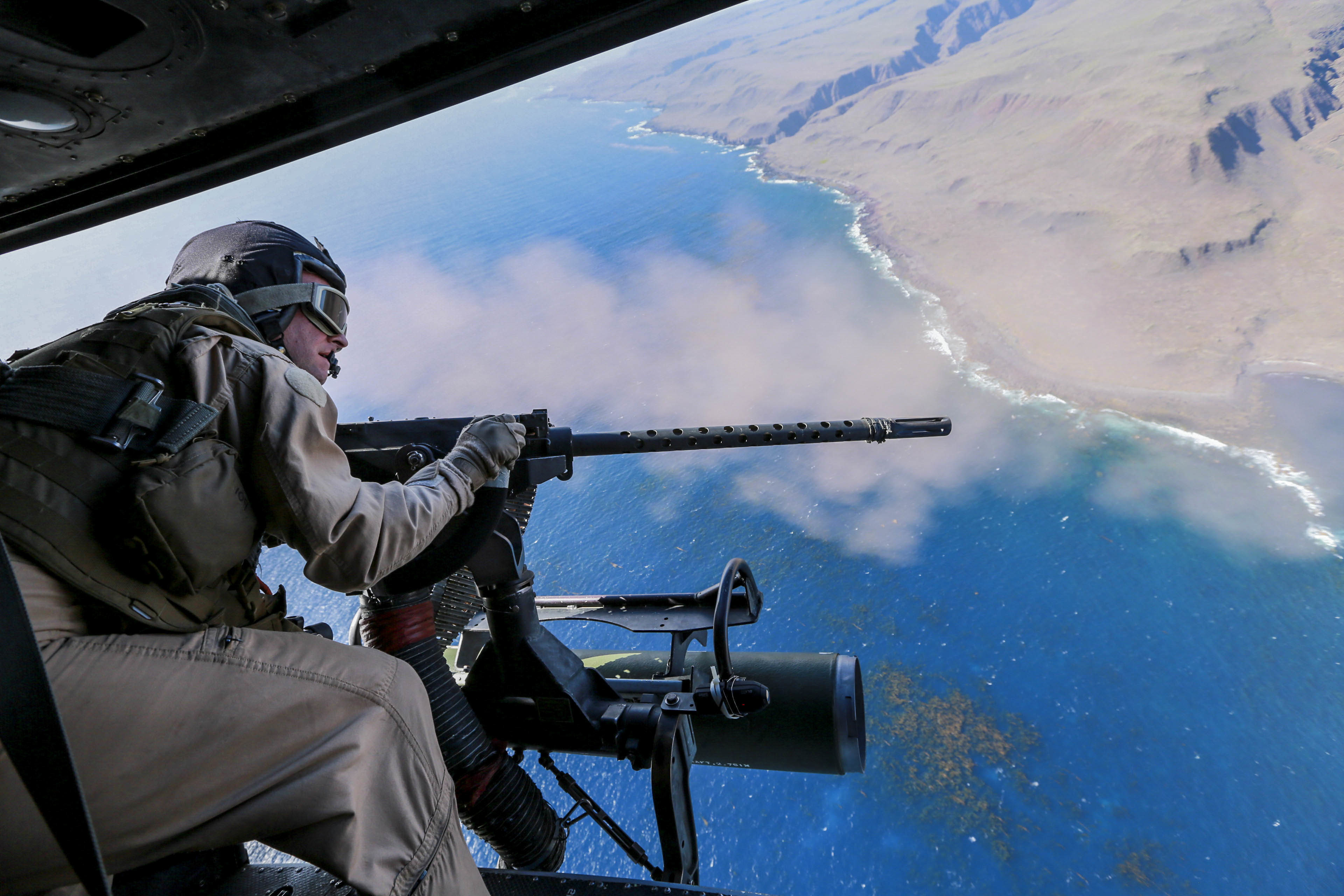
Naval Auxiliary Landing Field San Clemente Island
The small craft that would carry American soldiers onto the beaches of Normandy, Iwo Jima, and a hundred other hostile shores was first tested here, on a rocky island 68 miles from the California mainland. In 1939, the Navy developed the Landing Craft, Vehicle and Personnel at San Clemente Island, and from that moment the island's fate was sealed. Today, Naval Auxiliary Landing Field San Clemente Island, also known as Frederick Sherman Field, serves as the hub of the Navy's busiest fleet airspace and the only location in the Pacific where surface ships, submarines, aircraft, and expeditionary forces can train simultaneously in all warfare areas.
The Southernmost Channel Island
San Clemente Island stretches 21 miles long and 4.5 miles at its widest, covering 57 square miles of volcanic terrain. It lies roughly 55 miles south of Long Beach and 70 miles west of San Diego, isolated enough for the kind of training that cannot happen near civilian populations. The Navy has owned the island since 1937, and it has served continuously as a testing ground, training range, and research facility ever since. The airfield sits near the southern end, its runways oriented to catch the prevailing Pacific winds that sweep across this exposed outpost.
Sherman's Field
On January 11, 1961, the station was officially designated Frederick C. Sherman Field in honor of Vice Admiral Frederick C. Sherman, a three-time recipient of the Navy Cross. Sherman had commanded carriers in World War II, leading strikes against Japanese positions across the Pacific. The naming honored both his combat record and his contributions to naval aviation. Today the field supports tactical training for the Pacific Fleet, with the main runway used for carrier qualification training. The United States Coast Guard and other service branches also utilize the facility.
The Only Place of Its Kind
What makes San Clemente Island irreplaceable is its integration of air, sea, surface, and subsurface training capabilities. The San Clemente Island Range Complex covers 2,620 square nautical miles and includes the Navy's only remaining ship-to-shore live firing range. Two mine exercise areas allow realistic training in mine countermeasures. The Southern California Anti-Submarine Warfare Range and seven submarine areas provide undersea training. A shallow water Undersea Training Range and two laser training ranges round out the facilities. Surface ships, submarines, and aircraft can conduct shore gunnery, naval bombardment, air defense, antisubmarine warfare, and electronic warfare exercises simultaneously. No other Navy facility offers this combination.
Green Power on a Remote Outpost
Despite its remote location and military mission, San Clemente Island has become a test bed for renewable energy. The Navy installed three 225-kilowatt wind turbines to reduce diesel fuel consumption and harmful emissions. Between February 1998 and April 2000, the turbines generated two gigawatt-hours of electricity, supplying approximately 13 percent of the island's power needs. In fiscal year 1999 alone, the turbines saved 141,757 gallons of diesel fuel and avoided 18,450 pounds of carbon monoxide emissions. Future goals target 15 percent or more of the island's electricity from wind power, proving that even the most tactical of military installations can reduce their environmental footprint.
From the Air
Naval Auxiliary Landing Field San Clemente Island (KNUC) is located at 33.02N, 118.59W on San Clemente Island. This is an active military facility with restricted airspace. Civilian aircraft must obtain prior permission to land. The main runway 24/06 is used for carrier training. Contact San Diego Approach for routing around the extensive restricted areas surrounding the island.