Naval Base Panama Canal Zone
Eleven sixteen-inch naval guns pointed outward from the Canal Zone during World War II, their muzzles aimed at threats that, in the end, never arrived. Behind those guns lay something more complex than a single base: a constellation of installations scattered across both oceans, from the submarine pens at Coco Solo on the Atlantic to the dry docks at Balboa on the Pacific, with fuel farms, seaplane ramps, radio stations, and a PT boat base on an island in between. From 1917 to 1999, the United States Navy operated this network to protect the fifty miles of water that connected two oceans -- and in doing so built a military infrastructure so extensive it rivaled some stateside naval districts.
Guarding Both Gates
The canal's vulnerability was its genius turned inside out: a single waterway connecting the Atlantic and Pacific meant that any enemy who closed it could split the American fleet in two. The Navy's solution was to fortify both ends. On the Atlantic side, Naval Station Coco Solo opened in 1918 as a submarine base near Fort Randolph. C-class, O-class, and S-class submarines rotated through over the decades, and by World War II the station included a hospital, ammunition depot, and ship repair facility. Senator John McCain was born at the small Coco Solo naval hospital in 1936. On the Pacific side, Rodman Naval Station was founded in 1932 across from the Port of Balboa, where the east bank had grown too crowded. Rodman's fuel depot began operating in 1943, and its three dry docks could service vessels damaged anywhere in the theater. The base later served as the headquarters for the Commander-in-Chief of the Atlantic Fleet's Southern Detachment.
Eyes Over the Water
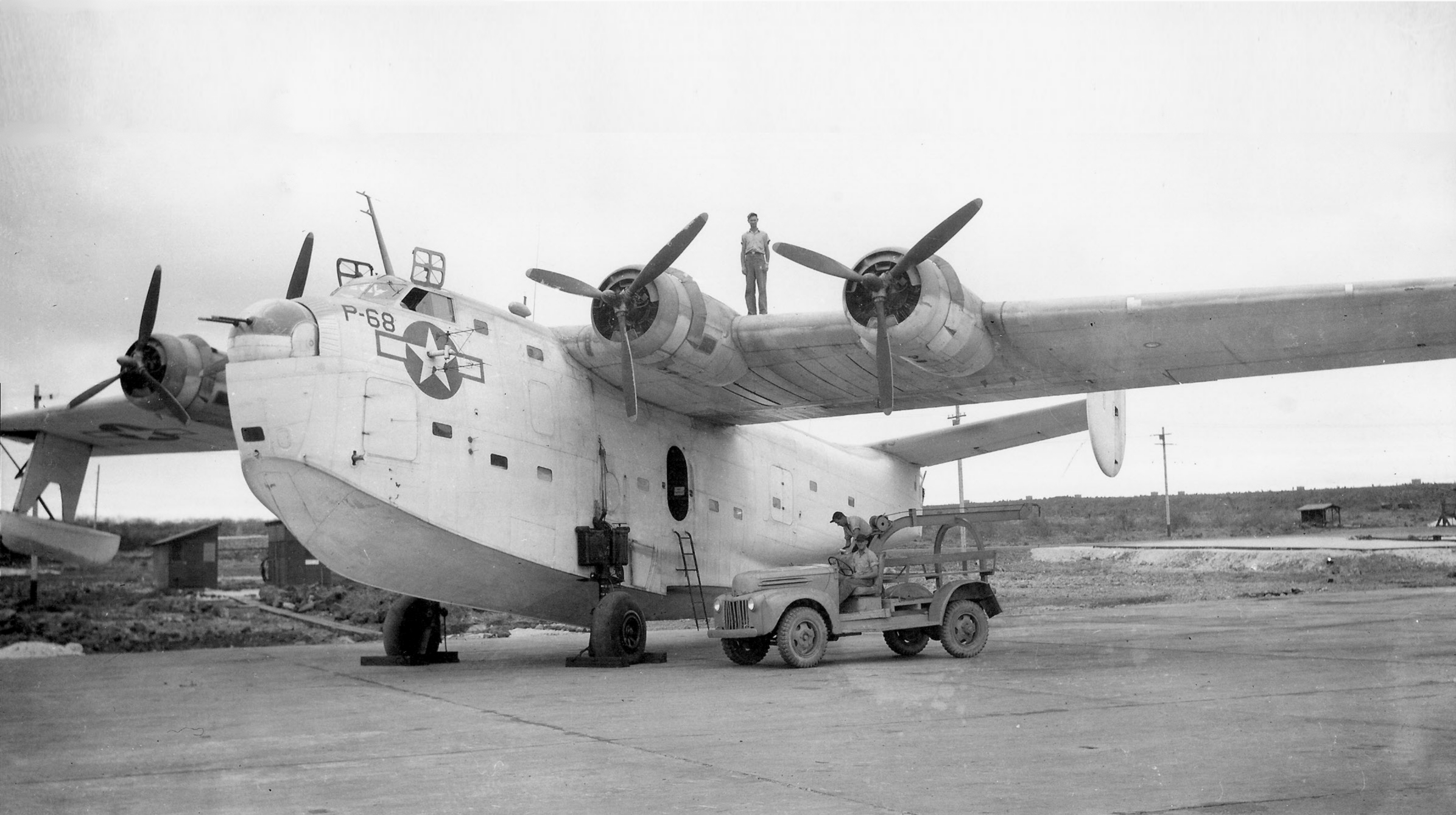
Seaplanes proved essential. NAS Upham, the seaplane base at Coco Solo, flew patrols over the Caribbean, the Antilles, and the coasts of South America, hunting U-boats that threatened tanker convoys feeding the Pacific war effort. The base started with aging Glenn L. Martin PM-2 seaplanes in the 1930s, upgraded to Consolidated P2Ys, and then to PBY Catalinas that served through the war. After Pearl Harbor, VP-32 at NAS Upham expanded its patrols to the Pacific side, watching for Imperial Japanese Navy submarines. Later, larger Martin PBM Mariners arrived equipped with ASG radar, and in July 1943 their crews located and sank three German U-boats: U-159 south of Haiti, U-759 east of Jamaica, and U-359 south of Puerto Rico. The Canal Zone's air patrols were part of the reason no Axis submarine ever attacked the waterway directly.
The Fuel That Won the War
When Japan seized the Dutch East Indies oil fields, the Canal Zone's tank farms became the critical link in the fuel supply chain for the Pacific war. Tankers were being sunk at alarming rates in the early Battle of the Atlantic, so the Navy built fuel pipelines along the canal itself -- the first opened on April 18, 1943, a second by year's end, followed by diesel and gasoline lines the next year. The Balboa tank farm alone covered 820 acres. Gatun's farm near Gatun Lake spanned 1,700 acres. These were not glamorous installations, but without them the ships and aircraft fighting across the Pacific would have run dry. Even the canal's construction debris found military use: the Amador Causeway, connecting Flamenco Island to the mainland, was built from rock excavated during canal construction and served as a naval staging area.
Threats That Almost Were
The canal's defenses were tested more by plans than by attacks. Nazi Germany's Operation Pelikan envisioned bombing the locks but was aborted. In August 1943, Japan planned to strike the canal using aircraft launched from I-400-class submarine carriers -- enormous vessels carrying three Seiran floatplanes each. Japanese crews trained specifically for the Panama Canal mission, but by June 1945 the war's toll forced a cancellation. Japan redirected the submarine carriers toward Naval Base Ulithi, but surrendered before the attack could launch. The I-400s were captured by the U.S. Navy, their planes already sunk at sea on orders from Tokyo. By April 1943, American intelligence had assessed the direct threat to the canal as diminished, and defenses began to draw down. The elaborate network of smoke generators, anti-aircraft guns, radar, searchlights, and anti-torpedo nets had done their job by existing.
Handing Back the Keys
The Torrijos-Carter Treaties of 1977 began the long goodbye. The Canal Zone was renamed the Reverted Areas, and on October 1, 1979, sovereignty returned to Panama. Military installations drew down through the 1980s and 1990s. Rodman Naval Station was turned over on March 11, 1999; it is now the Vasco Nunez de Balboa Naval Base, operated by Panama. Coco Solo closed the same year, its waterfront transformed into the Manzanillo International Terminal, one of the Western Hemisphere's busiest container ports. The Balboa dry docks became Astilleros Braswell International, then MEC Balboa Dry Docks Panama. Naval Communications Station Balboa, which had operated since 1908 with VLF transmitters powerful enough to reach submarines across the Pacific, went silent in 1999. The guns, the patrols, the fuel farms, the seaplane ramps -- all repurposed or demolished. The canal still connects two oceans, but the navy that once guarded it has gone home.
From the Air
The former Naval Base Panama Canal Zone installations are spread across both the Atlantic and Pacific sides of the canal. On the Pacific side, the former Rodman Naval Station (8.952N, 79.573W) and Port of Balboa are visible near the Bridge of the Americas. On the Atlantic side, the former Coco Solo Naval Station is near Colon (9.36N, 79.88W). The Balboa dry docks and tank farm areas are identifiable from 3,000-5,000 feet AGL along the Pacific entrance. Nearby airports include Marcos A. Gelabert International Airport (MPMG) and Panama Pacifico International Airport (MPPA, the former Howard AFB). The canal itself is the primary visual reference, running northwest-southeast for approximately 50 miles.