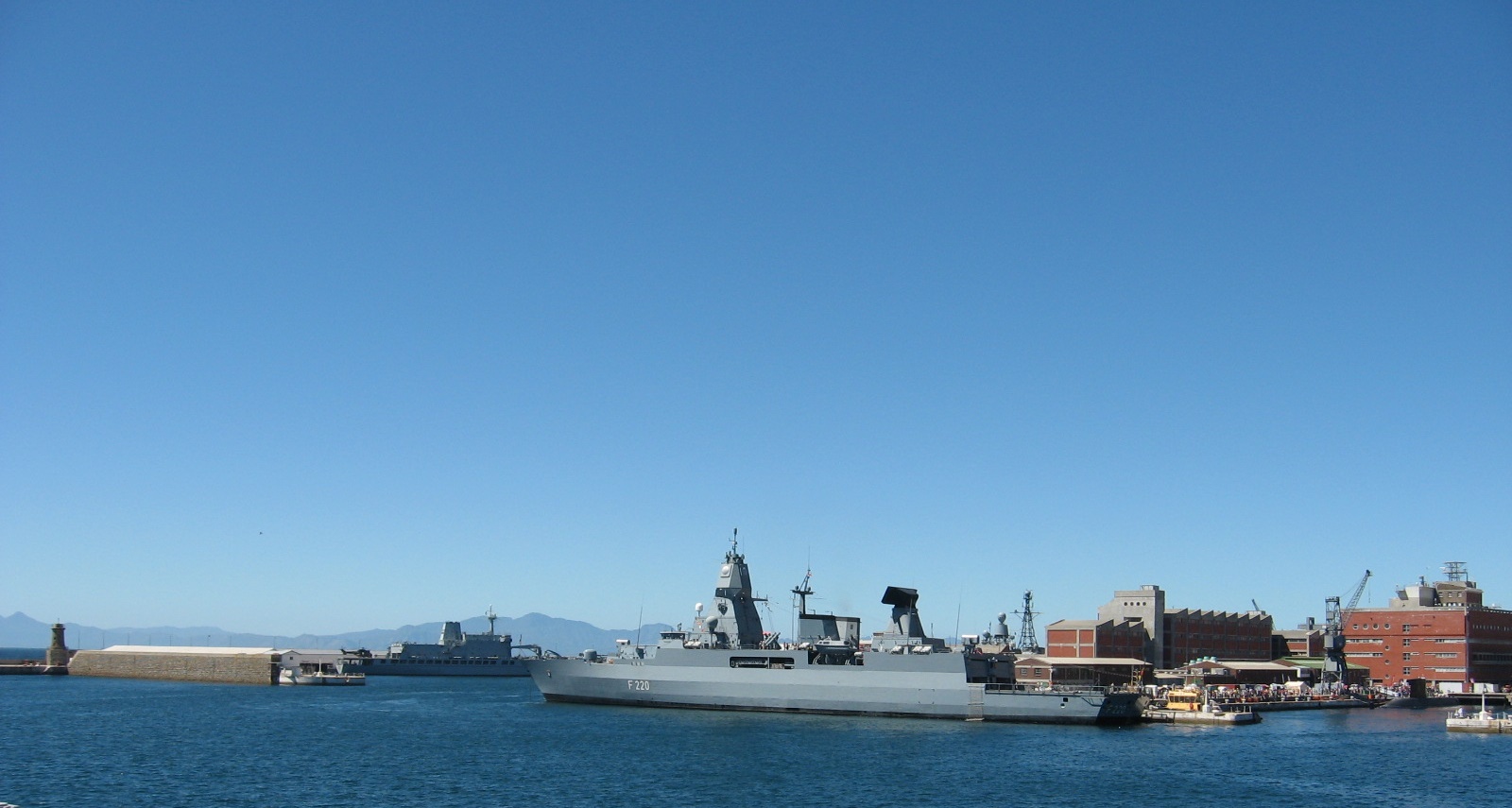
Naval Base Simon's Town
A pair of stone storehouses built in the 1740s still stand on the Simon's Town seafront, right where the Dutch East India Company placed them when this coast belonged to the VOC and the harbor's only purpose was servicing merchant ships on the long voyage to the East Indies. Those buildings are among the oldest structures in the Western Cape, and they mark the spot where South Africa's largest naval base began its improbable, 280-year career. What started as a modest dockyard under Dutch administration passed to the British Royal Navy in the 1790s, grew into a major imperial facility over the next century and a half, and now serves as the home port of the South African Navy's frigate and submarine flotillas. Three flags, three navies, one harbor.
The VOC Yard and the Royal Navy
The Dutch East India Company established the original dockyard facility in Simon's Town in 1743, choosing the sheltered eastern shore of the Cape Peninsula on False Bay. When the British took the Cape Colony in the 1790s, they took the dockyard with it. The earliest surviving Royal Naval building on the site dates from 1815: a combined mast-house, boathouse, and sail loft that now serves as the South African Naval Museum. Over the following decades, the Royal Navy expanded the facility gradually, adding steam engineering workshops and coaling stations as the age of sail gave way to steam. In 1885, the Cape Colony government transferred the assets of the Simon's Bay Dock and Patent Slip Company to the British Admiralty, consolidating naval control over the waterfront. By the close of the nineteenth century, the demands of a modern navy had outgrown the original yard, and in 1898 a large site was acquired to the east for a dockyard extension -- the East Yard, whose main factory building was completed in 1910.
Cold War Anchorage
Simon's Town's strategic importance survived the transition from sail to steam and from empire to republic. The 1955 Simonstown Agreement between Britain and South Africa formalized the transfer of the base to South African control while maintaining British access rights -- an arrangement rooted in Cold War anxieties about the sea lanes around the Cape. The Royal Navy had used the base as a key staging point during both World Wars, and the southern Atlantic and Indian Ocean shipping routes it guarded remained vital through the nuclear age. In 1975, the dockyard underwent its most dramatic expansion: a large area of land was reclaimed from the sea and the harbor walls extended to form a new tidal basin, giving the South African Navy the deep-water facilities it needed for a modern fleet.
From Frigates to Controversy
Today the base houses the South African Navy's frigate and submarine flotillas, along with training facilities for both. The frigates and submarines visible in the harbor are the operational backbone of a navy that patrols thousands of kilometers of coastline along both the Atlantic and Indian Oceans. In December 2022, the base found itself at the center of an international controversy when the Russian cargo ship Lady R docked at Simon's Town. The United States ambassador to South Africa alleged that South African military supplies had been loaded onto the vessel for use in Russia's invasion of Ukraine. The incident, which became known as the Lady R affair, raised uncomfortable questions about South Africa's foreign policy stance and the role of this centuries-old naval facility in contemporary geopolitics.
A Dockyard You Can Visit
Unlike many military installations, Naval Base Simon's Town sits within a town that welcomes visitors. The South African Naval Museum, housed in the 1815 mast-house and sail loft, is open to the public and traces the base's history from the VOC era through the British period to the present. The West Yard's stone storehouses from the 1740s are visible from the waterfront road, and the Selborne Graving Dock -- still in active use -- can be glimpsed from several vantage points along the harbor. The town itself wraps around the naval precinct, its main street lined with restaurants, museums, and the bronze statue of Just Nuisance, the Great Dane who became the only dog formally enlisted in the Royal Navy. In December 2015, Naval Base Durban was redesignated as a fully fledged naval base and home port of the offshore patrol flotilla, but Simon's Town remains the navy's primary facility and spiritual home.
From the Air
Naval Base Simon's Town is located at 34.18°S, 18.43°E on the western shore of False Bay. The harbor, dockyard, and moored naval vessels are clearly visible from the air. The base sits at the southern end of the town of Simon's Town, with the Cape Peninsula mountains rising steeply to the west. Nearest airport: Cape Town International (FACT), approximately 40 km north. Best viewed at 2,000-3,000 ft AGL approaching from the east across False Bay. The Selborne Graving Dock and tidal basin are identifiable features.