Naval Information Warfare Center Pacific
On June 1, 1940, Secretary of the Navy Frank Knox established the Navy's first laboratory on the West Coast. The U.S. Navy Radio and Sound Laboratory had a focused mission: research and development in communications and radio propagation. Over the next eight decades, that modest beginning would grow, merge, rename itself repeatedly, and emerge as the Naval Information Warfare Center Pacific, a facility that now develops everything from autonomous underwater vehicles to offensive cyber weapons.
Decades of Transformation
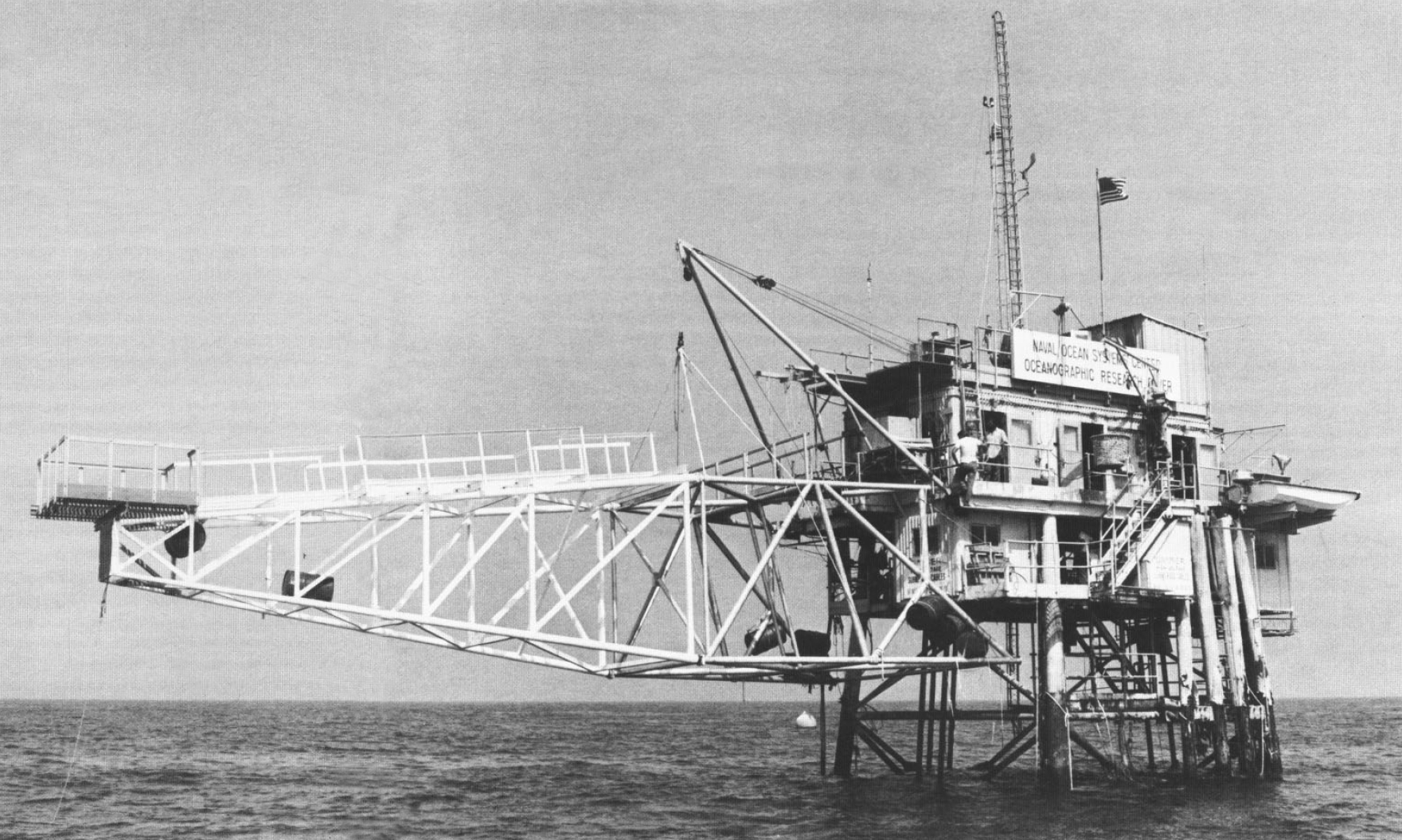
The laboratory's lineage reads like a history of naval technology itself. The original Radio and Sound Lab became the U.S. Navy Electronics Laboratory, then the Naval Electronics Laboratory Center. Meanwhile, in 1943, a second West Coast lab opened in the high desert at Inyokern, California: the Naval Ordnance Test Station, focused on improving weapons dropped from aircraft. That facility evolved through the Naval Undersea Warfare Center, the Naval Undersea Research and Development Center, and finally the Naval Undersea Center. On March 1, 1977, these two streams merged to form the Naval Ocean Systems Center. Today's NIWC Pacific carries forward research traditions from radio propagation to undersea acoustics to electronic warfare, each transition adding new capabilities while preserving institutional knowledge.
Where Fleet Meets Future
NIWC Pacific occupies a unique position in the Navy's research structure: it is the only Naval technical center headquartered in a major fleet concentration area. San Diego's harbor hosts air, surface, submarine, and special operations forces, placing researchers within walking distance of the sailors who will use their work. This proximity shapes the center's culture. Prototype systems can be tested on actual ships, feedback from operators reaches engineers quickly, and the gap between concept and deployment shrinks. Support extends across the Pacific through detachments in Hawaii, Guam, and Japan, ensuring that forces throughout the theater have access to the center's capabilities. Research areas span command, control, communications, and computers; intelligence, surveillance, and reconnaissance; cyber operations; autonomous systems; ocean engineering; and even marine mammal operational systems.
Contamination and Cleanup
The center's Old Town San Diego headquarters carries a burden from its World War II past. Soil and groundwater beneath the site are contaminated with trichloroethylene, a volatile metal-cleaning agent used in missile and aircraft production. The EPA registers the facility as an active Superfund cleanup site. In September 2014, more than 150 employees had to be relocated to avoid toxic TCE vapors infiltrating their workspace. Since 2011, the Navy has worked to remove the contamination, gradually reducing TCE levels. In October 2018, the Navy announced plans to renovate or redevelop the Old Town site, issuing a Request for Interest for private-sector partners. The cleanup represents an obligation the present owes to the past, remedying environmental damage that seemed invisible when the priority was winning a world war.
Technology for Tomorrow's Conflicts
NIWC Pacific's current initiatives reflect how naval warfare has transformed since 1940. The Enhanced Polar System provides communications in Arctic regions where satellites in equatorial orbits cannot reach. The Mobile User Objective System delivers narrowband communications to mobile forces worldwide. Research into C4ISR for autonomous vehicles explores how unmanned systems can operate in contested environments with minimal human oversight. Cyber programs address both offense and defense in a domain that did not exist when Frank Knox signed the laboratory into being. The Consolidated Afloat Networks and Enterprise Services program modernizes shipboard information technology. Since 2002, the center has hosted the annual Autonomous Underwater Vehicle competition, inviting university teams to demonstrate the next generation of undersea robots. Eighty-five years after its founding, the laboratory that began with radio waves now works at the bleeding edge of artificial intelligence, autonomous systems, and networked warfare.
From the Air
Located at 32.75N, 117.20W in San Diego's Old Town neighborhood. The facility includes the TRANSDEC testing pool visible from the air. San Diego International Airport (KSAN) lies approximately 2 nm southwest. The center is situated near major Naval installations including Naval Base San Diego. Restricted airspace may apply to portions of the facility.