
Naval Support Command (Germany)
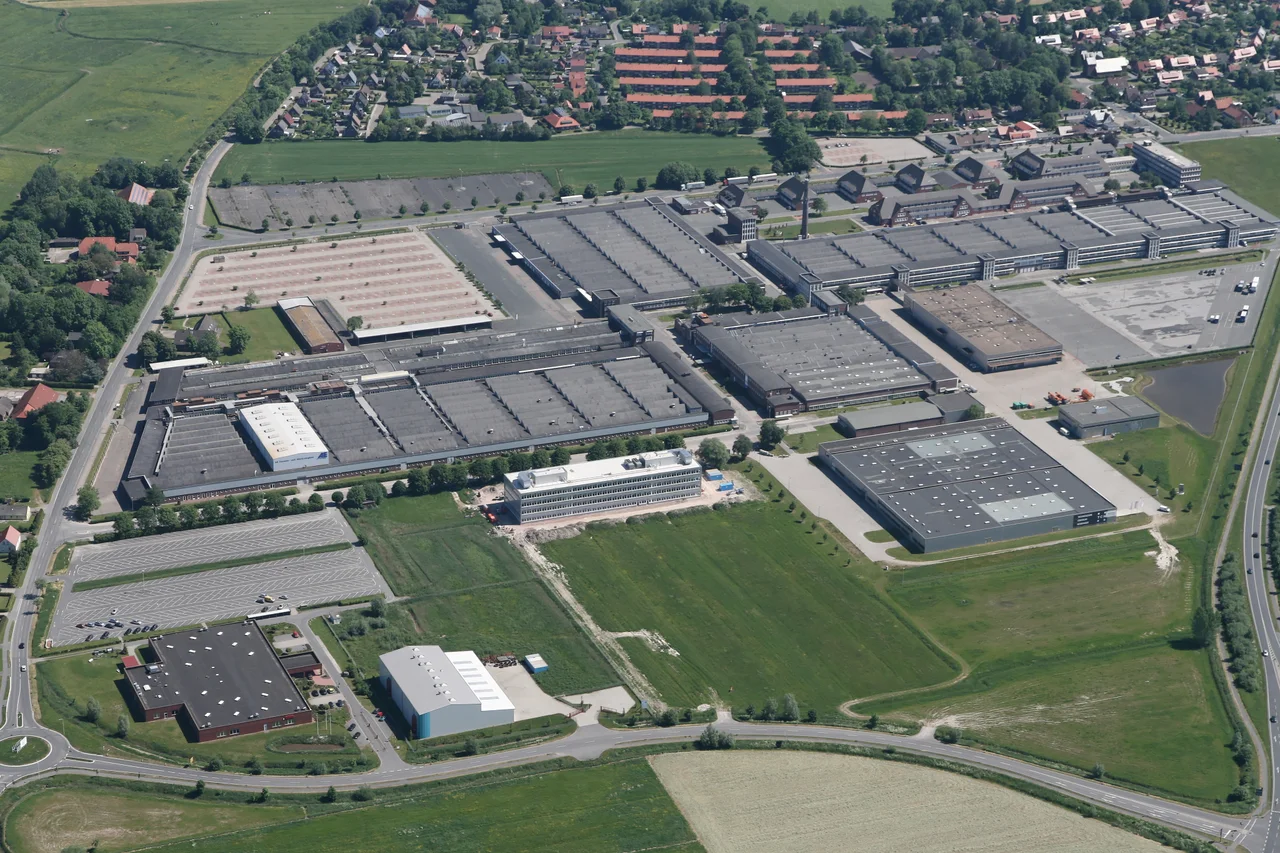
Olympia made typewriters. From its plant at Roffhausen, just east of Wilhelmshaven, the brand turned out elegant mechanical machines that sat on the desks of European secretaries and journalists for most of the 20th century. The factory closed and the buildings stood empty until 2012, when an entirely different organisation moved in: the Marineunterstützungskommando, or Naval Support Command, of the modern Bundeswehr. Sailors replaced typists. Where carbon paper and ribbon spools once travelled the assembly lines, the operations staff who keep the German fleet at sea now move through repurposed industrial halls, fluent in the dry arithmetic of logistics.
An Advance Detachment in Spring
The new command came together quietly. In the spring of 2012 an advance party arrived at the old Olympia works to begin the unglamorous work of setting up offices, wiring secure networks, and turning a typewriter plant into a military headquarters. Formal establishment came on 1 October 2012, when the Marineunterstützungskommando - MUKdo for short - officially took up its duties. The mission was a reorganisation rather than something genuinely new. The Bundeswehr had decided to consolidate the various technical, logistical, and command-support functions that kept the Navy operational - work that had previously been scattered across several different commands at the Heppenser Groden naval base and at Eckernförde on the Baltic - under a single unified authority.
Sixteen Locations, One Job
MUKdo today employs 1,142 people across 16 separate locations, weighted heavily toward Wilhelmshaven on the North Sea coast and Eckernförde on the Baltic. There is also a small detachment in Virginia Beach, Virginia, embedded with the United States Navy to handle the liaison work that NATO standardisation requires. The command runs in three departments. Department I handles operational support technology and logistics - the senior engineers responsible for ship technology, weapons and sensors, and naval aircraft, along with the technical oversight of airborne weapon systems and the Navy's land units. Department II covers operational support and operational testing, the experimental and validation work that lets new systems enter service. Department III oversees command support, including the Navy's land-based radio stations such as the long-range transmitter at Rhauderfehn.
The Invisible Work
Naval logistics is the kind of work that nobody photographs and most people never think about. Frigates and submarines do not stay at sea without an unbroken supply of fuel, food, spare parts, ammunition, technical certifications, software updates, calibrated sensors, and trained crews. Aircraft do not fly without spares and maintenance records. Radio stations do not transmit without antenna arrays, transmitter halls, and engineers willing to live in remote corners of Lower Saxony. MUKdo is the organisation that makes all of those pieces fit together. When a German frigate sails into the eastern Mediterranean or the Baltic, the chain of decisions that put it there - what fuel it carries, what software runs its radars, which spare parts are loaded in which crate - runs back to staff officers in the converted Olympia halls at Roffhausen.
Old Factory, New Fleet
The choice of building has its own kind of poetry. The Olympia works were once part of the productive backbone of West Germany's post-war economic miracle - a quiet town factory turning out typewriters that travelled the world. When the typing industry collapsed under the weight of personal computers, the buildings stood idle. The Bundeswehr's decision to repurpose them rather than build a new headquarters fits a German tradition of patching new functions into old structures: turn a factory into a command, turn an industrial railway siding into a logistics yard, keep the bones and refit the rooms. Air traffic from the nearby JadeWeserPort container terminal and from the Wilhelmshaven-Mariensiel airfield passes overhead. The fleet the building serves comes and goes from Heppenser Groden, a few kilometres east. The work is steady, the people are professionals, and the typewriters are gone.
From the Air
Located at 53.53 north, 8.03 east in Roffhausen near Wilhelmshaven, Lower Saxony, on the site of the former Olympia typewriter works. Nearest airports: Wilhelmshaven-Mariensiel (EDWI) about 8 km southeast, Wittmund (ETNT) Luftwaffe base about 20 km northwest, Bremen (EDDW) about 70 km south. Best viewed from 2,000-3,500 ft - the long industrial-style buildings of the former factory complex are visible from cruising altitude with the JadeWeserPort container cranes and Wilhelmshaven's tank farms nearby. Heppenser Groden naval base sits a few kilometres east along the western shore of the Jade Bight. Coastal westerlies prevail; expect mixed civilian and military traffic in the airspace.
Nearby Stories
- Wangerooge 0.7 km away
- Aurich (district) 4.5 km away
- Rheiderland 6.4 km away
- Valentin submarine pens 6.8 km away
- Thomas Disaster 9 km away
- Bad Zwischenahn 11 km away
- Neuwerk 15 km away
- HVDC DolWin2 37 km away