Nazi Gold Train
There is no train. After eighty years of rumor, two government-backed digs, ground-penetrating radar surveys, and a small army of treasure hunters with metal detectors, the most famous lost cache of World War II remains a story told in beer halls. The Nazi gold train is supposed to lie somewhere in the wooded hills around Walbrzych in Lower Silesia, sealed inside a coal mine or rail tunnel by retreating Germans in the spring of 1945. Onboard, the legend says: more than 300 tonnes of gold, jewels, weapons, and looted artistic masterpieces. Historians have never found a single document, witness, or rail spike to support the claim.
Anatomy of a Legend
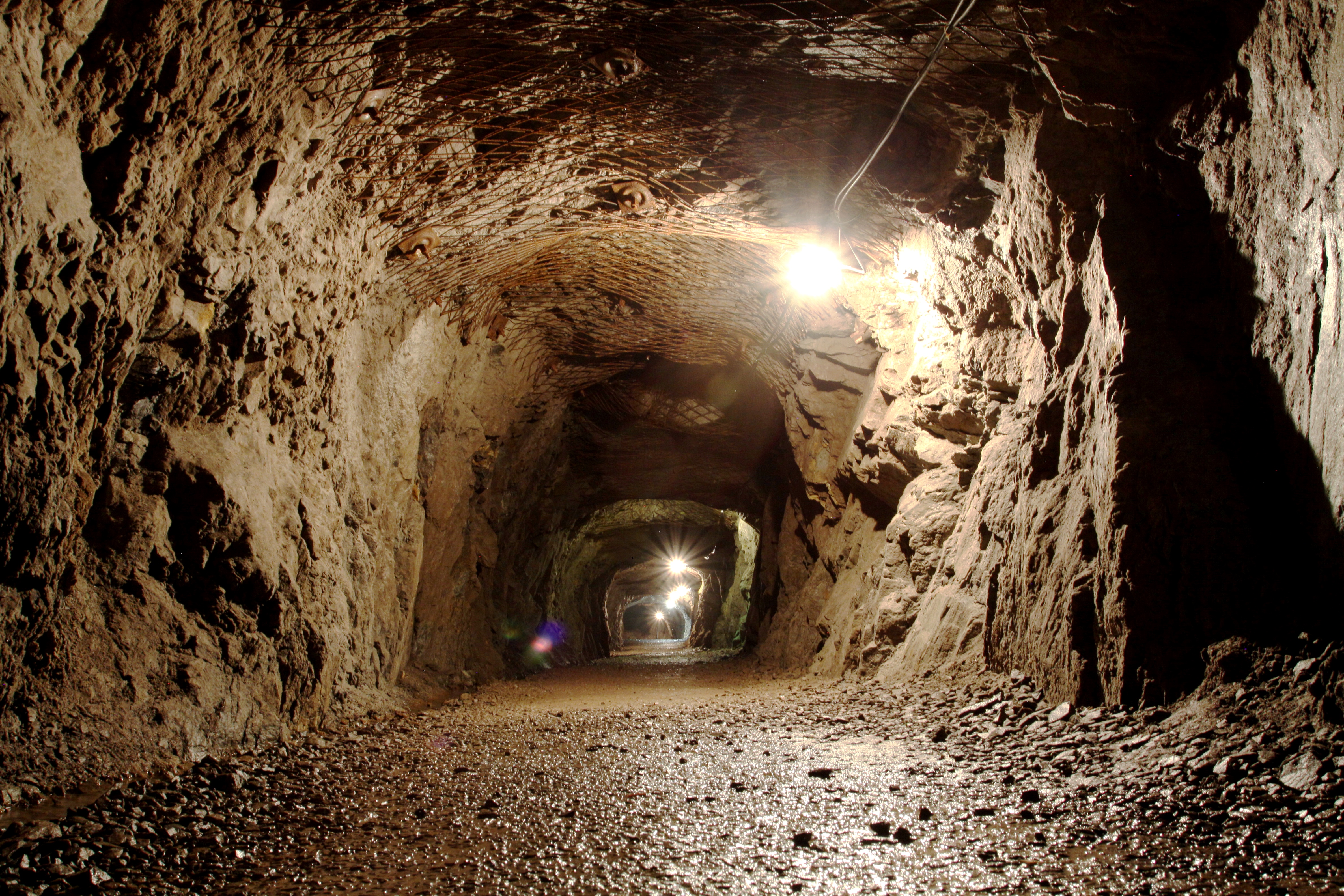
The story has a useful geography. In early 1945 the Red Army was closing on Breslau — today Wroclaw — and German engineers were still digging Project Riese, a vast unfinished complex of tunnels in the Owl Mountains beneath the Gothic silhouette of Ksiaz Castle. The purpose of those tunnels remains uncertain. Some historians think they were meant for an underground arms factory; others suspect a hardened Fuhrerhauptquartier. Project Riese was real, the slave labour that built it was real, and the tunnels still exist. Into that confirmed mystery the train slips like a key into a lock. A heavy armored convoy is said to have left Breslau, paused at the station in Swiebodzice, and never reached Walbrzych. Nothing in the German rail records confirms the journey, and nothing in the Soviet records confirms its disappearance.
Zone 65
In August 2015 two amateur explorers, Piotr Koper and Andreas Richter, told Polish authorities that a deathbed confession had pointed them to a buried train near kilometer 65 of the rail line south of Walbrzych. They asked for ten percent of whatever was found. A Polish deputy culture minister briefly told reporters that ground-penetrating radar showed, with 99 percent probability, a hundred-metre train. He walked the claim back days later. Soldiers cordoned off the woods. Treasure hunters arrived with shovels. By December, mining specialists from AGH University in Krakow had surveyed the site and concluded there was no train, only what looked like a collapsed tunnel. Koper and Richter dug anyway, beginning in August 2016, with sixty-four engineers, geologists, and demolition specialists. After seven days they hit nothing. The radar reflections turned out to be naturally formed sheets of subsurface ice.
What the Town Got Instead
The mayor of Walbrzych offered a striking accounting. Tourism rose 44 percent during the dig. He estimated the global media coverage was worth around 200 million dollars to a town whose annual promotional budget runs to 380 thousand. "Whether the explorers find anything or not," he said, "the gold train has already arrived." He floated naming a roundabout after Koper and Richter. The two men eventually parted ways. Koper kept searching. He never found the train, but in January 2019, while stripping plaster in an old palace in the village of Struga, he uncovered a series of large sixteenth-century Renaissance wall paintings hidden behind the wall — a genuine and valuable find made by accident in the wrong place. In July 2025 a new and unrelated group calling itself Gold Train 2025 announced that the real cache was in three boxcars buried elsewhere in the Swidnica Forest. They were granted permission to dig fifty centimetres deep with hand shovels.
Why the Story Refuses to Die
There is a darker layer beneath the carnival. The Nazis did loot. Trains carrying gold fillings extracted from the mouths of murdered Jews ran from Treblinka and Sobibor to the Reichsbank in Berlin. The Hungarian Gold Train of 1945, packed with property stolen from Hungarian Jews, was real. Real crimes generate real artifacts, and real artifacts breed false rumors that a single dramatic discovery might somehow settle accounts. Walbrzych benefits from the publicity. Treasure hunters get the chase. But the people whose property the legendary train would supposedly contain are mostly dead, and what was actually stolen from them was traced and sometimes recovered through patient archival work in archives at Bad Arolsen and at Yad Vashem — work less photogenic than a man with a metal detector standing in a Polish forest, but truer to what was lost.
From the Air
The supposed location near kilometer 65 of the Wroclaw-Walbrzych rail line sits at 50.82 degrees north, 16.31 degrees east, in the foothills of the Central Sudetes. From cruising altitude the Owl Mountains rise as a forested ridge running northwest from Walbrzych toward the Czech border, with the dark mass of Ksiaz Castle visible on a spur above the Pelcznica gorge. Best viewing altitude is 5,000 to 8,000 feet AGL. Nearest airport is Wroclaw-Strachowice (EPWR), about 70 km northeast.